
What does browntail moth rash look like?
Browntail moth rash looks like red bumps, raised welts, or patchy inflamed areas that often get mistaken for poison ivy or insect bites. Mild cases appear as separate bumps on exposed skin, while heavier exposure produces broad patches across the torso and limbs with an intense itch.
What is actually going on
Picture a bright Saturday in June. You spend the afternoon raking under an old oak, maybe mowing the back strip of lawn, feeling completely fine. That night your forearms itch a little. By morning there are red, raised welts scattered across your neck, your wrists, even a patch on your stomach that was under your T-shirt the whole time, and you never saw a single bug all day.
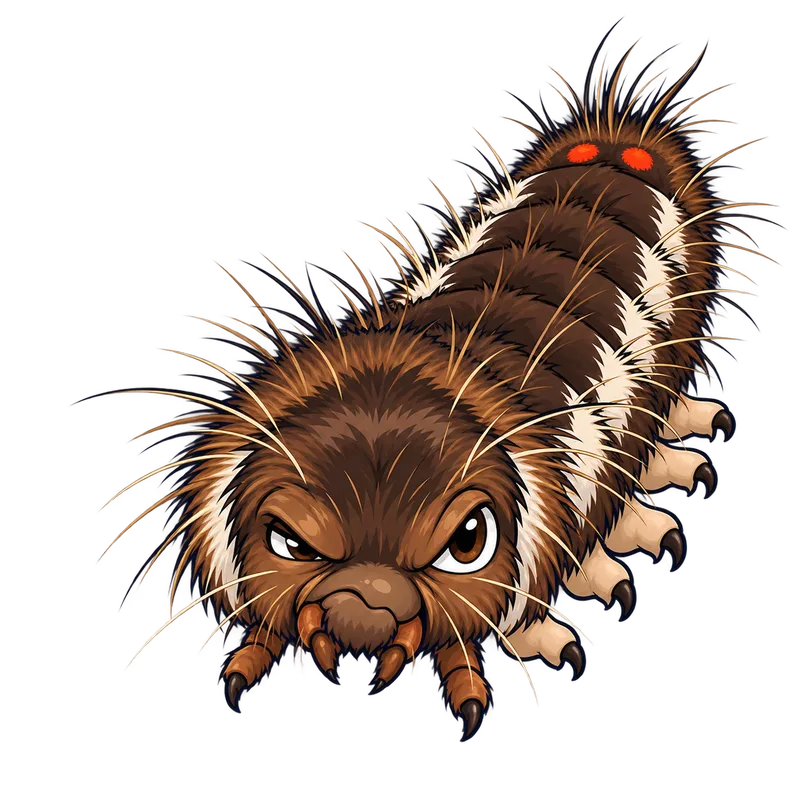
That is the classic browntail moth rash, and the first thing worth knowing is that nothing bit you. The caterpillars of the browntail moth, an invasive species well established in Maine, on Cape Cod and in parts of eastern Canada, carry millions of microscopic barbed hairs. Think of them as invisible splinters of fiberglass insulation. Each hair is hollow, hooked at the tip and loaded with a toxin. The barbs anchor it into the outer layer of your skin, the toxin seeps into the surrounding tissue, and your body answers with redness, swelling and a ferocious itch.
On the skin, the rash shows up as red bumps, raised welts or patchy, inflamed areas, and it gets mistaken for poison ivy or a cluster of insect bites all the time. Mild cases appear as separate bumps wherever skin was exposed: forearms, neck, ankles. Heavier exposure produces broad, angry patches across the torso and limbs, sometimes with real swelling. The itch is the signature. It is intense, persistent, often described as burning or stinging, and it usually starts within hours of exposure. Most cases settle down in a few days, though sensitive people can stay miserable for weeks.
Here is the part that surprises everyone: you never have to touch a caterpillar. The hairs shed into trees, grass and leaf litter, and dry wind picks them up. They land on your skin, drift through open windows onto bedding and work their way through loose clothing. They also stay toxic for up to 3 years in dry conditions, so old nests in a garage or under the eaves are still hazardous long after the caterpillars are gone. And those fluffy white moths fluttering around your porch light in July? Harmless. Their hairs are not toxic. The damage was done quietly, weeks earlier, by caterpillars you never noticed.
How to tell for sure
Honest answer first: nobody can identify a pest from a rash. A welt is a welt, and a photo of your arm will not tell a doctor, or anyone else, which species caused it. What you can do is read the pattern and the circumstances, which usually point you in the right direction.
Browntail rash usually appears in late spring and early summer, roughly May through July, after time outdoors in an infested area. The bumps often show up in places no insect would logically bite: across the back, the stomach, skin that was covered by a loose shirt. That is because hairs drift and settle rather than hunt. Waking up with random welts after sleeping with the windows open, or after sleeping on sheets that were line dried outside, fits the pattern well. Hanging laundry outdoors in June in browntail country is basically flying a net for toxic hairs.
Compare it with the usual suspects. Poison ivy tends to form streaky lines where the plant brushed the skin, and it often blisters. Browntail rash is more scattered and blotchy, and it usually does not produce those classic blisters. Bed bug bites often appear in rows or small clusters on skin exposed at night, and they come with other evidence in the bedroom. Browntail welts can appear overnight too, but they track with outdoor activity or open windows, not with a mattress.
If you want certainty about the pest itself, look at the trees, not your skin. Browntail caterpillars leave small, tight silken winter nests, about 2 to 5 inches long, wrapped around leaves at the very tips of branches, especially on apple, cherry, oak, birch and rose family trees. Those are easy to confuse with other webs. Fall webworms build much bigger, looser tents over branch ends in late summer, and eastern tent caterpillars build dense tents in branch forks in spring. If you are not sure what is in your trees, your state extension service or a licensed arborist can identify it properly, which matters more than guessing.
What usually comes next
The practical decision most people face is simple: how do I stop itching without making it worse?
Start by getting the hairs off. Take a cool shower as soon as you can after exposure, and wash the clothes you were wearing in warm water. Then treat the itch with the ordinary over the counter toolkit: cool baths with colloidal oatmeal or baking soda, calamine lotion or 1% hydrocortisone cream on the patches, plain unscented moisturizer a few times a day, and an oral antihistamine if the itch is relentless. A non-drowsy one like loratadine works for daytime, and a drowsy one like diphenhydramine can help at night if the itching is wrecking your sleep. For severe localized itching, some pharmacists compound combination creams, but that is a conversation to have with a pharmacist or doctor rather than a home experiment.
The one rule people get wrong is heat. A hot shower feels like it should help, the same way scratching feels productive for about four seconds. Heat opens up blood vessels in the skin, releases more of the chemicals driving the itch, and turns a bad rash into a worse one. Keep the water cool or lukewarm, and keep heating pads away from the welts entirely.
While you heal, think about the source. If the rash came from yard work, do the mowing and raking on damp days or wet the area down first, since moisture keeps hairs grounded. Cover up with long sleeves tucked into pants, gloves and a mask during the high risk months. None of this is dramatic. It is just the price of a tidy yard in caterpillar country.
When to get help
Most browntail rashes are miserable but self limiting, and they resolve with the home care above. Some situations are different, and they are worth stating plainly.
Get emergency help immediately if you develop trouble breathing, wheezing, a feeling of tightness in the airway, or swelling of the lips, tongue, mouth or throat after exposure. Inhaled hairs can inflame the airways, and a severe reaction is a 911 situation, not a wait and see one.
See a clinician or urgent care if the rash covers large areas of your body, is severely painful, involves your eyes, or shows signs of infection from scratching, such as pus, spreading warmth, red streaks or fever. Poison Control at 1-800-222-1222 is the right call for questions about toxic exposures. And keep the diagnostic limit in mind: a clinician treats your skin, but no one can name the pest from the rash alone.
On the property side, if you find winter nests high in a tree canopy, that job belongs to a certified arborist or licensed applicator with the right equipment, and caterpillar treatment in landscape trees is regulated work in affected states. Handle the skin gently, leave the tall trees to professionals, and keep the laundry indoors until July.