
What are the signs of clothes moths?
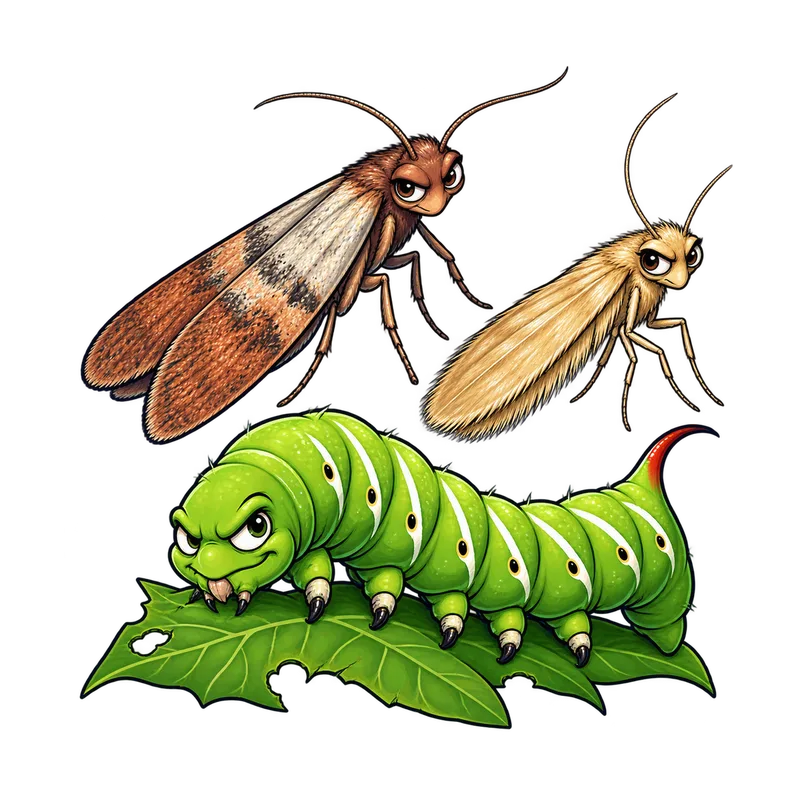
The signs of clothes moths include ragged little holes in animal fibers, fine silken feeding tubes, portable cases, and tiny hard pellets of frass that match the fabric color. You may also spot tiny golden or buff-colored moths darting into dark folds of closets, as these adults actively avoid bright light.
What is actually going on
You pull that good wool sweater from the back of the closet for the first cold day of the year, and right on the front, there is a cluster of ragged little holes. You wonder if the dry cleaner chewed it up, or if mice somehow got into the wardrobe. But when you look closer at the frayed edges and fine silk threads lining the damage, you are usually dealing with clothes moths.
It helps to know right away that the adult moths fluttering around do not actually eat your clothes at all. They have non-functional mouthparts and cannot chew a thing. The entire problem comes down to the caterpillar stage, which is the only form of the insect that causes physical damage.
Those tiny caterpillars possess a rare talent in the insect world, which is the ability to digest keratin, the tough structural protein found in animal fibers like wool, cashmere, mohair, silk, fur, and leather. If a fabric is entirely plant-based like clean cotton, or purely synthetic like nylon, it normally leaves the larvae hungry and uninterested.
However, clothes moths are not picky if a garment comes with a little extra seasoning. Fabrics stained with human perspiration, body oils, beer, milk, or food spills are preferentially targeted because that organic soilage provides nutritional salts and moisture that speed up how fast the larvae grow.
How to tell for sure
Spotting the signs usually starts with the type of damage and the architectural style the larvae leave behind. If you are dealing with webbing clothes moths, you will typically find fine silken feeding tubes, tunnels, or extensive webbing sheets spun across the surface of the fabric. Casemaking clothes moths take a different approach, as the caterpillar constructs a portable, open-ended silken case that it drags along as it feeds, camouflaging the little shelter with bits of the fabric it consumes.
You will also find tiny hard pellets scattered across the damaged items. These are larval droppings, known as frass, and they usually take on the exact color of the dyed fabric being eaten, which leads many people to mistake them for moth eggs. True clothes moth eggs are microscopic, translucent, soft, and extremely fragile, so you are unlikely to spot them without a magnifying glass.
Adult moths are another clue, though they behave differently than most people expect. Unlike pantry pests that zip toward bright kitchen lights or outdoor moths drawn to porch fixtures, adult clothes moths dislike light and actively avoid it. When you open a dark closet or disturb a wool pile, you will usually see tiny, golden or buff-colored moths with a weak, fluttery flight darting quickly into dark folds instead of circling overhead lamps.
It is also easy to confuse these signs with other household critters. Carpet beetle larvae often get blamed for clothes moth damage, but those beetles leave behind hairy shed skins and salt-grain-like frass instead of silken tubes or cases. Pantry pests like Indian meal moths have distinct reddish-copper tips on their wings and fly toward daylight, which separates them from closet dwellers.
What usually comes next
Once you confirm you have clothes moths, you generally have to decide whether to treat the affected garments yourself or throw them out, and the most reliable practical choice for washable woolens and natural fabrics is thermal or physical eradication. You do not need to guess at complicated chemical mixtures because basic temperature control takes care of every life stage from egg to adult.
For items that can handle the cold, sealing infested garments inside a heavy plastic bag and placing them in a freezer set to zero degrees Fahrenheit for at least seventy-two hours will kill everything inside. The trick here is letting the bagged item thaw slowly at room temperature for up to a full day before opening it up, which keeps condensation from forming directly on the damp fabric and ruining it.
If you prefer heat, laundering washable woolens in hot water or taking dry-cleanable items to a professional dry cleaner accomplishes the exact same goal, wiping out the eggs and larvae in one step while washing away the body oils that attracted them in the first place.
When to get help
Most clothes moth issues yield to thorough vacuuming, laundering, and careful storage, but certain situations call for outside help. If the damage spans wall-to-wall carpeting across multiple rooms, originates inside inaccessible building voids, air ducts, or disused chimneys, or threatens valuable museum collections, historic textiles, and antique furniture upholstery, you should bring in a pest management professional equipped for structural treatments or commercial thermal deinfestation.
You might also wonder if these insects pose a health risk, but clothes moths do not bite, sting, transmit infectious diseases, or cause direct pathogenic harm to humans or pets. If you notice skin marks or rashes, do not diagnose them as moth bites, and consult a clinician or a dermatologist to find the actual cause.