
Squash vine borer moth vs other orange-and-black moths: what differs?
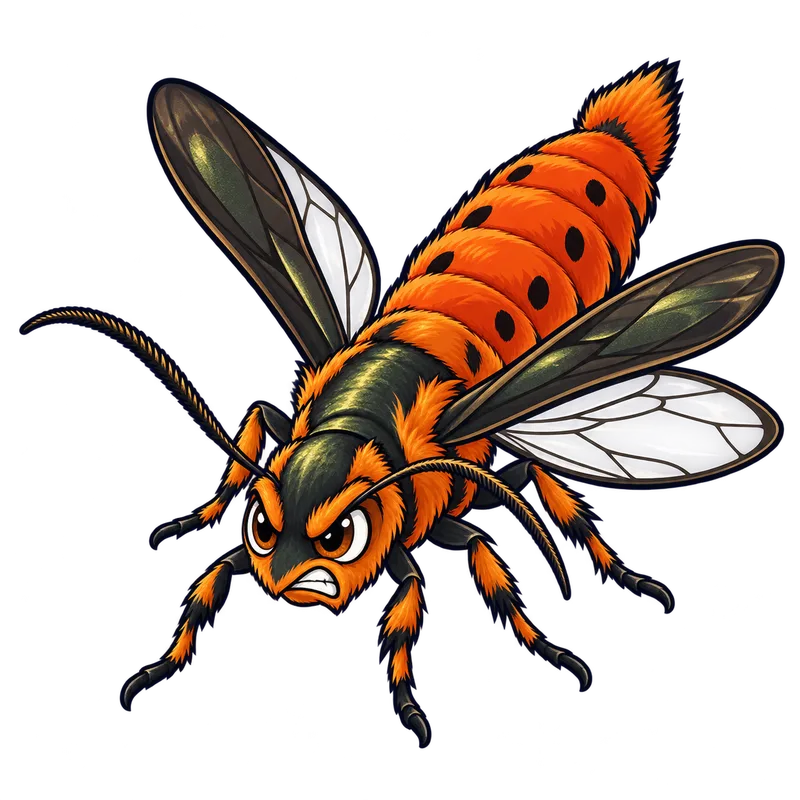
The squash vine borer moth differs from other orange and black moths by featuring a wingspan of 25 to 38 millimeters, dark metallic olive-green forewings paired with completely clear hindwings, and enlarged hind legs densely fringed with long orange and black hairs. It also flies during peak daylight hours.
What is actually going on
Picture walking out to the garden on a warm Tuesday morning with your coffee, glancing down at your prized zucchini patch, and noticing a bright, chunky little bug hovering over the stems like a miniature helicopter. It has a vivid orange belly and dark, metallic green wings, and it looks suspiciously like a wasp trying on a moth costume. You might be tempted to admire it as a harmless visitor, but you are actually looking at the adult stage of the squash vine borer, one of the most destructive garden pests you can face.
The main reason people get confused is that this insect relies on disguise. The squash vine borer moth is a master of mimicry, using its wasp-like appearance and daytime flight habits to trick predators into leaving it alone. While most moths prefer to stay hidden in the dark and wear dull, dusty camouflage, this one zips around during peak daylight hours. It flies with a heavy buzz, showing off an orange and red abdomen dotted with black and hind legs wearing what look like thick, fuzzy orange-and-black leg warmers.
When you compare it to other orange-and-black insects in the garden, the differences come down to wing texture and body structure. Other moths with similar color palettes, such as the pickleworm moth, have fully scaled wings without transparent patches. Meanwhile, beneficial wasps that share the color scheme lack scales entirely and do not have those brush-like furry legs. The squash vine borer moth also features wings like a stained-glass window, sporting opaque, dark olive-green forewings that frame crystal-clear, transparent hindwing panes.
That adult moth is not actually interested in chewing on your plants directly. Its sole mission is laying tiny, coppery-brown eggs right at the base of the stems. The real devastation begins a week or two later when those eggs hatch into caterpillars that bore straight into the interior of the vine. Once inside, the larva feeds on the internal plumbing of the plant, cutting off water and nutrients completely.
How to tell for sure
To confirm you are dealing with a squash vine borer rather than another garden oddity, you have to look past the flying adult and check the physical evidence on the plant itself. If your zucchini or pumpkin vines are suddenly collapsing in a dramatic heap during the heat of the day, do not assume they just need a drink of water.
First, examine the base of the wilting vine right near the soil line. You are usually looking for a small, round entry hole accompanied by a pile of wet, yellowish-green frass that looks remarkably like fresh sawdust pushed out of a construction site. That sawdust-like material is the telltale signature of an internal caterpillar at work.
If you still want to catch the adult moth in the act, usually look for them hovering around cucurbit crops like summer squash, winter squash, pumpkins, and gourds from late spring through mid-summer. Remember the key identifiers, which include a wingspan of about 25 to 38 mm, dark metallic olive-green forewings paired with completely clear hindwings, a bright orange or reddish abdomen marked with black dots, and enlarged hind legs densely fringed with long orange and black hairs.
Do not confuse these signs with bacterial wilt, which is spread by cucumber beetles and also causes sudden wilting, but never leaves behind entry holes or sawdust-like droppings. Squash bugs can also cause leaves to flag and wilt, but they leave clusters of bronze eggs on leaf undersides and do not tunnel inside the stems.
What usually comes next
Once you have figured out what is actually attacking your garden, you have to decide on a game plan before your entire squash harvest completely collapses. If you manage to catch the problem early, basic cultural controls tend to offer the best defense without making you reach for harsh chemicals.
For the next planting cycle, timing is everything. In many regions, delaying your squash planting until mid-June allows the main flight window of the adult moths to pass by before your young stems are tender enough to attract them. If your plants are already in the ground, wrapping them with floating row covers from the moment you transplant can physically block the moths from landing and laying eggs. Just remember that you must pull those covers off the exact moment female flowers open, or your plants will miss out on pollination entirely and fail to set fruit.
Another clever trick for running vine varieties is mounding a single shovel full of soil over the vine joints every 6 feet along the stem. This acts like an insurance policy, encouraging the plant to sprout secondary roots at those nodes. Even if a borer wrecks the main basal stem, the backup roots keep the rest of the vine alive and producing.
If you decide to use sprays, timing is everything. Foliar sprays do nothing once the caterpillar is safely tucked inside the stem. You have to direct treatments toward the lower stem bases right when you spot the first adult moths or entry holes, and always follow the product label instructions and pre-harvest intervals to the letter.
When to get help
Sometimes a garden problem outgrows a weekend DIY fix, especially if you are managing a larger growing operation or running into unexpected safety roadblocks. If you are dealing with large-scale agricultural production where individual stem management and hand-picking are impossible, it is usually time to consult a university extension specialist, a state department of agriculture, or a licensed pest control operator to design a threshold-based management plan.
When handling chemical controls, safety comes first. Synthetic pyrethroid insecticides can be harsh on beneficial pollinators and aquatic life, so applications must be restricted strictly to lower stem bases and applied during late evening hours when bees are inactive. Never attempt to diagnose or treat skin reactions, unusual bites, or chemical exposures yourself. In the event of accidental pesticide ingestion, eye contact, or inhalation, immediately contact a medical clinician, urgent care facility, or your regional Poison Control Center. Finally, always check local regulations regarding protected wildlife and native insects before altering your garden environment, ensuring your pest control efforts stay safely within legal boundaries.