
How can bagworms damage arborvitae?
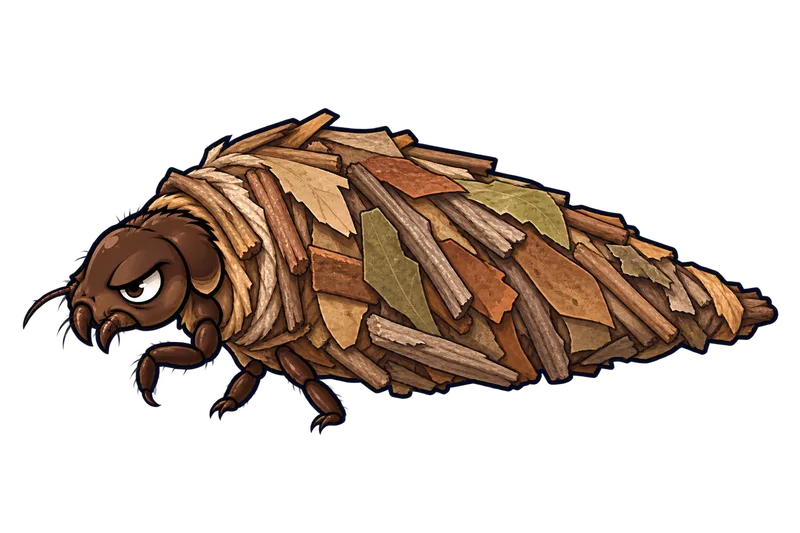
Bagworms damage arborvitae by feeding directly on the green scale leaves and tender shoots, while also strangling the plant. The caterpillars anchor their silk cases to twigs with tough bands that refuse to stretch as the branches grow, biting into the bark and choking off the water and nutrient pathways.
What is actually going on
You step out onto the porch with your morning coffee, glance at the neat row of arborvitae lining the driveway, and notice a section of the hedge looks a bit thin and rusty. You walk over for a closer look, and what you first took for an odd cluster of dried pinecones or stubborn seed pods is actually moving. It is a tiny, tapered case made of silk and chewed-up bits of foliage, and inside is a caterpillar wearing its home like a custom backpack.
Bagworms do damage to arborvitae through a clever and destructive double whammy. First, the active larvae munch straight through the green scale leaves and tender shoots. Because evergreens do not store vast energy reserves in their woody needles and cannot easily regenerate stripped tissue, heavy grazing quickly leaves the plant looking scorched and battered.
Second, these pests play a long game of structural sabotage. Before a caterpillar transforms into its next life stage, it anchors its silk case to a twig with a tough, circular band of silk. Think of this band like a plastic zip-tie pulled tight around a growing arm. As the arborvitae branch expands in diameter over the months, that unyielding silk loop refuses to stretch. It bites right into the bark, choking off the vascular pathways that carry water and nutrients, and kills the branch distal to the loop even if the insect has long since moved on or died.
How to tell for sure
Spotting the problem early usually comes down to recognizing the bags. In late spring or early summer, you will see small, quarter-inch to half-inch brown cases dangling from the tips of the branches, twitching as the hidden caterpillars haul them around. By mid-summer, those bags grow up to an inch and a half long, and the damage becomes painfully obvious as the upper canopy starts browning out from the top down.
People often wonder how to tell a bagworm case apart from a natural arborvitae seed cone. Real cones are symmetrical, woody, and fixed firmly to the branch as part of the tree. Bagworm cases are random, haphazardly decorated with bits of real leaves and bark woven into the exterior silk, and they hang loosely from a distinct silken thread. If you touch one and it pulls away or retracts slightly, you are dealing with an active pest.
Another clue is the timing of the decline. If your arborvitae is shedding interior needles as part of its normal seasonal drop, that is usually uniform and happens quietly. If you see ragged, chewed-up branch tips alongside dangling silken debris, you can safely blame caterpillars rather than a root issue or a passing drought.
What usually comes next
When you find a handful of bags on a small hedge during the dormant season, the fix is straightforward. You pull them off by hand or snip them away with pruners, dropping them into a bucket of soapy water or crushing them to finish off the overwintering eggs. There is one crucial catch here, and missing it ruins the whole exercise. You have to make sure you snip or unwrap that tough silken band from the twig when you take the bag off. If you just snap the bag away and leave the loop behind, the branch will still end up girdled and dead by next summer.
When an infestation covers a massive privacy screen or a tall hedge, hand-picking turns into an impossible chore, which is usually when people start looking at sprays. If you go that route, timing is everything. Chemical or biological treatments usually only work when the larvae are small and actively feeding, which means late May in warmer coastal zones or early to mid-June in northern regions.
If you wait until mid-summer, spraying is a complete waste of time and product. By then, the caterpillars are too large to bother, and they have already sealed their bags tight to pupate. Besides, watch out for the temptation to grab a broad-spectrum chemical just because it promises a quick fix. That specific insecticide type is notorious for wiping out beneficial predatory mites, which often triggers a secondary explosion of spider mites that will finish off your arborvitae just as effectively as the bagworms did.
When to get help
There are times when a backyard hose-end sprayer and a pair of garden shears will not cut it, and you need to hand the problem over to someone with commercial equipment. If your arborvitae trees tower over the roofline, a small hand-pump sprayer cannot reach the upper canopy where the highest concentration of feeding damage usually hides. Licensed arborists use high-pressure power sprayers and mist blowers to achieve the thorough underside coverage required to reach small larvae.
You should also consult a professional if your hedge has already suffered severe canopy loss, exceeding thirty to fifty percent defoliation. At that stage, the tree is under immense physiological stress, and a structural health assessment is necessary to determine if it can bounce back or if it is harboring secondary issues like fungal tip blights or root rots that mimic or compound caterpillar damage. When in doubt about whether a struggling evergreen can be saved, an on-site expert can give you a realistic prognosis before you spend money on treatments that might come too late.