
What do spongy moth caterpillars eat in a landscape?
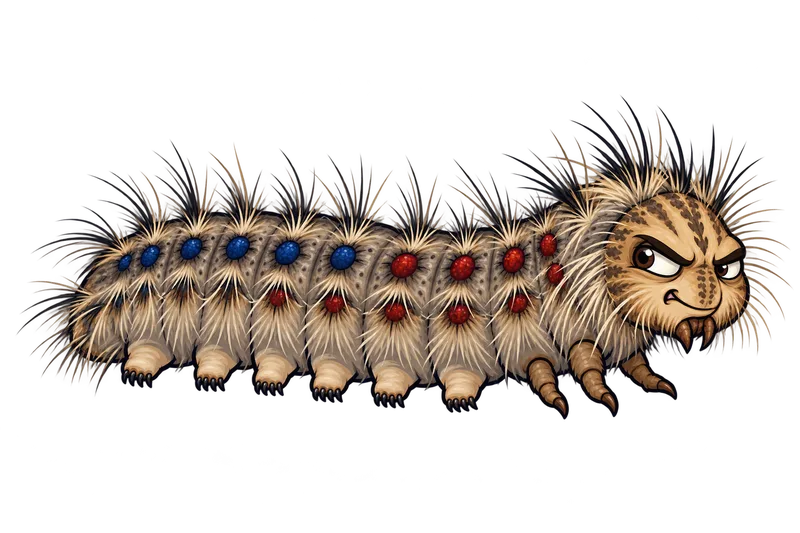
Spongy moth caterpillars primarily feed on the foliage of landscape trees and shrubs, showing a distinct preference for oak and apple species. When populations surge or preferred food sources run out, they will also consume maples, poplars, other broadleaf trees, and even conifers.
What is actually going on
You walk out to the back patio on a warm morning in late May, coffee mug in hand, and notice a fine layer of green dust covering the table. It looks almost like sawdust. Then you glance up at your favorite old oak tree, and instead of a thick, leafy canopy, you can see right through the branches to the sky. Something is mowing down your landscape.
Spongy moth caterpillars are broadleaf defoliators that primarily feed on the foliage of landscape trees and shrubs. They have a massive appetite and a distinct preference for oak and apple species, though they will go after maples, poplars, and other broadleaf trees when populations surge. When those tiny eggs hatch right around the time spring leaves are expanding, the young larvae start chewing small holes and skeletonizing the plant tissue.
As those caterpillars grow into plump, hungry larvae through June, their food consumption accelerates dramatically. They do not spin tents in branch crotches like tent caterpillars do, so you will not see silken webs. Instead, they hang out openly on leaves or crawl down trunks looking for shade during the heat of the day. Because the females lay their tan, spongy egg masses on anything nearby, from fence posts and patio furniture to firewood and house siding, these pests easily hitchhike into new yards and spread across entire neighborhoods before you even realize they have moved in. When preferred food sources run out during heavy outbreaks, starving late-instar larvae will migrate and feed on less preferred broadleaf trees or even conifers.
How to tell for sure
If you want to know what is munching on your trees, look for the physical cues. Spongy moth egg masses usually appear as buff-colored or tan patches measuring 30 to 60 mm long by 20 to 30 mm wide, containing anywhere from 100 to 1000 eggs. They feel fuzzy or spongy to the touch, and you will usually find them stuck firmly to tree bark, under patio table rims, or on the sides of storage sheds.
When you look at the caterpillars themselves, mature larvae usually display distinct pairs of blue and red spots running down their backs, covered in stiff hairs. If you spot hairy caterpillars chewing ragged edges out of your oak or apple leaves, you are usually looking at the right culprit. Keep in mind that visual checks have limits, because telling the standard European spongy moth apart from the flight-capable Asian spongy moth variant usually requires official laboratory DNA testing handled by agricultural authorities.
What usually comes next
Once you spot them, you have to decide what to do based on how many caterpillars are crawling around and the size of your trees. If you catch the infestation early in spring around mid-May when the leaves are fully expanded and the caterpillars are still small, you can apply biological treatments or insecticidal soaps according to the exact directions written on the product label. The caterpillars have to eat the sprayed leaves for certain stomach poisons to work, and treatments often break down quickly in sunlight, so timing and thorough coverage matter. As caterpillars grow larger, their tolerance to these treatments increases significantly, which changes what works.
If you are dealing with egg masses before they hatch, scraping them off with a putty knife is a solid move, but do not just drop them onto the grass. Eggs on the ground can survive winter and hatch just fine. You usually need to submerge those scraped masses in a container mixed with household liquid soap or bleach for at least two days, meaning 48 hours, to destroy them completely. For trees where caterpillars crawl up and down the trunk daily, wrapping the bark with a burlap skirt gives them a shady place to hide, making it easy for you to collect and dispose of them every afternoon.
When to get help
Some situations outgrow a weekend project. If your landscape trees suffer heavy defoliation year after year, the repeated stress drains their stored energy reserves and leaves them wide open to secondary wood-boring insects and diseases. That is the time to call a licensed commercial pesticide applicator who has the specialized high-pressure mist blowers and power equipment to handle large, mature shade trees safely.
You should also watch out for your own health. Contact with caterpillar hairs or the fuzz from egg masses can trigger skin rashes or respiratory irritation in sensitive people. If anyone in your household suffers a severe allergic reaction or breathing difficulty, seek clinical evaluation or contact poison control immediately. Finally, if you live in an area where spongy moth populations are strictly regulated and you suspect a new introduction, report your sighting to your local department of agriculture or plant biosecurity agency so they can manage the spread properly.