
What should you know before scraping a spongy moth egg mass?
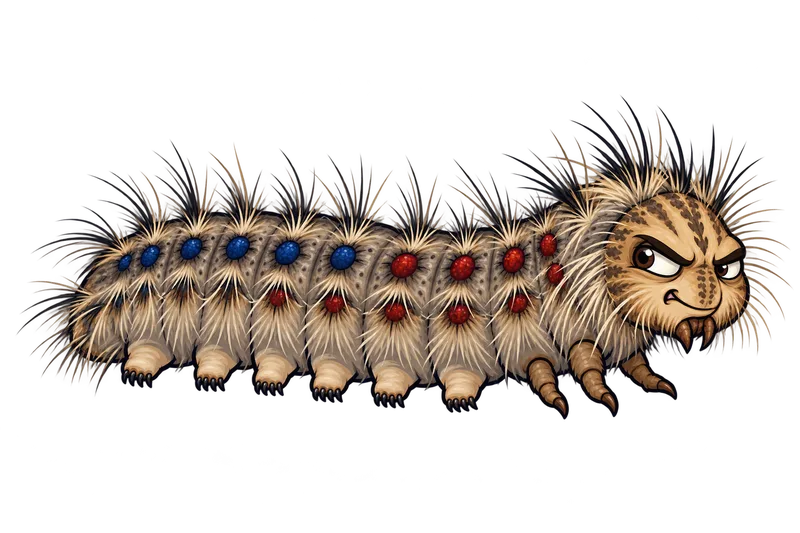
Scraping a spongy moth egg mass requires catching every fragment in a container and immediately soaking them in soapy water or bleach for at least two days so they do not survive the winter. Because the buff or tan cluster measures 30 to 60 mm long, you must wear heavy gloves and safety glasses to avoid irritating hairs.
What is actually going on
Picture stepping out onto your back patio on a crisp November morning to put away the last of the lawn chairs, only to spot a peculiar, felt-like patch stuck right to the side of your wooden shed. It looks almost like a small piece of tan suede or a dried-out apricot glued to the timber. If you are dealing with a spongy moth invasion in your neighborhood, that little patch is actually a dense cluster holding hundreds of future caterpillars. Before you grab a random tool and start chipping away at it, you need to know that scraping these egg masses off a tree trunk or an outdoor wall is a classic winter chore, but doing it wrong is worse than doing nothing at all.
If you simply knock the cluster onto the ground with a stick, you have not actually solved the problem. Those eggs are remarkably resilient and will happily survive a brutal winter nestled in the cold leaf litter, only to hatch right on schedule in the spring. To get ahead of the cycle, you have to scrape the entire mass cleanly off its surface, catch every last fragment in a container, and immediately neutralize the embryos using a liquid soak or thorough physical crushing.
It sounds simple enough, but a few technical details dictate whether your afternoon of yard work actually protects your trees or just scatters a few hundred hungry larvae across your lawn. You also have to reckon with the physical makeup of the mass itself, which is coated in tiny, irritating hairs shed by the female moth that can trigger a nasty skin rash or eye irritation if you go poking around bare-handed.
How to tell for sure
Before you start scraping anything, you need to verify that you are actually looking at an active spongy moth egg mass rather than an old, spent one from a previous year, or worse, a completely different insect nest. An active spongy moth egg mass usually measures about 30 to 60 mm long and 20 to 30 mm wide, and it feels firm and slightly spongy to the touch, much like a dense piece of velvet. It will usually be colored in shades of buff, tan, or light brown because it is blanketed in protective abdominal hairs left behind by the female when she laid the eggs back in the summer.
If the patch you are looking at appears faded, sun-bleached, feels hollow, and is peppered with tiny pin-sized holes, you are usually looking at a spent mass. Those little holes are the exit doors left behind by caterpillars that already hatched last spring. Scraping an old, empty mass gives you zero population control benefit, so you are essentially just scraping ghost towns off your bark.
You also want to avoid confusing these with other common outdoor egg deposits. For instance, spotted lanternfly egg masses are usually laid in straight vertical rows of 30 to 50 eggs and covered in a shiny, mud-like grey secretion that cracks and dulls over the winter. Eastern tent caterpillars wrap dark, collar-like bands completely around small twigs of fruit trees. Spongy moth masses, by contrast, are shapeless, felt-like patches slapped onto flat surfaces like tree trunks, firewood stacks, or house siding.
What usually comes next
When you are certain you have a live cluster sitting on a spot you can easily reach, your next step is just setting up your gear. Pick a dry afternoon anytime between October and April, after the trees have dropped their leaves and before the spring warmth wakes things up, and pull on safety glasses and heavy work gloves to keep those tiny, prickly hairs out of your eyes and off your skin.
Grab a dull tool like an old butter knife or a stiff plastic scraper, and hold an empty plastic tub or bucket right underneath the egg mass to catch the fallout. Press the edge of your tool flat against the wood or bark right above the cluster and push steadily downward so the whole patch peels off in one piece straight into your waiting container.
Never let the scraped bits drop onto the ground where they can easily survive the winter. Instead, fill your container with a mixture of water and ordinary dish soap or household bleach until every last egg mass is completely underwater. Leave that bucket alone for at least two days so the liquid can soak through those protective hairs and kill the developing embryos before you dump the contents into the trash.
When to get help
Scraping works fine for eye-level spots and low branches, but you will want to put down the scraper and bring in someone else when things get complicated. If the masses are way up in the high branches of a mature oak or maple tree, do not risk balancing on a tall ladder or swinging poles near power lines. High-canopy problems usually call for a professional tree care specialist who can handle certified canopy treatments or spray safe biological controls when the caterpillars hatch in the spring.
You also need to stop and check the rules if you live in an area where the spongy moth is brand new or heavily regulated under tight quarantine laws, like parts of Western Canada or protected western zones. In those places, homeowners are usually told to leave the masses alone rather than scraping them off independently. Instead, take a clear picture, write down the address or landmark, and call your local agricultural extension office, state department of agriculture, or a national plant health authority so they can verify the species and take care of it properly.
Finally, if anyone in your home breaks out in bad rashes or hives, or starts having trouble breathing after touching the caterpillars or their hairy nests, get in touch with a doctor or your local poison control center right away.