
Bagworm cases vs ordinary plant debris: how can you tell?
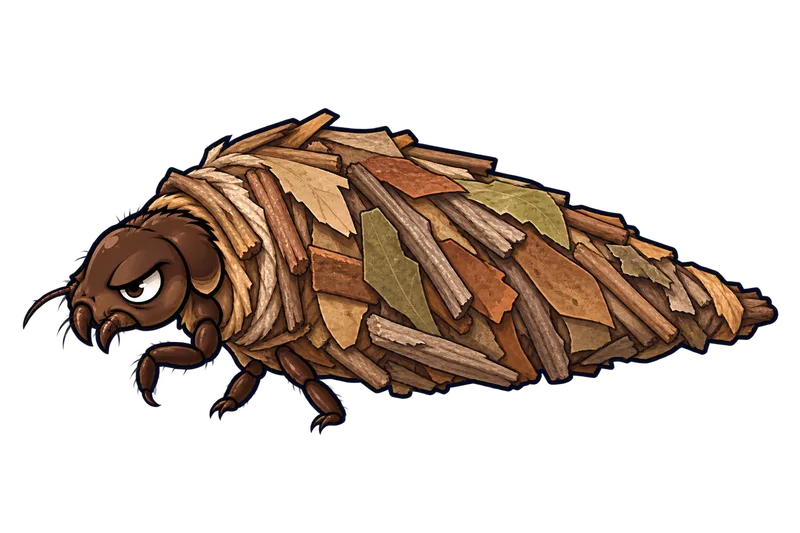
You can tell a bagworm case from ordinary plant debris by checking how it is attached, its shape, and whether it contains a living caterpillar. A bagworm case is a custom-built, spindle-shaped shelter woven with silk and plant foliage, and it is firmly anchored to a twig by a tough silk band that requires deliberate effort to remove.
What is actually going on
You walk out to check your arborvitae on a crisp autumn morning, and something catches your eye. There are little brown spindle-shaped things dangling from the branches, looking for all the world like leftover bits of mulch, stray leaves, or dried-out seed pods that blew in from the yard next door. You reach out to flick one off, but instead of blowing away in the breeze, it stays stubbornly put. Bagworm cases and ordinary plant debris look surprisingly similar at a glance, but they are entirely different beasts under even casual scrutiny. A bagworm case is a custom-built, spindle-shaped shelter that a caterpillar weaves using dense silk and fragments of your plant's own foliage, much like a tiny sleeping bag made of natural forest camouflage. Ordinary plant debris, on the other hand, is just random litter.
The confusion usually happens because these caterpillars are master builders. When a bagworm hatches, it immediately starts spinning a portable home, gluing bits of pine needles, arborvitae scale, or bark flakes to an inner sleeve of tough white silk. As the caterpillar grows, it enlarges the case, adding more plant bits so it blends right into the foliage. If you find a cluster of brown bits on your shrubs, you might wonder why it matters whether they are bugs or just trash. The trouble is that these portable shelters are anchored to the plant by a tough, circular band of silk wrapped tightly around the twig. Ordinary garden rubbish rests loosely on a stem or falls off at the first gust of wind. A bagworm case requires deliberate effort to remove. More importantly, that silk band is non-stretching and weather-resistant, which means it stays put through rain, snow, and wind.
How to tell for sure
Telling them apart usually comes down to three quick checks you can perform right on the spot. First, look at the attachment. If you gently pull on a piece of debris and it tumbles to the ground, it is just litter. If it refuses to budge, look closer. A bagworm case is tied to the twig with a distinct ring of silk. Second, check the shape and texture. Plant debris tends to be flat, jagged, or randomly decayed. A bagworm case usually has a symmetrical, tapered, spindle-like silhouette. If you happen to look at it with a magnifying glass, you will see the neat shingling of plant bits woven systematically onto a uniform inner lining of felted silk.
Third, test the occupant, though usually from a safe distance. During the active feeding season, a bagworm case is mobile. The caterpillar pokes its head and front legs out to chew on your leaves. If you tap the case or startle it, the creature usually pulls itself entirely inside and draws the top opening shut like a tiny drawstring pouch. Ordinary debris is completely inert, hollow-free, and contains no living organism or inner silk lining.
What usually comes next
Once you confirm you are dealing with bagworms rather than harmless yard waste, you have to decide what to do about them before they strip your evergreens bare. If you only see a few cases on a small shrub, hand-picking is usually your best bet. Here is where many gardeners make a costly mistake. If you simply yank the bag off the branch by hand, the tough silk loop often stays behind wrapped around the twig. As the branch grows thicker through the season, that leftover loop acts like a tight rubber band, choking off the plant's water and nutrient pathways in a process called girdling. Always use small snips or pruning shears to cut the silk band completely away from the wood.
If you are dealing with a heavier infestation, timing is everything. Chemical or biological sprays, such as microbial options that target caterpillar digestion, are generally effective only when the larvae are young and their cases are small. Once summer rolls on and the cases grow larger, the caterpillars stop feeding and seal their bags for pupation, rendering sprays practically useless. At that point, physical removal remains your primary option.
When to get help
Most light to moderate bagworm issues can be managed with a pair of shears, a bucket of soapy water, and a bit of patience. However, certain situations call for backup. You should consider calling a licensed professional if the infestation occupies the upper canopy of tall shade trees where you cannot safely reach the foliage with hand tools or standard garden sprayers. Arborists possess high-pressure equipment and systemic treatments that can handle mature trees safely.
Furthermore, if you suspect a pesticide application is necessary in a dense residential zone or public space where local regulations restrict broad-spectrum chemical use, a professional can ensure compliance while selecting low-risk, targeted options. If your evergreens are experiencing rapid, severe defoliation that threatens the survival of the plant, consult an extension agent or a certified tree care specialist to evaluate the damage and determine the safest path forward.