
When should a lawn be inspected for sod webworm larvae?
You should inspect your lawn for sod webworm larvae about two weeks after you spot peak adult moth activity at dusk. The exact timing depends on your geography, requiring checks in late June and early September in cooler northern regions or from spring through autumn frost in the deep South.
What is actually going on
Picture stepping out onto the back patio on a warm evening in late June, holding a cold glass of iced tea, and noticing a flurry of small, dull tan moths zigzagging just above the grass blades. They look harmless enough, almost like blowing scraps of paper, so you head back inside and think nothing of it. A few weeks later, however, those erratic little moths turn out to have left you a parting gift. You walk out to mow and find irregular patches of grass turning an ugly, strawlike brown, looking as though someone took a pair of kitchen shears and buzzed the lawn right down to the thatch.
You should usually inspect your lawn for sod webworm larvae about two weeks after you spot that peak adult moth activity at dusk. The moths themselves do not eat your grass, which often catches people off guard. Instead, they flutter around solely to scatter eggs across the lawn. Those eggs hatch into hungry little caterpillars that build silken tunnels in the thatch layer and come out exclusively at night to chew grass blades off near the crown. By the time those brown patches show up on your turf, the damage is already well underway, and waiting until you see dead grass means you are always playing catch-up.
Pinpointing the right inspection window depends heavily on your geography. In cooler northern and mid-Atlantic regions, you typically look for two generations of pests per year, translating to major scouting checks in late June and early September. If you live further down in the deep South, warmer weather allows for three to six overlapping generations, meaning you have to keep an eye out for activity from spring straight through to the autumn frost. Heat and drought also tend to amplify the damage, so a dry summer can force you to inspect your turf even when the calendar does not strictly suggest it.
How to tell for sure
Do not rely on visual browning alone to confirm an infestation, since drought stress, fungal diseases, and chinch bugs can leave remarkably similar brown scars on a yard. The definitive way to know what is happening is to run a simple soap flush test in the transition zone where the healthy green grass meets the damaged brown patches. Mix about 3 to 4 tablespoons of standard liquid dishwashing soap into 2 gallons of clean water in a bucket, then pour that mixture evenly over a measured 1 square yard section of turf.
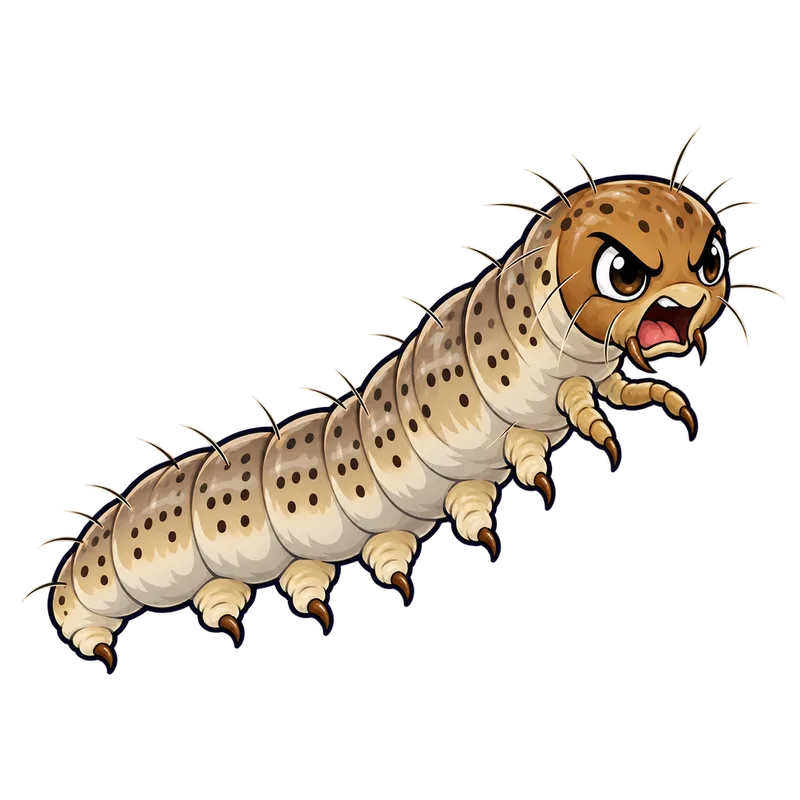
Stand there and watch the area continuously for about 10 minutes. If sod webworms are present, the soapy water irritates their silken burrows and forces them to scramble to the surface. You will usually see small caterpillars reaching up to three-quarters of an inch in length, typically dirty-white, light green, or brownish, dotted with distinct dark spots along their bodies and finished off with a hard brown or black head capsule.
You can also look closely at the grass blades themselves. Webworms clip the stems just above the soil line and drag them back into the thatch, leaving behind ragged, notched tips and tiny green pellet droppings known as frass. If your lawn feels spongy or loose underfoot, almost like a worn-out foam mattress, that texture often points to a heavy accumulation of thatch combined with active silken tunnels. Treatment is generally justified if your soap flush drives 15 or more larvae up to the surface within that single square yard test zone.
What usually comes next
Finding a high count of caterpillars on your lawn leads straight to one major practical decision, and timing makes all the difference here. If you catch the infestation early while the larvae are still small, you have a solid window to use biological controls like Bacillus thuringiensis, a naturally occurring soil bacterium. That option only works if the caterpillars actually ingest the product on the grass blades, and by the time the larvae grow large and mature, they simply become resistant to it.
When you decide to treat the lawn with an insecticide, how you apply it matters just as much as what you use. Webworms are nocturnal grazers that feed strictly at night, so foliar sprays should always go down in the early evening. Most importantly, do not water your lawn and do not mow for 1 to 3 days after applying caterpillar treatments. Unlike treatments for root-feeding white grubs, which require a heavy post-application watering to push the product into the soil, webworm treatments need to stay right on top of the grass leaves so the caterpillars ingest them during their late-night snack.
You can also discourage future webworm invasions through basic cultural care. Keeping your mowing height above 2.5 inches gives the turf enough resilience that it rarely suffers catastrophic damage. If your thatch layer exceeds half an inch in thickness, plan to dethatch in the spring or early fall, since a thick mat of dead organic matter acts like a luxury hotel for burrowing caterpillars. Avoid dumping heavy nitrogen fertilizer onto your grass in the spring, which only forces out soft, succulent growth that acts like a dinner bell for pests.
When to get help
Pesticides are strictly regulated by federal and state laws, meaning the product label is the final legal authority on how much you can use, what personal protective equipment you need, and how long you must wait before letting people or pets back onto the grass. Synthetic pyrethroids and other broad-spectrum insecticides are extremely toxic to aquatic life, so you must never apply them near storm drains, ponds, or standing water. If your lawn includes flowering weeds that attract foraging bees, you also have to watch out for pollinator safety and avoid treating those areas while bees are active.
Homeowners dealing with massive commercial landscapes, sprawling athletic fields, or infestations requiring restricted-use chemicals should hand the job over to a licensed professional applicator. If you notice birds, skunks, or raccoons tearing up your turf looking for a meal, remember they are hunting for grubs or caterpillars beneath the surface. Native wildlife, nesting birds, and visiting bats are protected under regional wildlife laws, and you cannot legally trap, handle, or relocate them without explicit authorization from your state or provincial fish and wildlife agency.
Should anyone experience unusual skin irritation or suspected bites while working in the yard, do not attempt to diagnose or treat the reaction at home. Contact a clinician, your local urgent care center, or poison control right away for professional medical guidance.