
How do you get rid of carpet moths in the UK?
Getting rid of carpet moths requires a systematic combination of deep physical extraction, environmental clearing, and targeted treatments. Success depends on whether you tackle the issue early with intensive DIY methods like thorough vacuuming or call in specialized support for widespread infestations.
What is actually going on
You pull a heavy armchair away from the wall to vacuum, and instead of finding the usual dust bunnies, you spot bare threads and tiny little brown cases that look strangely like grains of rice crawling across the carpet. That sinking feeling sets in because you realize you are sharing your living room with textile pests. Getting rid of carpet moths in the UK is rarely about a quick spray of a can. It takes a systematic combination of deep physical extraction, environmental clearing, and targeted treatments, because the visible bugs are usually just the tip of the iceberg.
The truth is that you are probably dealing with the larvae of either the webbing clothes moth or the case-bearing clothes moth, though hungry carpet beetle larvae can leave behind identical destruction. Adult moths do not actually eat your expensive wool rug or fitted carpet. They lack functional mouthparts, meaning their only job is to flutter around, mate, and lay microscopic eggs. The heavy lifting of destruction is left entirely to the worm-like larvae, which possess specialized chewing mandibles designed to digest animal proteins like keratin.
If your carpets are made of pure synthetics like nylon or polypropylene, you might wonder why they are suffering. Clean synthetic fibers are completely indigestible to these larvae. However, larvae will happily chew straight through a synthetic blend or a nylon carpet if it happens to be seasoned with spilled tea, gravy, pet dander, or sweat. Think of a clean wool fiber as plain unsalted rice, whereas a wool sweater or carpet stained with spilled food or body oils is a fully stocked gourmet buffet packed with the trace vitamins and salts larvae desperately crave.
Modern British homes accidentally make this problem worse. Widespread double glazing and central heating keep indoor microclimates warm year-round, which shortens breeding cycles and allows these pests to multiply across multiple generations instead of following a single outdoor seasonal cycle. Furthermore, traditional architectural quirks like disused chimney flues and loft spaces containing old bird nests act as permanent breeding grounds. Those nests continuously supply a fresh wave of larvae that march straight down the flue and into your living areas.
How to tell for sure
Figuring out what is chewing your flooring usually starts with looking at the debris left behind. Webbing clothes moth larvae spin silken feeding tubes and sheets across the surface of the carpet, hiding underneath while they graze. Case-bearing moth larvae take a different approach by building a portable, open-ended cylindrical case out of silk and carpet fragments, dragging it around like a tiny tailored sleeping bag. If you spot what looks like moving grains of rice on your wool pile, you have usually found the case-bearers.
Carpet beetles operate differently because they do not spin silk at all. Their chunky, bristly larvae, commonly known as woolly bears, leave behind distinctive dry, papery cast skins that look like hollow husks. As these larvae grow and shed, those discarded husks are usually the very first visible clue that you have an infestation, long before you notice any bald patches on your floor.
You also need to know the difference between larval waste and eggs, since homeowners often mix them up. Larval frass consists of hard, opaque, granular fecal pellets that match the color of the carpet fiber they just ate, resembling coarse grains of pepper. Actual moth eggs are microscopic, soft, and translucent, acting more like tiny fragile water balloons that easily pop or crush under physical contact. If you find hard pepper-like grains tucked along your skirting boards, you are usually looking at frass.
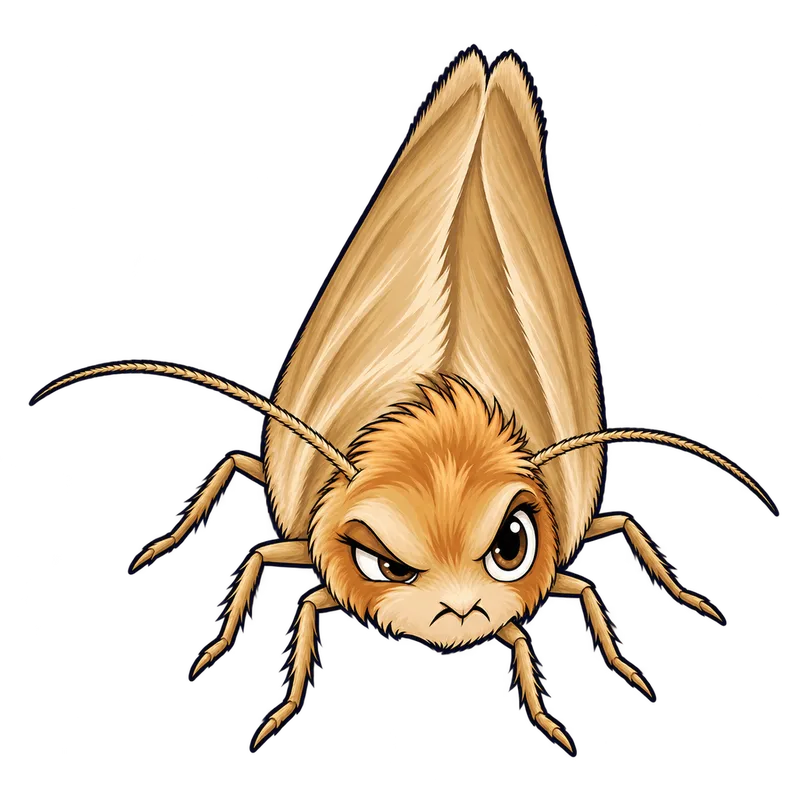
Adult appearance offers another clue, though it rarely tells the whole story. Webbing clothes moths usually measure about five to eight millimeters long, displaying a golden-fawn sheen with a distinctive reddish-orange tuft of hair on their head. Case-bearing adults are a dull silvery-grey with three faint dark spots on their wings. If you spot small insects scuttling away rather than flying when you turn on the light, you are usually dealing with clothes moths that prefer to run and hide in dark corners.
What usually comes next
When you confirm that textile pests have taken hold, your most important practical decision is whether to tackle the issue through intensive physical intervention or to call in specialized support. DIY eradication usually succeeds only when caught early and focused on the physical source. This means pulling back fitted carpet edges if necessary, stripping away accumulated lint, and getting deep into the dark perimeters where pests thrive.
Vacuuming alone will not solve the problem if you leave the source untouched, but it remains your strongest immediate weapon. You need to vacuum along every skirting board, underneath heavy sofas, and behind radiators using a narrow crevice tool to suck up hidden eggs and larvae. The crucial rule here is immediate disposal. The moment you finish, seal that vacuum bag tightly and throw it into an outside wheelie bin, otherwise the surviving larvae will simply crawl right back out of the canister and return to your carpets.
Many people reach for aerosol bug bombs or total-release foggers out of frustration, but that is generally a waste of money. Foggers create a fine mist that drops floating adults out of the air, but the insecticide spray fails completely to penetrate dense carpet pile, heavy furniture weight, or the protective silken tubes where the damaging larvae hide. Traditional mothballs containing naphthalene or paradichlorobenzene are also off the table because they are banned under UK biocide regulations, and open-room repellents simply dissipate before they can kill anything.
If you have movable wool rugs or infested garments, thermal control offers a reliable chemical-free path forward. Freezing items inside a sealed heavy polyethylene bag at negative eighteen degrees Celsius for fourteen days kills every single life stage from egg to adult. When you take the bag out, leave it sealed for a full day so the item slowly warms up to room temperature, preventing indoor condensation from ruining delicate fibers.
When to get help
There are moments when standard home remedies will not cut through an infestation, and recognizing those limits saves you time and money. You should involve a professional pest control technician if the infestation spans multiple rooms, reaches deep into building structural voids, or originates from inaccessible locations like a tall chimney flue or a loft space packed with old bird debris. Properties with high-value historic wool textiles or antique Persian rugs also require commercial assistance, as these items often need specialized humidity-controlled heat chambers or industrial freezing facilities rather than standard DIY methods.
Safety concerns around chemical treatments also demand caution. You should never apply residual indoor insecticides directly onto clothing, bedding, or pet sleeping areas, as skin contact or inhalation can lead to acute chemical exposure and irritation. If anyone in your household experiences persistent allergic reactions, unexplained skin rashes, or respiratory distress that you suspect might be linked to pest exposure or chemical treatments, stop what you are doing and consult a clinician immediately.
If you or someone in your home accidentally swallows an insecticide or suffers adverse physical symptoms from misapplied chemical sprays, do not wait. Call the NHS on one one one or reach out to poison control services right away for professional medical guidance. Letting professionals handle widespread or chemically complex infestations keeps your home safe and ensures the root of the problem is finally extinguished.