
How do you deal with small moths in a pantry?
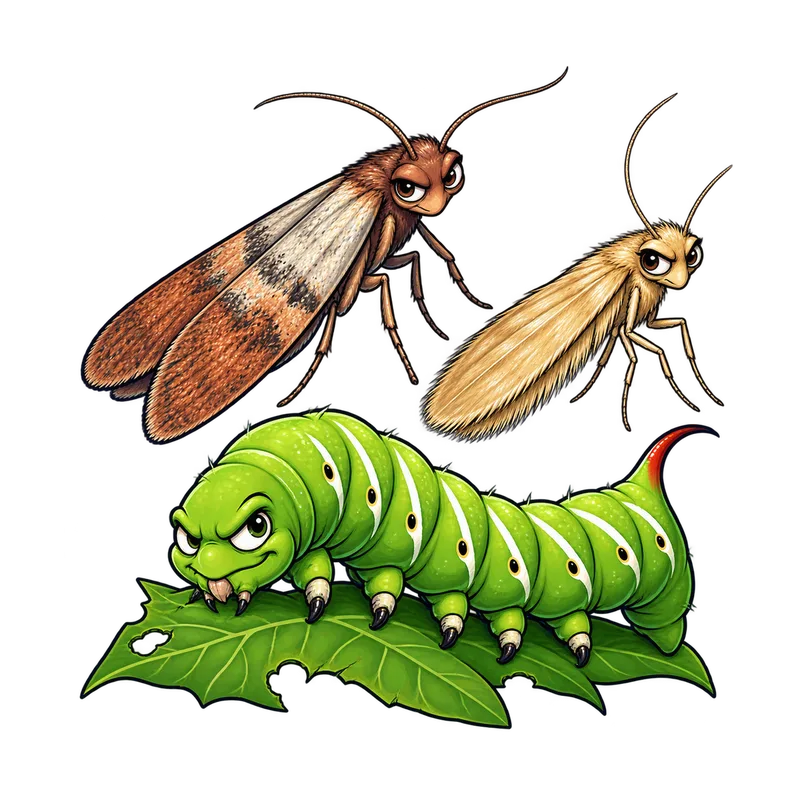
Dealing with Indian meal moths in a pantry requires locating and discarding every infested food item, scrubbing down the shelves to clear hidden eggs, and moving uninfested dry goods into hard containers. Half measures fail, so you must empty the entire pantry completely and inspect every package of dry goods you own.
What is actually going on
You reach for the bag of flour tucked away in the back of the cupboard to bake a weekend pie, and something flutters out of the darkness, landing lazily on the kitchen wall. It is a small moth, pale gray at the top with a coppery, metallic sheen near the bottom of its wings. You wave it away, thinking nothing of it, until you open the cereal box the next morning and find tiny, sticky webs clinging to the flakes.
You are dealing with stored-product pests, usually known as Indian meal moths. Managing them successfully requires a bit of detective work and some unglamorous housekeeping. You have to locate and discard every infested food item in the pantry, scrub down the shelves to clear out hidden eggs, and shift all your uninfested dry goods into hard containers that chewing caterpillars cannot breach.
It is easy to assume that leaving the pantry doors open or spraying a bit of household bug killer will clear the air, but neither approach gets to the root of the problem. Adult moths do not actually eat your groceries because they lack functional mouthparts. Their only job is to flutter around, mate, and lay hundreds of microscopic eggs on or near suitable food sources. The real damage, and the messy webbing you are seeing, comes entirely from the hungry caterpillars that hatch out of those eggs.
How to tell for sure
People often worry that a moth in the house means their woolen sweaters are about to be devoured, but pantry moths and clothes moths are entirely different insects. Indian meal moths usually measure around five-eighths to three-quarters of an inch long when resting, and their wings look like they were dipped in two different paint colors. The half closest to the head is a pale cream or gray, while the outer two-thirds is a distinct coppery bronze or reddish-brown.
Clothes moths, on the other hand, are smaller and usually a uniform, dull golden-buff or silvery-gray without any copper markings. They avoid light and care only for animal fibers like wool, silk, or feathers, meaning they will never bother your flour or rice. If you find small moths hovering around the kitchen or settling on cereal boxes, you are usually looking at pantry pests, not wardrobe hazards.
You will also find distinct signs in the food itself. As the caterpillars feed on grains, nuts, spices, pet food, or dried fruit, they spin silken threads that trap tiny bits of food and dark waste pellets. If you notice a box of oatmeal that looks clumpy, or fine dust spilling out from a leaky package seam like sand from a pinprick, you are usually seeing the handiwork of pantry moth larvae rather than a random spoilage issue.
What usually comes next
Once you confirm you have pantry moths, you have to make a choice about how far you are willing to go with your cleanup, because half-measures simply do not work here. You can throw away the obviously ruined cereal and wipe the shelf, but if you leave a single open box of crackers in the cupboard, the cycle will start all over again. The single most effective decision you can make is to empty the entire pantry completely and commit to inspecting every single package of dry goods you own.
This means pulling out the pet kibble, the forgotten bags of holiday spices, the baking supplies tucked behind the canned goods, and even the decorative birdseed in the garage. Anything showing the slightest sign of webbing, tiny holes in the plastic, or suspicious clumping needs to go straight into a heavy plastic trash bag and out to the bin.
After you throw out the compromised items, you need to change how you store the survivors. Flimsy cardboard boxes and thin plastic wrap are no match for hungry caterpillars, which can chew right through them. Shifting your uninfested dry goods into airtight glass, metal, or heavy rigid plastic containers with tight-fitting rubber gaskets is the only reliable way to keep future pests out. If you skip this containerization step, any new groceries you bring home will just become the next nursery.
When to get help
Most pantry moth infestations can be resolved with thorough sanitation and secure storage, but there are times when you need outside backup. If you have cleaned every shelf, thrown out compromised food, and locked everything into glass jars, yet moths keep appearing month after month, the breeding source is usually hiding somewhere out of reach. This happens when larvae crawl away from the food and pupate deep inside structural wall voids, behind cabinet trim, or within subfloor spaces where household cleaning tools cannot reach.
You should also look for professional pest management help if the problem spans multiple apartments or units in a shared building, where insects travel freely through utility chases and shared wall cavities. On the health and safety front, pantry moths do not bite or transmit human diseases, but the heavy accumulation of larval webbing, shed skins, and frass can trigger allergic reactions, skin irritation, or respiratory discomfort in sensitive individuals who inhale or handle heavily contaminated foods.
Keep an eye out for unusual invaders, too. If you ever find hairy, scarab-like larvae or brown beetles with dense bristles in imported grains or bulk commodities, you could be looking at a regulated quarantine pest like the Khapra beetle, whose barbed hairs can cause severe skin and digestive issues. Any suspected encounter with high-risk agricultural pests belongs in the hands of local agricultural authorities or professional exterminators rather than a simple weekend cleanup.