
Are plaster bagworms harmful to people?
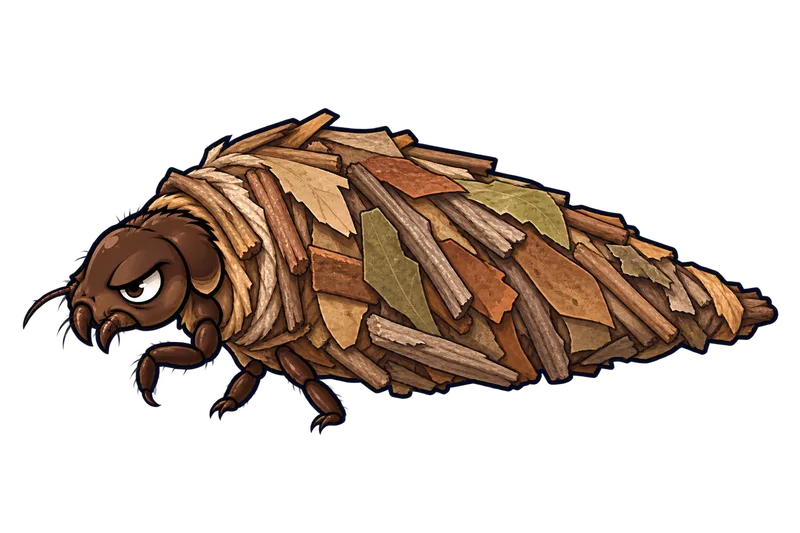
No, plaster bagworms are harmless to people and pets. The caterpillars cannot bite, sting or carry disease, and the adult moths do not feed at all. Seeing them on a wall is mostly a sign of damp air or hidden mold, since the larvae graze on mold spores, cobwebs, skin flakes and dust.
What is actually going on
You walk into the bathroom to brush your teeth, glance up at the pale wall above the baseboard, and spot what looks like a stray piece of grey lint stuck to the paint. An hour later, you walk past the same spot and notice the little speck has moved an inch to the left. Before you start worrying about what kind of exotic invader has just moved into your house, you can relax. Plaster bagworms, also known as household casebearers, are completely harmless to people and pets. They do not bite, they do not sting, and they do not carry diseases.
Those tiny moving sacks are actually the portable protective homes of small caterpillars. Inside that flat, grey shelter lives a slow-moving larva that drags its little sleeping bag everywhere it goes. When people first see them inching up a damp bathroom wall or across a basement floor, the common assumption is that these insects are eating the drywall or looking to feast on human blood. In reality, the caterpillar is just grazing on microscopic mold spores, stray cobwebs, shed human skin flakes, and old bits of insect dust left behind in neglected corners.
The adult moths that eventually emerge from these cases have mouthparts that do not work, meaning they do not bite, chew, or feed at all. Their only job is to reproduce and start the cycle over in another dark, undisturbed crack. If you find a few of them clinging to a wall, you are not dealing with a medical emergency or a dangerous infestation. You are simply looking at an insect that prefers living in quiet microenvironments where the air stays heavy with moisture.
While the bugs themselves cannot hurt you, their presence is usually trying to tell you something useful about your house. Plaster bagworms need high relative humidity to survive and thrive. If you are seeing them regularly, your home likely has a localized moisture issue, poor ventilation in a bathroom, or a damp wall where mold is quietly growing just out of sight. Think of them less as a pest to fear and more as a biological indicator that tells you where your house is holding onto too much water.
How to tell for sure
Spotting a plaster bagworm usually comes down to recognizing its very distinctive architecture. The case is typically six to 13 millimeters long, shaped remarkably like a tiny, flattened pumpkin seed or a squashed grain of rice. It is woven from tough silk and camouflaged with whatever raw materials the caterpillar happens to find nearby, which usually means fine plaster dust, paint flakes, microscopic soil particles, and stray grey lint from carpets.
The color usually matches whatever background the insect has been crawling across, ranging from chalky white to dusty grey or pale tan. When the caterpillar wants to move, it pokes its head and its first three pairs of tiny, dark legs out of one end of the case and drags the entire heavy structure along the wall. If you gently touch the case or startle the insect, the caterpillar quickly yanks its head back inside and retreats into safety, leaving behind what looks like an inanimate bit of trash glued to the plaster.
You can usually tell these cases apart from clothes moth damage by where you find them. Plaster bagworms prefer hard, vertical surfaces like plastered walls, masonry blocks, concrete, and baseboards, especially in high-humidity rooms like laundry areas, bathrooms, and unventilated basements. If you check woolen sweaters hanging in a well-ventilated bedroom closet, you are usually looking at a different fabric pest altogether, even though the broader family of tineid moths shares similar habits.
One common point of confusion involves mysterious skin irritation or red marks that people occasionally blame on plaster bagworms. Because the caterpillars lack biting mouthparts, venom glands, and any way to pierce human skin, they are physically incapable of biting you in your sleep. If you wake up with itchy bumps, the culprit is usually something entirely different, such as unseen fleas, bed bugs, mites, or a reaction to household detergents, rather than the harmless little grey pods crawling up your drywall.
What usually comes next
Once you have figured out what is actually on your wall, your main practical choice comes down to picking between a quick surface cleanup or rolling up your sleeves to fix the actual environmental conditions that invited them inside. If you simply scrape the cases off the paint or vacuum them away without sorting out the room humidity, you are treating the symptom instead of the root cause. Those little grey pods will keep showing up as long as the air stays damp and microscopic mold keeps growing on the surfaces.
To make a real dent in the population, you should begin by dropping the relative humidity in the problem areas. Running a dehumidifier in the basement, keeping the bathroom fan spinning after a hot shower, or pulling heavy furniture away from the wall to improve airflow will dry out the microclimates where the larvae live and starve them of mold. Combine that change with a thorough vacuuming along the baseboards, crown molding, and dark corners to pull up stray lint, dust, and any remaining cases.
If you are tempted to run out for chemical sprays to treat your living room walls, stop and think about it for a second. Insecticide sprays are generally ineffective against plaster bagworms if the room stays humid, and product labels strictly forbid spraying chemicals across interior living areas, bedding, or clothing. Vacuuming up the physical debris and drying out the air will accomplish far more than any bottle of spray ever could, keeping your space clean and naturally hostile to case-building insects.
When to get help
Plaster bagworms are almost always a simple weekend housekeeping annoyance, but there are a few specific situations where you should hand the job over to a professional. If you or someone in your house deals with severe asthma, stubborn allergies, or chronic skin irritation that flares up around dusty indoor areas, those shed silken cases and mold spores can act as real mechanical irritants. For unexplained medical symptoms, skin rashes, or breathing trouble, you should always talk to a clinician or visit an urgent care clinic instead of trying to guess an insect reaction at home.
You should also look for outside help when these bugs are not just a minor seasonal nuisance in the bathroom, but a sign of a deeper structural problem in your house. If you are finding heavy, widespread concentrations of plaster bagworms across multiple rooms, it usually points to chronic moisture issues, hidden roof leaks, faulty plumbing behind the drywall, or poor crawlspace ventilation. When that happens, calling in a building contractor or a licensed pest control operator is the smartest way to find the hidden water source and protect your home framing from damage.