
What are forest tent caterpillars?
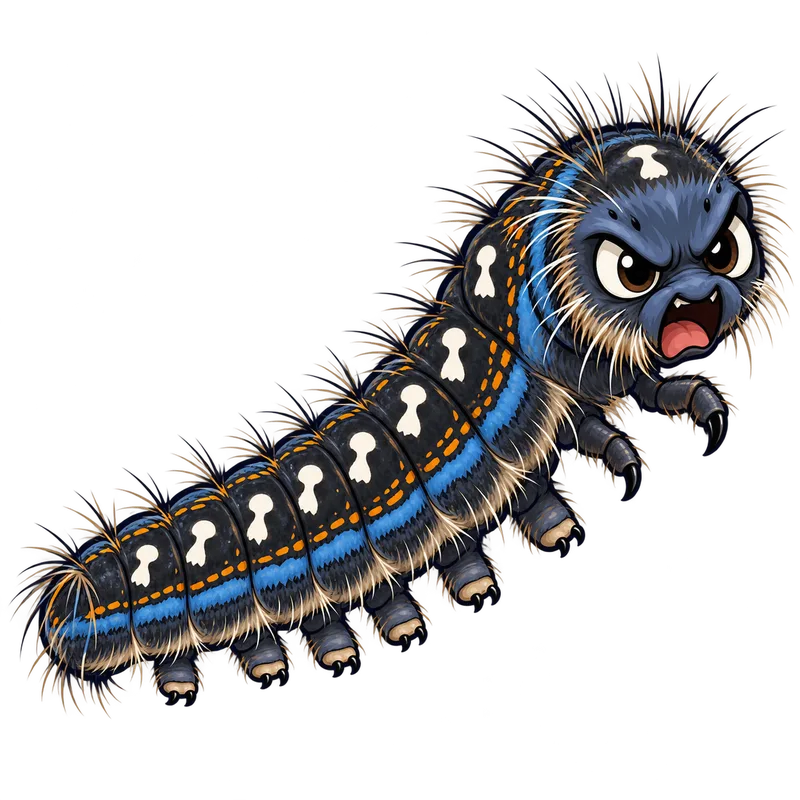
Forest tent caterpillars are native North American moth larvae that feed on broadleaf deciduous trees, though unlike their web-building cousins, they do not actually spin silken tents. These dark, stout-bodied larvae grow up to 1.5 inches long and are marked by a row of white spots down their backs.
What is actually going on
You walk out to inspect the maple tree in the front yard one sunny morning in May, and half the canopy looks oddly see-through. Closer inspection reveals hundreds of fuzzy, dark caterpillars crawling along the bark and stripping the remaining leaves down to the bare veins. Naturally, you might wonder if you are dealing with a local invasion of nest-building pests, especially when neighbors mention tent caterpillars.
The forest tent caterpillar is a native North American moth larva that loves broadleaf deciduous trees, but despite its common name, it does not actually build a tent. It belongs to the same family as the eastern tent caterpillar, which is famous for spinning thick, silky web-nests in the crotches of fruit tree branches. Our forest dweller, however, refuses to build a silken home. Instead, it gathers in flat, open mats on the bark of tree trunks or large branches to rest and molt, leaving those communal resting sites to feed individually or in groups on the canopy foliage during the day.
You will typically find them targeting a wide variety of hardwoods like oaks, maples, birches, ashes, elms, and fruit trees such as apples and cherries. Populations of this insect tend to rise and fall in sporadic outbreak cycles. In most years, natural predators, parasitic flies, and disease keep numbers quietly in check, but every so often local populations surge, causing widespread defoliation that can make a healthy tree look surprisingly ragged by early summer.
How to tell for sure
If you are trying to figure out which caterpillar is marching across your trees, look closely at their habits and resting places. The easiest way to tell forest tent caterpillars apart from their web-building cousins is the complete absence of a silken tent in the tree branches. If you spot large, dense silk bags wedged in the fork of a branch, you are usually looking at eastern tent caterpillars or fall webworms rather than the forest tent variety.
Forest tent caterpillars are generally stout-bodied larvae, dark in color, often marked with a row of keyhole or footprint-shaped white spots running down their backs and pale blue stripes along their sides. When they are not up in the canopy chewing on leaves, they usually congregate in loose, overlapping layers on the flat silken pads they spin directly onto the trunks or main limbs of the host tree.
You can also check the twigs during the dormant fall and winter months. The overwintering stage consists of dark, varnished egg masses wrapped tightly in bands around small twigs and branches. Spotting these encrusted bands before the spring bud break gives you a reliable preview of what will hatch once the weather warms up.
What usually comes next
Deciding how to handle a leaf-stripping event usually comes down to the condition of the tree and the size of the pests. A healthy, mature hardwood can typically survive one year of heavy defoliation without permanent damage, since these trees store enough energy to push out a brand-new set of leaves later in the season.
If you choose to act because the tree is a prized ornamental or an orchard fruit producer, timing is everything. Biological treatments and bacterial sprays perform best when the larvae are tiny and freshly hatched in early spring. Once those caterpillars grow past 1.5 inches long and near full size, basic sprays stop working well because older larvae eat less and tolerate treatments much better.
When you find them bunched up on the lower bark while resting, you can sweep them directly into a bucket of warm, soapy water for a quick fix. Never try to burn them off the trunk with a torch or open flame. Scorching the bark causes terrible heat damage to the tree, harming the living tissue underneath far worse than any caterpillar ever could.
When to get help
Certain scenarios mean it is time to step back and let a professional take over. If your yard holds giant shade trees where the invasion reaches high into the upper branches, stay off the ladder and skip risky DIY spraying. Operating high-pressure equipment and wearing proper protective gear safely in large trees is a job for a certified arborist or a licensed applicator.
On the health front, keep in mind that touching these caterpillars can lead to physical trouble. The fine, bristly hairs and molted skins of the larvae can cause skin irritation, rashes, or allergic contact dermatitis in people with sensitive skin. If you experience bad skin reactions, get stuff in your eyes, or swallow any accidentally, reach out to a doctor, an urgent care facility, or your regional poison control center immediately.
Lastly, if you intend to apply store-bought chemical insecticides to fruit trees in your garden, always check the product label for waiting periods and safety rules. When you feel unsure about local pest rules or whether a weak tree can handle multiple years of heavy defoliation, your local agricultural extension office or forestry agency can offer advice tailored to your area.