
What should you do if you find oak processionary moth caterpillars?
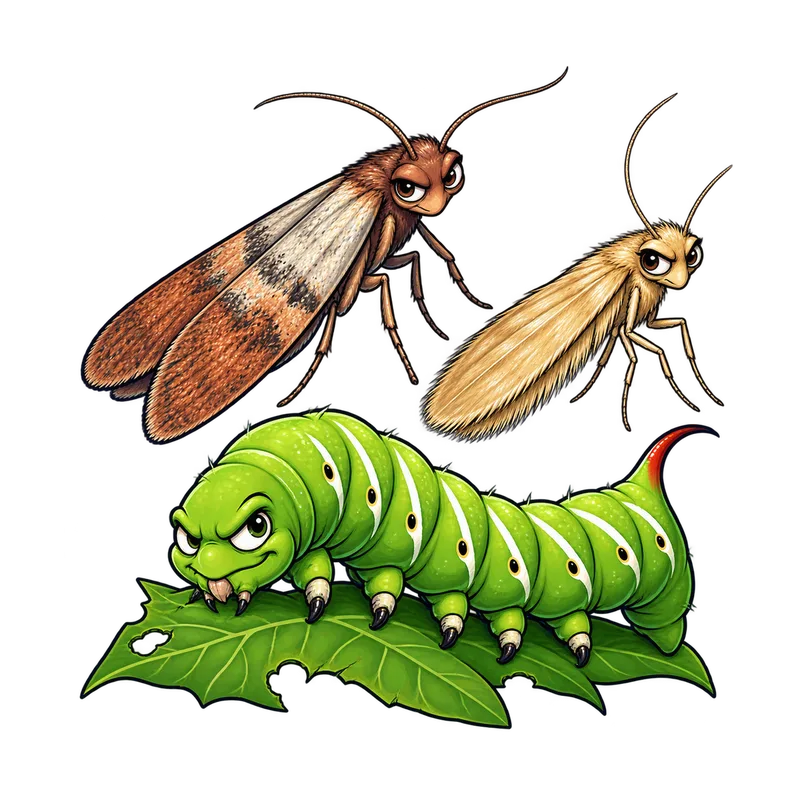
If you find oak processionary moth caterpillars, do not touch them, keep people and animals away, take a photo from a safe distance, and report the sighting to the plant health authorities. The caterpillars are covered in fine toxic hairs that cause allergic skin rashes, eye irritation, and breathing trouble.
What is actually going on
You are walking the dog through the park on a spring morning and notice something odd on the trunk of an old oak: a line of hairy caterpillars moving head to tail, one behind the other, like a slow little train. Higher up there is a patch of white silk stuck flat against the bark. The dog wants a closer look. So, honestly, do you.
Don't. If those are oak processionary moth caterpillars, the right response is short: do not touch them, keep people and animals away, take a photo from a distance and report it to the plant health authorities. That is the whole plan, and the rest of this article is about why it is the plan.
The oak processionary moth is a regulated quarantine pest. In Great Britain it has a limited foothold since it first arrived in 2007, and in Northern Ireland it is treated as a pest that must be kept out entirely. That legal status is the reason reporting matters: every sighting helps officials contain it.
The other reason is the hairs. The caterpillars are covered in fine hairs that carry toxins and cause allergic reactions. Touching them can bring on skin rashes, and the hairs also come loose and drift in the air, where they can irritate eyes and airways. People, dogs and horses can all react. The hairs stay active long after the caterpillars have moved on, packed into old nests and scattered in the leaf litter under the tree.
How to tell for sure
Three clues point to oak processionary moth. The first is the host: it feeds almost entirely on oak. The second is the behavior that gives it its name, those nose to tail processions across trunks, branches or the ground beneath the tree, seen in winter and early spring. The third is the nests, dense silk built directly onto the trunk or main branches, white at first and turning brown with age, which appear from late spring into summer.
The tree species is the quickest way to rule it out. Processions and silk nests on pines, cedars or larches point to a relative, the pine processionary moth, which attacks conifers. Silk tents tucked into the forks of cherry, apple or crabapple trees in North America are far more likely to be eastern tent caterpillars, a common native pest and not a quarantine species. In the United States, it also has to be told apart from familiar species that build webs or carry hairs of their own, such as forest tent caterpillar, spongy moth and buck moth.
That said, you do not have to be certain before reporting. A clear photo taken from a safe distance with your phone's zoom is exactly what the authorities need to make the call. Egg masses are much harder to spot, flat rectangular plaques on thin outer branches, usually high in a mature tree and easy to miss without binoculars.
What usually comes next
Report it. In England and Wales, contact the Plant Health and Seeds Inspectorate. In Scotland, contact Science and Advice for Scottish Agriculture. In Northern Ireland, contact the Department of Agriculture, Environment and Rural Affairs. In the United States, your local university extension diagnostic clinic or state department of agriculture is the place to start, and in other countries the national agriculture or forestry agency handles quarantine pests.
While you wait, keep children, pets and livestock well away from the tree and the ground underneath it.
Resist the urge to deal with it yourself. Knocking the nest down with a hose, burning it or pulling it off with gloves are all common reflexes, and all of them break up the silk and throw toxic hairs into the air, which is worse than leaving it alone. Even an old, brown, apparently empty nest is still loaded with hairs. Gloves are not protection here: the advice is not to handle caterpillars, egg masses or nests at all.
If the tree is in your own garden, removal is a job for certified arborists or licensed applicators with proper protective equipment and training in hazardous material. Report first, and let the authorities guide what happens next.
When to get help
If anyone touches the caterpillars or gets hairs on their skin or in their eyes, do not rub the area. Rinse the skin thoroughly with water. If a rash, eye irritation or breathing trouble follows, contact a physician, an urgent care clinic or poison control, which in the United States is 1-800-222-1222.
Call emergency services, 911 in the United States, straight away if someone has serious difficulty breathing or signs of a severe allergic reaction.
Take pets to a veterinarian if they have been near a nest or the caterpillars and show any sign of irritation.
The rule is simpler than the biology: hands off, distance, photo, report.