
Household casebearer vs plaster bagworm: are they the same?
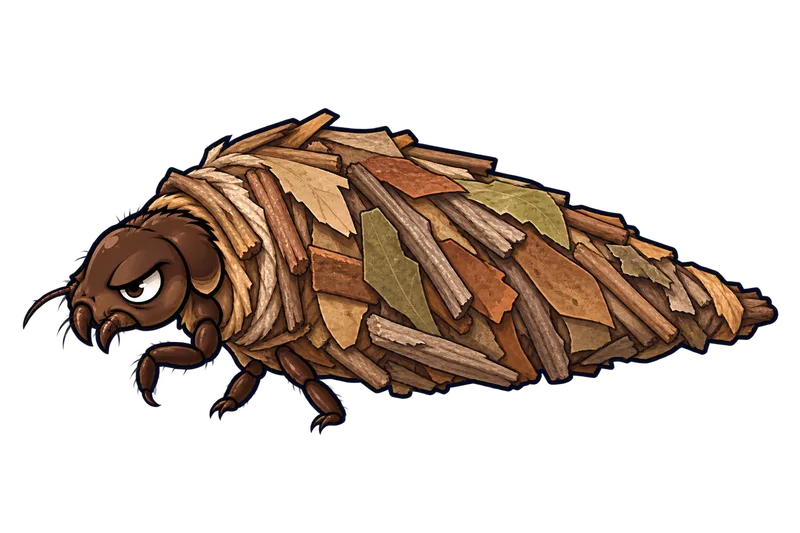
Household casebearer and plaster bagworm are the exact same wall crawling creature in everyday conversation across warm and humid southern regions, scientifically known as Phereoeca uterella. Whether you call it by either name depends on your location, because northern textbooks and entomologists often use casebearer to describe a completely different fabric eating pest.
What is actually going on
Imagine walking down your hallway on a humid afternoon and spotting what looks like a tiny, dirty grain of rice slowly crawling up the white plaster wall. You lean in closer, and you realize it is actually a miniature pouch made of dust and silk, with a small caterpillar poking its head out to haul the whole thing along. Naturally, you wonder what you are looking at and whether it is going to chew through your wardrobe.
People use the names household casebearer and plaster bagworm interchangeably in everyday conversation, especially across warm and humid southern regions. In local terms, both names point right to the same wall-crawling creature, which is scientifically known as Phereoeca uterella. This little caterpillar builds a flat, pumpkin-seed-shaped or diamond-shaped protective case out of silk, lint, dust, and tiny paint flecks. It drags this shelter wherever it goes, feeding on spider webs, shed insect skins, and fungal spores rather than munching on your clean clothes.
Strictly speaking, though, entomologists and university extension guides often separate these terms. In broader literature and colder northern states, the word casebearer usually refers to a completely different pest, the casemaking clothes moth. That relative builds a cylindrical, tubular case out of fabric fibers and spends its time hiding in dark closets, chewing holes in wool sweaters, feathers, and carpets. So while your southern neighbor calls the wall-crawling creature a plaster bagworm and a northern textbook calls a closet dweller a casebearer, the two names blur together in popular speech even though the insects prefer different menus and different addresses.
How to tell for sure
Figuring out which critter you are dealing with usually comes down to looking at where you find it and what kind of case it carries. If you spot a flat, grey, seed-shaped pouch crawling slowly across a painted wall, bathroom tile, or baseboard, you are looking at the plaster bagworm or household casebearer. These larvae generally stick to smooth structural surfaces and feed on household dust, cobwebs, and microscopic organic debris. They rarely damage your textiles.
If you find a cylindrical, open-ended tube made of wool fibers tucked away in a dark corner of a closet or inside a storage box of winter blankets, you are usually dealing with the casemaking clothes moth. Those larvae drag their tubular cases across your garments while they graze, leaving behind irregular holes and tiny, hard, opaque fecal pellets that match the color of the fabric. People often mistake those sand-grain-sized droppings for moth eggs, but actual moth eggs are microscopic, soft, and translucent.
Another useful clue is what the adult insects do when you disturb them. Adult clothes moths have non-functional mouthparts and never cause damage, but they flutter about with a nervous, erratic flight and prefer dark, quiet spaces. If you see tiny moths flitting around kitchen ceiling lights or pantry shelves, you are usually looking at pantry pests rather than fabric or plaster casebearers, because clothes moths actively avoid bright light.
What usually comes next
When you discover these cases around the house, your first practical choice is to decide whether you need to run a major cleaning campaign or just grab a vacuum. If you are dealing with wall-crawling plaster bagworms, they are mostly an aesthetic nuisance pointing to high indoor humidity or dusty corners rather than an active threat to your wardrobe. Thorough vacuuming along baseboards, window frames, and ceiling corners usually keeps their numbers down by removing the stray dust, hair, and cobwebs they rely on for food.
If you find evidence of casemaking clothes moths chewing up your woolens, your response needs to focus on your stored textiles. Start by inspecting vulnerable items like wool sweaters, felt hats, and old blankets kept in dark, undisturbed chests. Empty out the affected closets completely, and vacuum every crack, crevice, and shelf to suck up hidden larvae, lint, and eggs.
For washable garments showing damage, a hot wash cycle or a high-heat tumble drier will kill every life stage. If you have delicate woolens or heirlooms that cannot handle hot water, sealing them in a plastic bag and placing them in a chest freezer at zero degrees Fahrenheit for at least 72 hours does the job reliably. Just remember to let the bag warm up slowly to room temperature before opening it, which stops indoor condensation from dampening your fabrics. Avoid spraying insecticides directly onto clothing, bedding, or storage containers, because product labels strictly prohibit applying residual sprays to surfaces that touch your skin or garments.
When to get help
Most minor encounters with wall-crawling cases or closet moths respond well to basic sanitation, vacuuming, and thermal treatments like washing or freezing. However, some situations call for outside help. If an infestation has spread extensively through hidden wall voids, underneath wall-to-wall carpeting, or across multiple rooms in a larger building, do-it-yourself spot treatments will likely fall short.
You should also consult a professional pest control operator when dealing with high-value antique wool rugs, historical tapestries, valuable furs, or museum collections, which require specialized commercial freezing chambers or controlled-humidity heat treatments to avoid ruining the materials. Any structural interventions involving pressurized dust injections into wall voids, space treatments, or whole-house fumigation must be handled strictly by a licensed pest control applicator. If you notice unusual skin irritation that you suspect comes from contact with insect debris or larval hairs, consult a healthcare clinician for proper guidance.