
Why are clothes moths returning after adult moths are trapped?
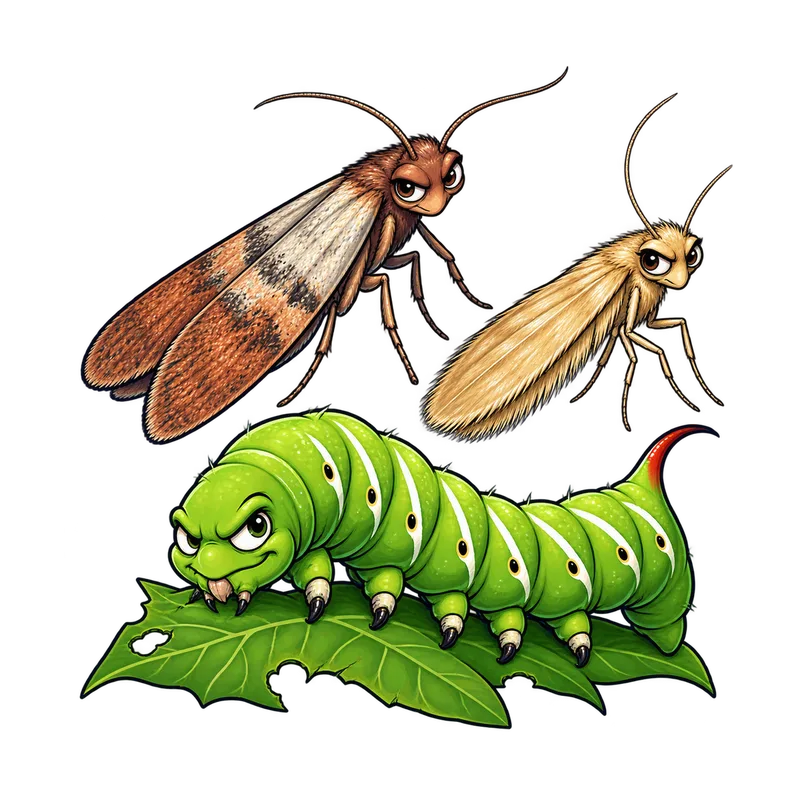
Clothes moths are returning because sticky pheromone traps only catch adult male moths and cannot stop the hidden larvae that actually chew holes in fabric. Those traps also miss mated females that have already dropped dozens of eggs onto your garments, which hatch into a fresh wave of destructive caterpillars within days.
What is actually going on
You clear out the closet, buy a handful of sticky pheromone traps, and hang them proudly among your winter garments. Within a couple of days, you notice several tiny flyers stuck to the glue. You figure the problem is handled, but a week later, you pull out a wool sweater and find fresh, ragged holes. If you caught the flyers, why are the moths coming back?
The short answer is that those sticky traps only catch half the population, and usually the harmless half at that. Adult clothes moths have no mouthparts and cannot chew through fabric. They live strictly to mate and lay the next generation. The destruction you see is entirely the work of the hungry caterpillars, known as larvae, which stay hidden deep inside fabric folds, carpet padding, and dark corners where traps cannot reach.
Catching male moths with a sex scent lure is like setting up a speed trap on an empty stretch of highway. It picks off a few travelers, but it does nothing to stop the females that have already mated and dropped dozens of eggs onto your favorite garments. Those eggs hatch within days, and a fresh wave of larvae immediately begins grazing on natural fibers, meaning your pest problem was never actually reduced by the traps alone.
How to tell for sure
Before you change your strategy, you need to know what is actually crawling around in the wardrobe. Webbing clothes moths are usually golden-buff with a tuft of reddish hair on the head, while case-bearing moths are grayish and drag a tiny portable silken case around like a sleeping bag. Both species love animal proteins such as wool, cashmere, fur, and silk, but they generally ignore cotton and synthetics unless those garments are heavily soiled with body oils, sweat, or food spills.
People also frequently confuse clothes moths with carpet beetles. Carpet beetle larvae look like tiny, bristly, carrot-shaped brown bugs, often called woolly bears. They chew similar holes in woolens, but their adults look like small, oval beetles that spend their time outdoors feeding on flower pollen rather than flying around your indoor traps.
Another common mix-up involves small pests fluttering around ceiling lights. Clothes moths actively avoid light and prefer to scuttle in the dark, so a moth hovering near your living room lamp is usually a harmless outdoor visitor or a pantry pest rather than a threat to your wardrobe. If you happen to find hard, colored specks on your woolens, remember that is usually larval frass, which feels like hard grains of salt matching the color of the sweater, whereas true moth eggs are microscopic, soft, translucent bubbles that wipe away with a light brush.
What usually comes next
Once you accept that traps are only a diagnostic tool and not a cure, your next move has to be physical and mechanical removal. Start by hauling infested woolens, blankets, and furs out into the bright sunlight and brushing them vigorously beneath every lapel and fold. Bright light causes larvae to drop off, and physical brushing crushes delicate eggs.
For items you cannot sun, laundering in hot water or taking them to the dry cleaner will clear out active insects. If you have delicate vintage sweaters, seal them in heavy plastic bags and place them in a home chest freezer maintained at zero to minus 4 degrees Fahrenheit for at least 48 hours to kill all life stages. Allow bagged items to thaw slowly at room temperature for 24 hours before opening to ensure condensation forms on the outside of the plastic bag rather than on delicate textiles.
Vacuuming is just as vital as treating the clothes themselves. You need to pull out the heavy furniture, clean along baseboards, and vacuum the dark floors of closets where lint and pet hair collect. Always seal and take the vacuum bag straight to an outdoor trash can immediately afterward, otherwise the surviving larvae will simply crawl right back out into your home.
When to get help
Most wardrobe and textile pest issues can be managed with thorough cleaning, freezing, and proper airtight storage, but certain situations call for an outside hand. If the infestation is widespread across wall-to-wall wool carpeting or integrated into the padding of expensive upholstered furniture, standard home remedies rarely reach deep enough to stop the damage.
You should also look for a professional if you suspect persistent reinfestations are originating from hidden structural voids, such as abandoned bird or rodent nests tucked away in a chimney, an attic, or an air duct. These natural debris piles serve as massive external breeding reservoirs that keep pumping new pests into your living spaces regardless of how often you vacuum the floors.
Finally, if you are dealing with high-value antique textiles, historic garments, or museum collections, leave the treatment to specialists who utilize controlled thermal chambers or specialized methods rather than risking valuable fabrics with guesswork. Keep in mind that fabric pests do not bite or transmit human diseases, but chemical mothball vapors can cause respiratory irritation if used improperly, and residual sprays must never be applied directly to clothing or bed linens.