
Carpet beetle larvae vs clothes moth larvae: what damages fabric?
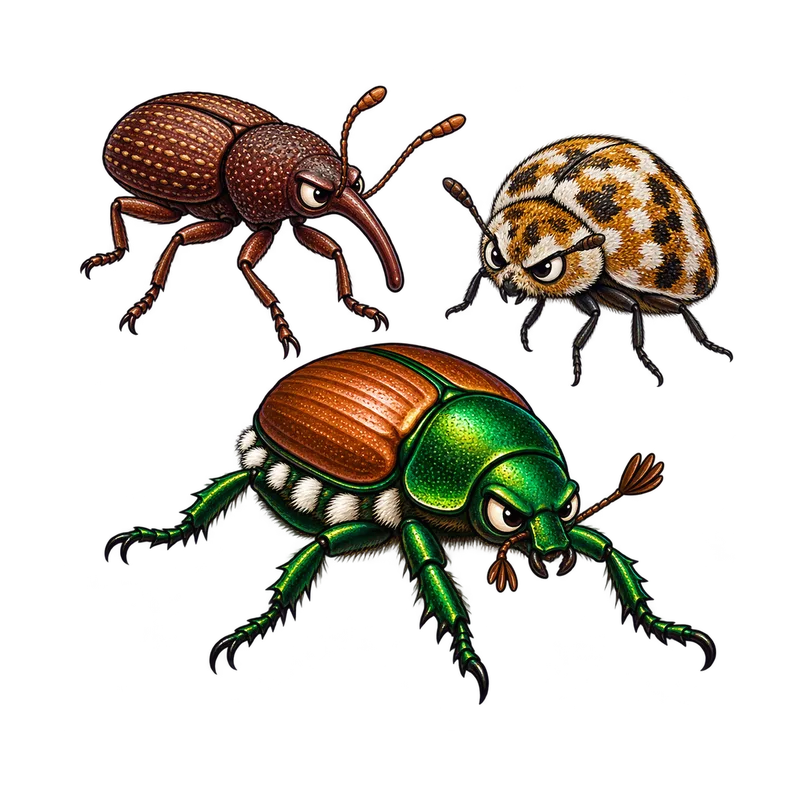
Both carpet beetle larvae and clothes moth larvae damage fabric by chewing on animal-derived materials containing keratin. Carpet beetle larvae create large single-area holes without webbing, while clothes moth larvae leave scattered irregular holes accompanied by silk tubes or cases. Adult insects of both species do not eat fabric at all.
What is actually going on
You pull that heavy winter sweater out of the back of the closet on the first genuinely cold November Tuesday, and right on the front fold sits a cluster of ragged holes. You immediately blame the flying insects you saw fluttering around the living room lamp last week, but domestic reality is rarely that straightforward. The truth is that neither adult carpet beetles nor adult clothes moths care about your wardrobe. The destruction is handled exclusively by their offspring, which are the chewing caterpillar and grub stages tucked safely away in the dark.
Adult clothes moths possess non-functional mouthparts and cannot eat anything at all, surviving just long enough to mate and lay the next generation. Adult carpet beetles do not care for your woolens either, preferring to sit on outdoor flower heads drinking nectar and eating pollen. If you spot an adult carpet beetle indoors, it is usually crawling slowly across a sunlit windowsill trying to escape outside, entirely oblivious to the structural devastation its hungry babies are causing downstairs in the dark floorboards.
These larvae do not munch on just any textile. They survive by breaking down keratin, which is the tough structural protein found in animal-derived materials like wool, cashmere, mohair, silk, fur, hair, and feathers. If you own a pure polyester shirt or a cotton bedsheet, it contains zero keratin, meaning those fibers cannot provide any nutritional value to the larvae. However, there is a catch. If that cotton shirt is stained with a splash of milk, human sweat, or dinner grease, or if it happens to be woven in a blend alongside wool, the hungry larvae will chew right through the plant or synthetic fibers just to get to the protein and the organic residues.
How to tell for sure
Since these insects hate light and burrow deep into dark folds, fabric seams, and undisturbed carpet pile, you rarely catch them in the act. Identification usually comes down to examining the physical artifacts and damage patterns they leave behind. Carpet beetle larvae, often called woolly bears, create large, concentrated, single-area holes or broad surface grazing on carpets and textiles. As they grow, they shed their skins multiple times, leaving behind dry, hairy, hollow husks along with hard, salt-grain-sized fecal pellets, but they produce zero silk webbing.
Clothes moth larvae operate differently. They leave scattered, irregular holes across dark garments and accompany them with structural silk. If you are dealing with webbing clothes moths, you will find fine silken feeding tubes or matted sheets spun across the fabric. If casemaking clothes moths are the culprits, the larvae construct portable, open-ended silken cases that look like tiny rice grains, dragging these little sleeping bags wherever they go while hiding their bodies inside.
You should also watch out for common identity mix-ups. Homeowners frequently spot pantry pests like meal moths flying around the house and assume they are destroying the wardrobe, but those insects only care about dry pet food, flour, and grains in the pantry. Similarly, silverfish enjoy munching on starches, glues, and damp paper, but they do not possess the enzymatic machinery required to digest the keratin in wool or fur.
What usually comes next
Once you confirm what you are dealing with, your main job is breaking the life cycle through serious cleaning. Vacuuming is your best frontline defense, particularly along baseboard edges, underneath heavy furniture, and inside closet perimeters where lint and hair collect to form natural feeding spots. Empty your vacuum bag straight into an outdoor trash bin so the survivors do not crawl right back out into the room.
For garments already infested, washing items in hot water or ironing them thoroughly will kill every life stage on contact. If you have delicate woolens or furs that cannot handle hot laundering, wrap them tightly in a clean sheet, seal them inside a heavy-duty plastic bag, and place them in a deep freezer for at least forty-eight hours to a week.
As for chemical control, keep your boundaries strict. Never spray liquid insecticides directly onto clothing, bedding, or mattresses. Residual sprays belong strictly as targeted treatments along baseboards and closet shelving joints, and you must let those surfaces dry completely before putting any clean garments back. Mothballs and chemical flakes only work when sealed inside airtight containers like a heavy trunk where lethal vapors can build up, and they offer zero protection in an open, frequently accessed wardrobe.
When to get help
There are moments when a standard household cleaning routine is simply not enough to turn the tide. If an infestation has spread widely through multiple rooms, inside wall voids, or across a complex heating and air conditioning duct system, you should call in a licensed pest control professional.
You should also bring in an expert if you are dealing with high-value antique textiles, heirloom woolen rugs, museum collections, or expensive taxidermy mounts that require specialized commercial treatments like chamber heating or professional gas fumigation. On the health side of things, remember that the barbed, spiny hairs covering carpet beetle larvae can trigger severe skin irritation, rashes, or respiratory discomfort when they accumulate in household dust. If you or someone in your household experiences unexplained skin lesions, persistent rashes, or breathing difficulties, consult a qualified clinician or allergist right away for proper medical guidance.