
What damage can emerald ash borer cause to ash trees in Ontario?
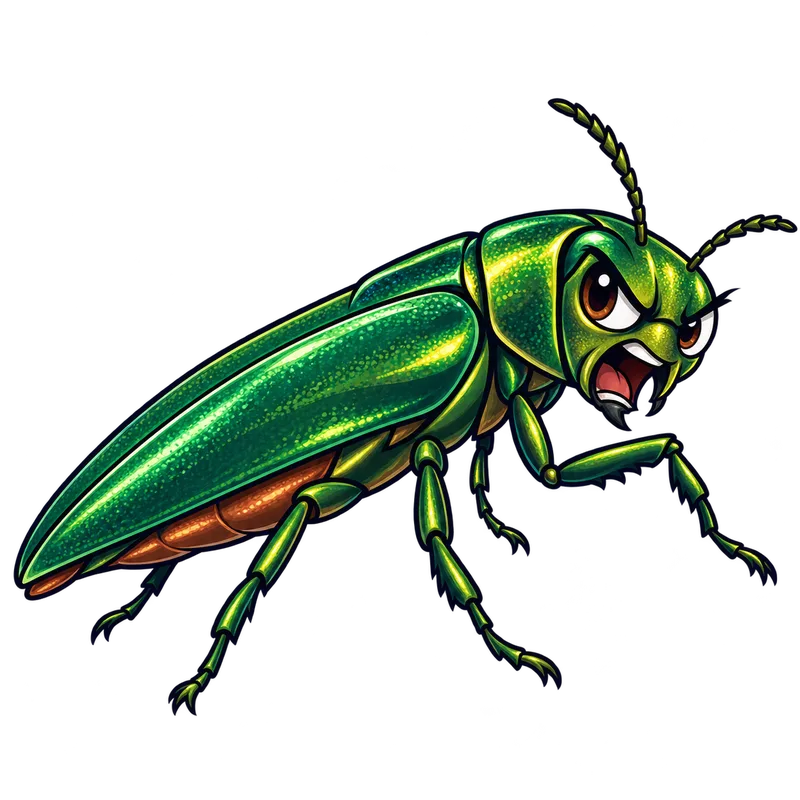
Emerald ash borer larvae cause damage in Ontario by chewing tunnels through the living tissue just under the bark, which severs the pathways for water and nutrients. This feeding leads to a top-down canopy dieback that worsens over successive seasons and results in near-total tree mortality within just a few years of a heavy infestation.
What is actually going on
Picture walking out to the back corner of your property on a warm June afternoon, only to notice that the crown of your favorite ash tree looks thin and yellowish at the very top. It almost feels like a house where the top floor loses power first while the downstairs lights stay on. The real trouble is happening entirely out of sight, right beneath the bark where an invasive wood-boring beetle from Asia is quietly dismantling the tree from the inside out.
The damage in Ontario comes down to hungry beetle larvae chewing tunnels through the living tissue just under the bark. This layer acts as the main highway for water and nutrients traveling between the roots and the leaves. As the larvae feed, they carve winding, S-shaped tracks packed with fine sawdust, which completely severs the pathways the tree needs to survive. Imagine someone wrapping a tight cord around the trunk in a dozen places until nothing can pass through.
Because the upper branches rely on that uninterrupted flow most of all, the top of the tree starves first. You get a classic top-down canopy dieback that worsens over successive seasons until the entire structure fails. Without preventive intervention, susceptible ash trees in Ontario face near-total mortality within just a few years of a heavy infestation. It is a remarkably thorough process that turns a mature, thriving shade tree into brittle firewood in a remarkably short span.
How to tell for sure
Spotting the problem early usually requires looking past the general decline and hunting for specific physical evidence. You can usually confirm emerald ash borer activity by checking for a combination of distinct clues left on the trunk and branches.
Adult beetles emerge in late spring by chewing neat, semi-circular holes through the bark that look just like a tiny capital letter D, measuring about 3 to 4 mm wide, which is just about the size of a wooden matchstick tip. When you peel away loose patches of bark on a declining tree, you will usually find those winding, sawdust-packed serpentine galleries carved flat against the sapwood.
You will also usually notice secondary signs like woodpeckers stripping off outer bark plates in search of a meal, leaving distinct light blonde patches called flecking against the darker trunk. Lower down on the tree, look for a sudden burst of leafy growth shooting straight out of the main stem or root collar, which is the tree's desperate attempt to sprout new foliage after losing its upper canopy. Vertical bark cracks measuring 5 to 10 cm long also tend to form as the tree tries to callus over the damaged areas underneath.
What usually comes next
When you spot the signs and realize your property is dealing with this beetle, your next move usually boils down to a stark choice between taking the tree down or trying chemical protection, depending entirely on how much damage has already taken place.
If the tree has already lost a large chunk of its upper canopy, often between 30% and 50%, the internal plumbing is too wrecked for treatments to circulate properly, meaning you are looking at a professional crew for safe removal. For healthy yard trees that still boast a full head of leaves, specialized insecticide treatments administered directly into the trunk by a licensed professional can sometimes keep them alive while the surrounding area takes a hit.
Looking at the bigger picture, the absolute golden rule across the province is to keep your firewood at home. Tossing logs into the back of your car for a weekend camping trip is the easiest way to move hidden larvae across county lines and spark a brand new problem elsewhere, which is why burning wood right where you buy it remains such a crucial habit.
When to get help
There is a clear line where playing detective in your own backyard stops and calling in trained operators or official agencies begins. Infested ash trees dry out with alarming speed and turn dangerously brittle, meaning large branches can snap off or the entire trunk can fail on a windy day without any warning. If a weakened tree leans toward your roof, your driveway, or the power lines, leave the chainsaw in the shed and hire a certified arborist who has the rigging gear and experience to handle high-risk removals safely.
Treatments like specialized trunk injections also call for commercial gear, proper licensing, and strict adherence to Canadian pesticide regulations rather than anything you can pick off a garden center shelf. Beyond your own yard, if you spot these beetles in an area of Ontario where they have not yet been a known menace, you should reach out to the Canadian Food Inspection Agency or log your findings with the Invasive Species Centre so authorities can monitor the front lines and keep quarantine rules effective.