
How big do wolf spiders get?
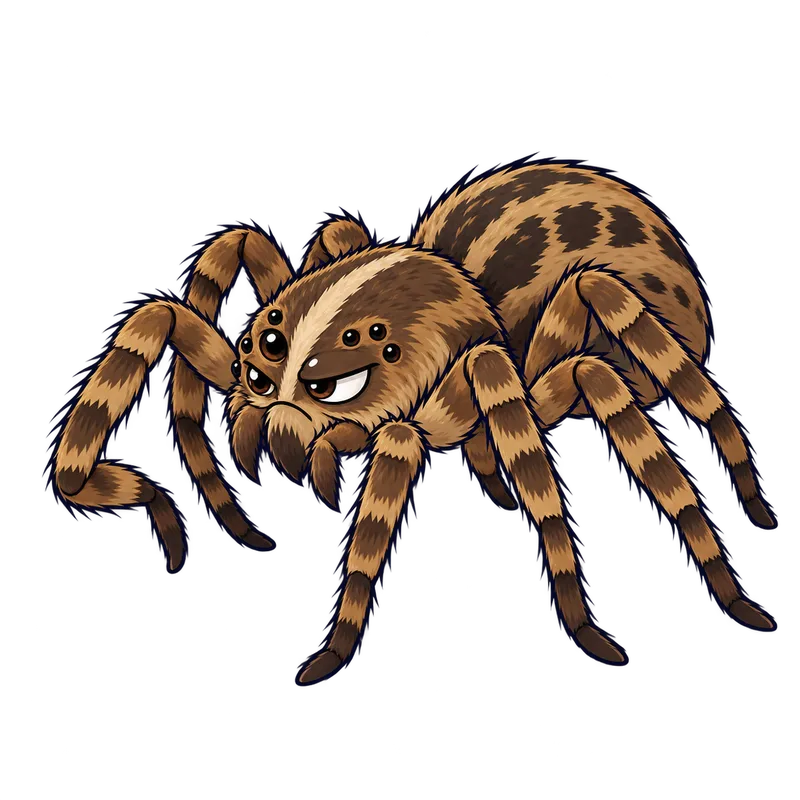
Common wolf spiders measure from one quarter of an inch to over an inch in body length, depending on whether you count their long legs. When you factor in their leg span, a medium-sized wolf spider can claim a total diagonal span of two to three inches.
What is actually going on
You are standing in the basement folding laundry when something dark and hairy darts across the concrete floor near your foot, moving with the terrifying speed of a runaway coin. You freeze, your heart does a little stutter step, and you wonder just how massive that spider actually is. When people ask how big wolf spiders get, the answer usually comes with a heavy dose of visual exaggeration because these ground hunters know how to command a room.
The confusion starts because scientists and everyday folks measure spiders differently. Arachnologists measure body length from the front edge of the head-thoracic section to the back of the abdomen, completely ignoring the legs. By that strict standard, common wolf spiders usually measure anywhere from one quarter of an inch to over an inch in body length. That is roughly the size of a US quarter to a large postage stamp.
But nobody stands over a panicked dash across the living room carpet with a ruler. When you factor in their long legs, their dense coat of fine hair, and their habit of sprinting across open ground, a medium-sized wolf spider can easily claim a total diagonal leg span of two to three inches. They look much larger than their actual body weight suggests.
Things get even wilder when you run into a mother carrying her young. Unlike most spiders that spin a web to stash their eggs, female wolf spiders tow their round silken egg sacs attached to their rear spinnerets. Once those eggs hatch, hundreds of tiny spiderlings climb up onto their mother's back and ride around like tiny passengers. A mother carrying this writhing load of spiderlings can look twice as thick and fuzzy as a solitary spider, turning an ordinary backyard hunter into a miniature beast that stops you dead in your tracks.
How to tell for sure
If you are trying to figure out what you are looking at while standing a cautious three feet away, forget about measuring legs. Look at the eyes instead. Wolf spiders have eight eyes arranged in three distinct rows. You will usually spot four small eyes in a bottom row, two huge prominent middle eyes staring right ahead, and two medium upper eyes set higher up on the head. That layout gives them exceptional daytime and night vision, which they use to hunt down crickets and beetles without a web.
People frequently mistake wolf spiders for brown recluses, mostly out of a generalized panic about brown spiders indoors. The differences are straightforward once you know what to look for. Brown recluse spiders have six eyes arranged in three pairs, and they usually feature a distinct violin-shaped marking on their top shell. Wolf spiders lack that violin mark completely and have eight eyes.
You might also notice them at night in the backyard by accident. If you sweep a flashlight beam across the lawn or along a garden border, a wolf spider's eyes will often reflect the light back at you like tiny green or silver headlights. It is a handy way to spot them hiding in the grass, though it tends to amplify the creep factor if you were just looking for your lost garden shears.
What usually comes next
Finding a large, fast-moving spider in the hallway usually triggers two immediate impulses, and neither of them is particularly helpful. The first is running to grab the heavy chemical sprays, and the second is trying to smash it with a heavy textbook. Neither approach makes much sense for a wandering hunter that just happened to cross your threshold by mistake. Wolf spiders do not infest homes the way ants or termites do. They wander inside looking for prey or seeking shelter from harsh weather, and they usually prefer to stay low to the floor near baseboards, garage doors, or basement window wells.
When you spot one indoors, the most practical step is simply escorting it outside or dealing with it physically without reaching for pesticide foggers. If you want it gone immediately, dropping an empty glass over it and sliding a stiff piece of card stock underneath gives you a safe way to carry it out to the yard. Alternatively, a household vacuum cleaner with a strong suction hose will remove a wandering spider instantly. If you choose the vacuum route, empty or seal the bag right away so the spider does not find its way back out.
If you keep seeing them week after week, the issue is usually structural rather than a spider problem. Sealing gaps under exterior doors, patching up foundation cracks, and pulling heavy mulch or stacked firewood away from your siding will cut off their entry points.
When to get help
It is worth keeping a cool head about the risk level here. Wolf spiders are non-aggressive ground hunters, and their venom is not medically significant to humans. If you do get bitten, which usually only happens if a spider gets trapped directly against bare skin inside a glove or a shoe, the result is typically mild localized pain, redness, and swelling that goes away on its own.
You should reach out for immediate clinical evaluation or contact Poison Control if a bite causes signs of a severe allergic reaction, such as trouble breathing, facial swelling, or dizziness. You also need to watch for secondary bacterial infections if the bite site starts showing spreading redness, increasing warmth, or pus, or if you realize your last tetanus booster was more than five to ten years ago.
Call a pest management professional if indoor sightings become a daily occurrence despite your best efforts at sealing gaps, or if you suspect a heavy underlying population of insect prey like beetles or roaches is drawing them inside in the first place. A professional can help identify the exact entry points and recommend structural proofing that keeps the ground hunters outside where they belong.