
Termite frass vs ordinary sawdust: what evidence matters?
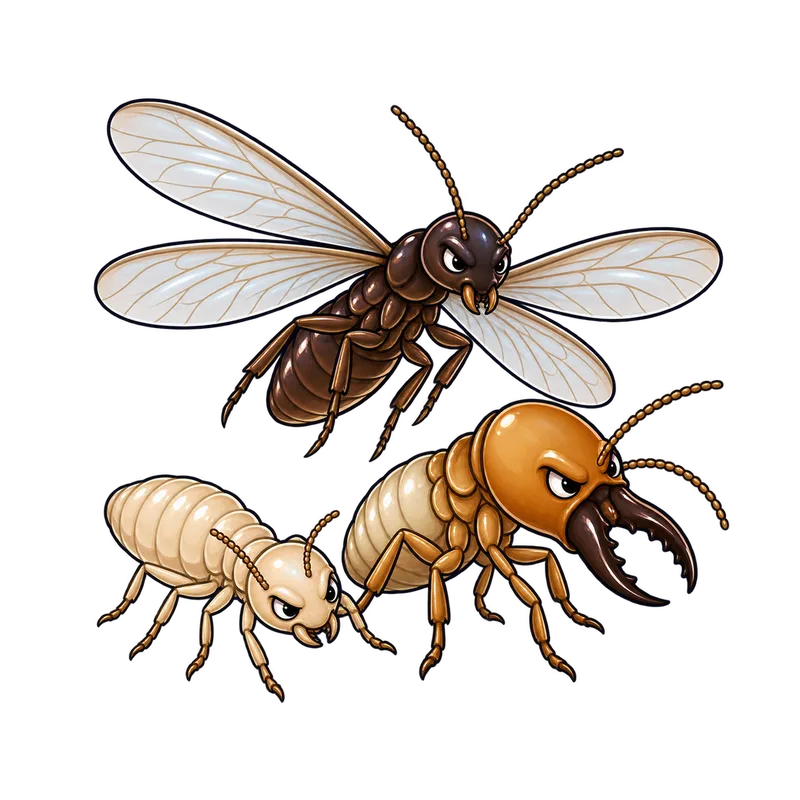
Termite frass consists of hard, uniform, oval pellets with six distinct sides and rounded ends, whereas ordinary sawdust is made of torn cellulose fibers and irregular shavings. Telling them apart depends on the texture and shape of the particles, which reveal whether the material is digested waste or raw shavings pushed out by insects.
What is actually going on
You spot a tiny pile of what looks like sawdust sitting neatly on the windowsill or right by the baseboard, and you immediately wonder what is chewing away at the house. Grabbing a broom to sweep it up solves nothing if you do not know who left it there. People usually assume any pile of wood dust means termites are quietly turning the framing into powder, but the culprit could just as easily be a beetle or an ant that does not even eat wood.
The real confusion starts because wood-destroying insects and mechanical saws leave behind very different types of debris. Termite frass, which is just a polite word for their droppings, consists of hard, sculptured pellets that look like miniature seeds pushed out through tiny holes. Ordinary sawdust, by contrast, is just torn cellulose fibers and irregular shavings left behind by a drill, a saw, or an insect that carves out nesting space without swallowing a single bite.
Understanding what you are looking at comes down to physics and biology. Some insects eat the wood, digest it, and push out engineered waste, while others chew tunnels purely to live in them and toss the raw shavings aside like a messy carpenter. If you want to know whether you are dealing with a structural emergency or just old damage, you have to look closely at the texture, the shape of the particles, and how they got there.
How to tell for sure
Start by looking at the pile with a magnifying glass or just rubbing a pinch between your fingers. If the material feels like soft baking flour or talcum powder, you are usually dealing with true powderpost beetles that target hardwoods like flooring and trim. If it feels gritty, like table salt mixed with tiny granules, it is usually from anobiid beetles.
When the pile consists of hard, uniform, oval pellets with six distinct sides and rounded ends, you are looking at drywood termite frass. These insects live entirely in seasoned timber without soil contact, and special plates in their hindgut squeeze the moisture out of their digested wood waste, molding the droppings into tiny geometric barrels. They kick these pellets out through round holes to keep their galleries clean.
Subterranean termites never leave dry pellets or sawdust anywhere. They keep their workings moist with liquid feces, saliva, and soil, building mud tubes instead of leaving loose dust on the floor.
If the pile contains coarse, fibrous wood shavings mixed with dead insect parts like ant heads, legs, or antennae, the tenant is usually a carpenter ant. Carpenter ants do not eat wood. They only chew out nesting galleries and throw the raw shavings out the door, along with the remains of insects they have eaten.
You can also run a simple test with a standard click-type ballpoint pen. Push the metal tip into an open exit hole in the wood. If only the tiny metal point fits, the hole is usually about one-sixteenth of an inch across and points to powderpost beetles. If the metal tip and part of the plastic face fit, the hole is slightly larger and typically belongs to anobiid or deathwatch beetles. If the entire pen shaft slides right in, you are looking at larger borers or carpenter bees.
What usually comes next
Finding a pile of dust does not automatically mean an active infestation is currently chewing up the house. Accumulated frass can sit quietly inside structural cavities for years and finally drop out onto the floor due to vibrations from heavy foot traffic or remodeling.
You need to verify whether the activity is happening right now, and the easiest way to check is the clean-and-wait method. Sweep up or vacuum the pile completely, place a dark piece of paper directly beneath the suspected kickout hole or damaged area, and wait three to seven days. If fresh pellets or powder appear on the paper during that window, the insects are still active inside the timber. Alternatively, you can seal old exit holes with tape or paint over them, and watch to see if new beetles chew their way out during the warmer months.
When to get help
Wood-boring insects can hollow out structural joists, studs, and rafters until only a thin outer shell remains, dropping timber strength below safe load-bearing limits. If you suspect structural damage, sagging beams, or widespread infestations, you need to bring in a licensed pest control professional for a thorough evaluation.
Never guess on chemical treatments, and always follow pesticide product label directions strictly. Structural fumigation or deep-barrier treatments require professional equipment and state licensing.
If you or anyone in the household experiences respiratory irritation, skin rashes, or severe allergic reactions around wood dust, consult a qualified clinician or local health provider right away, as frass and decay spores can trigger sensitivities.