
Termites
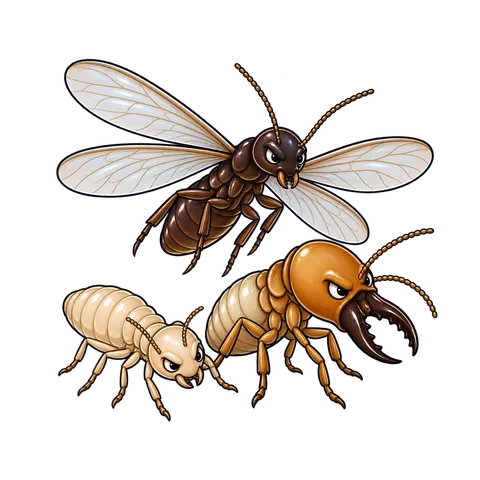
You notice something looking suspiciously like a pale, fat ant crawling across your basement floorboards, and you immediately wonder if you are looking at a termite. What actually groups these creatures together is a hidden, wood-eating lifestyle driven by an absolute need for plant fiber and cellulose, paired with a strict social system where soft-bodied workers do all the chewing while winged reproductives handle the expanding colony. You might picture every single one of them living deep underground, but this library actually spans three distinct groups that behave very differently, ranging from subterranean builders that construct mud tubes up concrete foundations to drywood species that live entirely inside sound, dry attic timbers and push out tiny, six-sided fecal pellets.
Telling termites apart from the other bugs they get mixed up with comes down to a couple of simple body checks that need no microscope at all. While ants have a tightly pinched, narrow waist and elbowed, bent antennae, termites feature a broad, uniform waist and straight, bead-like antennae. If you happen to catch them during a swarming flight, ants show two pairs of unequal wings with front wings much larger than hind wings, whereas termites carry four delicate wings of identical length that lay flat over the back. If you are staring at a pile of fine wood powder and open, unsealed round holes in your timber, you are looking at wood-boring beetles rather than termites, which always keep their galleries sealed and never leave open exit holes.
Explore termites
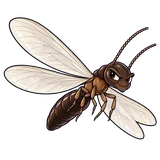 Eastern subterranean termiteReticulitermes flavipes
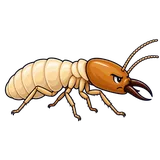 Western subterranean termiteReticulitermes hesperus
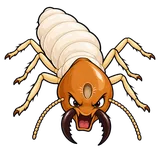 Formosan subterranean termiteCoptotermes formosanus
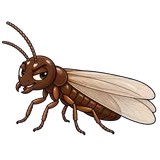 Asian subterranean termiteCoptotermes gestroi
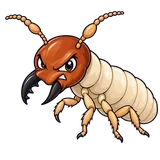 Western drywood termiteIncisitermes minor
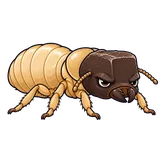 West Indian drywood termiteCryptotermes brevis
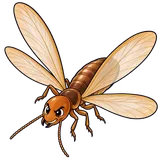 Pacific dampwood termiteZootermopsis angusticollis