
Termite wings vs ant wings: how can you tell?
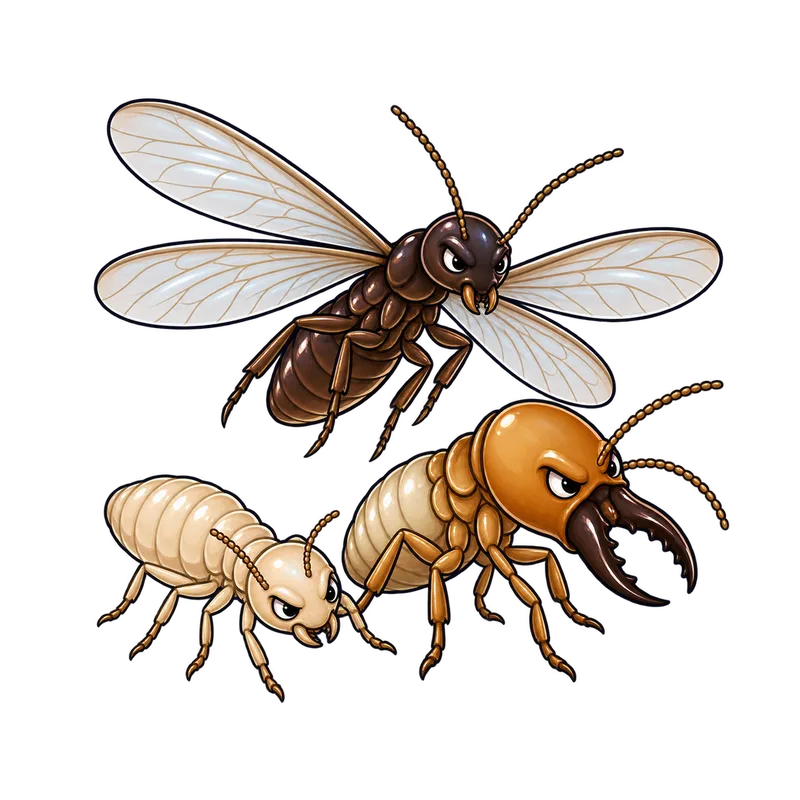
Termite wings are all identical in length and shape, and they extend about twenty five to thirty three percent past the tip of the abdomen when folded. In contrast, winged ants have a front pair of wings that is noticeably larger and longer than the back pair, and those wings rarely extend past the rear of the body.
What is actually going on
You are walking across the living room on a warm spring morning, and you spot a pile of delicate little wings scattered right on the windowsill. Naturally, your mind jumps to the worst possible conclusion. Are those termite wings, meaning your house is quietly being eaten from the inside out, or are they just harmless flying ants that wandered in through an open screen door? It is a stressful moment that happens in thousands of homes every year when the weather warms up and reproductive insects go looking for mates.
To give you the answer without making you wait, termite wings and ant wings look quite different once you know what to look at under a bright light. Winged termites carry four wings that are completely identical in length, shape, and delicate veining. When a termite is at rest, those four wings fold flat over its back and stretch out about twenty-five to thirty-three percent past the tip of its abdomen. Winged ants also have four wings, but their front pair is noticeably larger and longer than their back pair. When an ant folds its wings away, they rarely extend past the rear of its body.
If you are wondering why these two entirely different insects show up with wings at the same time, it comes down to a seasonal ritual called swarming. Both termites and ants produce specialized reproductive members, often called swarmers, that leave their mature colonies to fly, mate, and start new families elsewhere. Because both groups prefer warm, humid air and often take flight after a heavy rain, you frequently find them around the same windows and porch lights.
That shared timing is precisely why people mix them up so often. Yet nature actually gave us a foolproof way to tell them apart, and you do not need an entomology degree or an expensive microscope to figure it out. You just need a steady hand, a bright light, and a few minutes to look at the anatomy of the insect right in front of you.
Start with the wings themselves, since that is usually the first clue you notice. Take a magnifying glass if you have one, or just get close with your reading glasses. Look at the length of all four wings. If they match each other down to the last millimeter like a set of identical kayak paddles, you are almost certainly looking at a termite. If the front wings are clearly broader and longer than the back ones, you are looking at an ant.
Next, look at the body shape, specifically where the thorax meets the abdomen. Termites have a thick, broad waist. Their bodies look like a smooth, continuous cylinder, with no dramatic narrowing anywhere along the middle. Ants, on the other hand, have a very distinct and narrow pinched waist, often called an hourglass waist or a petiole. If the insect looks like it was tied tightly in the middle with invisible string, it is an ant.
Now check the head. Termite antennae are straight and flexible, looking just like a tiny string of pearls or beads. Ant antennae are very different because they bend sharply at a distinct angle, resembling a tiny elbow joint. This elbow shape is one of the quickest ways to separate the two groups if the wings have already fallen off.
Speaking of falling off, that is another major giveaway. Termite wings are designed for a single flight and feature a built-in fracture line at the base. Once a termite lands, it twists its wings and snaps them off cleanly, leaving a tidy pile of shed wings behind. Ants do not have that same fracture line. While a newly mated ant queen eventually chews off her wings, male ants keep theirs until they die, and you rarely find massive, uniform piles of clean-cut ant wings on a windowsill.
How to tell for sure
Once you figure out what you are looking at, your next move depends entirely on the exact spot where you found the evidence. Finding a dense cluster of identical wings or live flying insects trapped behind a curtain, along a windowsill, or near an indoor light fixture usually points toward a nesting problem nearby. That means you need to examine the surrounding wood closely and reach out to a qualified pest management professional to carry out a thorough inspection.
Conversely, spotting just one insect crawling outside on a patio stone or near an outdoor porch light during a warm summer evening usually means it is just a random traveler passing by from an outdoor colony. Natural outdoor swarms happen by the thousands every single year, and they do not automatically mean your structural framing is in danger.
Resist the urge to panic and buy a generic aerosol spray to treat the entire house just because you spotted a pile of wings. Spraying a surface insecticide along a baseboard might kill the few visible insects crawling out in the open, but it will never reach the hidden colony chewing away behind your drywall or beneath your subfloor. A pile of wings indoors is simply a warning sign, not the whole problem. Your best approach is to drop a few intact specimens into a small container of rubbing alcohol so an expert can identify them easily, and then set up a professional inspection to see if your home needs active protection.
What usually comes next
Certain situations mean handling things on your own simply will not cut it, and you need to bring in outside help. If your check turns up hollow wood, buckling baseboards, or mud tunnels running up your concrete foundation right next to a pile of termite wings, you should call a licensed pest control professional right away. Damaged structural wood calls for specialized repairs, and treatments like soil barriers, bait stations, or structural fumigation involve complex methods and strictly regulated products that belong in the hands of trained applicators.
When to get help
You also want to keep clear safety and health boundaries in mind. Termites do not sting and they do not carry human diseases, so finding them in your living room is a structural headache instead of a medical emergency. However, if anyone in your home suffers from painful stings, swelling, or severe allergic reactions caused by outdoor insects you cannot positively identify, get in touch with a doctor, an urgent care clinic, or poison control right away.
Lastly, keep in mind that older houses and rural properties occasionally harbor protected wildlife like bats or nesting birds tucked away inside wall cavities or attics. If an inspection uncovers protected animals living right alongside your home, a professional pest manager or your local environmental agency must direct the next steps to make sure you stay compliant with local wildlife protection laws while still dealing with any structural pests.