
Can you hear termites inside a wall?
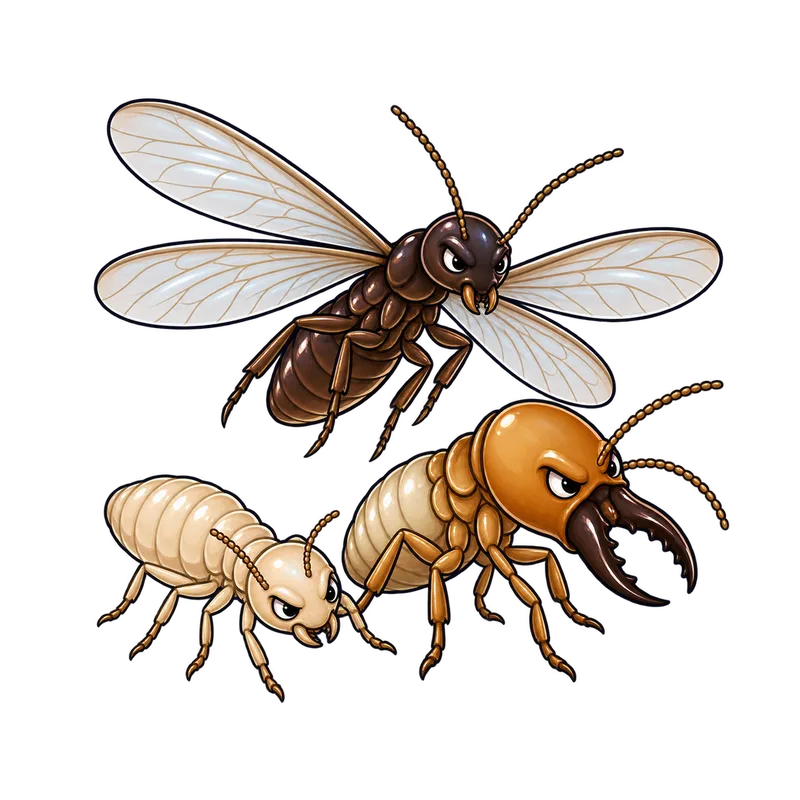
Yes, you can sometimes hear termites inside a wall, but only when soldier termites bang their heads against the wood to warn the colony. This sounds like a faint ticking or tapping within a few feet of the infestation, usually triggered by a knock or vibration.
What is actually going on
Picture this. You are up late, the house is finally quiet, and you lean your head back against the wall. Then you hear it: a faint, irregular ticking, somewhere inside the drywall. Your mind goes straight to termites, because of course it does. So, can you actually hear termites inside a wall? Yes, sometimes. But probably not in the way you imagine, and that distinction matters more than the answer itself.
Termites have a reputation as silent destroyers, and they have mostly earned it. The workers, the pale little insects doing all the actual chewing, feed more or less silently. Even when thousands of them are at it at once, the sound is a faint rustle at best, something like dry cereal crackling in milk, and it almost never makes it through drywall or plaster to your ear. Here is the uncomfortable part: if you hear nothing, that tells you nothing. A wall can be quietly full of termites and give you zero audio warning. Silence is not an all-clear.
The exception is the soldiers. Termite colonies include a caste of soldiers with big, hardened heads, and those heads are not just for fighting. When the colony gets disturbed, say you bump the baseboard with the vacuum or slam a door near the nest, soldiers anchor their legs and bang their heads against the walls of their tunnels, over and over. It works like a tiny emergency telegraph, sending a vibration through the wood that warns the rest of the colony. And that head banging is genuinely loud enough for you to hear. People describe it as a ticking or tapping, usually noticeable within a few feet of the infested timber in a quiet room.
One more wrinkle worth knowing before you start a conversation with your wall: termites cannot hear you. They have no ears for airborne sound. They feel vibrations through sensors in their legs, which is why shouting at the drywall accomplishes nothing, but knocking on it gets their full attention. If the ticking starts right after you knock, that is not a coincidence. That is the soldiers answering.
How to tell for sure
Here is the trap to avoid: a noise in a wall is not a diagnosis. Several other tenants produce sounds that are easy to confuse with termites, and some are considerably louder. Carpenter ants rustle as they move through their galleries and clean out their nests. Old house borer larvae, big beetle grubs chewing through softwood studs, make a rhythmic clicking or rasping that carries surprisingly well at night. And then there is the deathwatch beetle, an insect that taps its head against wood on purpose to attract a mate, usually on spring nights, which is the exact scenario that sends people to the internet at 2:00 AM convinced the house is being eaten. Sometimes it is. Sometimes it is just beetle romance.
On top of the insects, walls make plenty of non-insect noise. Pipes expand and contract, houses settle, electrical boxes hum, and mice scratch. So the ticking alone proves nothing. What actually confirms termites is physical evidence you can see or touch, and the good news is that you can look for most of it yourself.
Walk the outside of your house and look at the foundation, the slab edge, and any crawlspace piers. Subterranean termites, the most common kind in most of the United States, build mud tubes, narrow earthen tunnels about the width of a pencil, to travel between the soil and your wood without drying out. Finding those is a strong sign. Check window sills for piles of discarded wings, which swarmers shed after their mating flight. If you are in drywood termite country, think coastal California, Florida, the Gulf Coast, look instead for tiny piles of hard, six-sided pellets below baseboards or furniture. Those are droppings pushed out of the wood, and they usually mean somebody is living in it.
Then there is the tap test, which inspectors call sounding. Take the handle of a screwdriver and knock along baseboards, door frames, and any exposed wood, a few inches at a time. Solid wood answers with a sharp, dense sound. Wood that termites have hollowed from the inside gives back a dull, hollow thud, like tapping a ripe watermelon versus an unripe one. If the surface also dents or crushes easily under thumb pressure, that spot deserves a closer look. And no, tapping will not make termites spread through your house. People worry about this. It startles the soldiers into their head banging routine, which is temporary, and sounding is a standard, non-destructive technique that inspectors themselves use.
If you find actual insects, you can settle the termite-versus-ant question with a cheap 10x hand lens. Termites have straight, bead-like antennae, a thick waist with no pinch, and, when winged, four wings of equal size. Ants have elbowed antennae, a narrow pinched waist, and two pairs of wings where the front pair is clearly bigger. Pop a specimen into a small container with some rubbing alcohol and a professional can confirm it. That thirty-second check matters, because the treatment for ants and the treatment for termites are very different conversations.
What usually comes next
So you heard something, or you tapped something and it answered wrong. Now the question on the table is a simple one: do you have enough to call somebody, or should you keep poking around? My vote is to stop at observing and hand the rest to a licensed inspector, and the reason is not dramatic at all.
Termites eat wood from the inside out and leave the outer skin intact, which means the damage is almost always worse than it looks. A baseboard that sounds hollow can be the visible corner of a much bigger excavation running through the studs behind it. Trained timber pest inspectors do not just knock on things, though they do plenty of that too. They carry moisture meters to find the damp zones termites love, stethoscopes built to pick up insect sounds through wall linings, and sometimes thermal cameras or small probe cameras to look inside cavities. Put together, that kit can map an infestation your ear and a screwdriver would never find, no matter how patient you are.
A couple of temptations to resist while you wait. Do not spray a random insecticide into the wall and declare victory. Termite treatments, whether liquid soil barriers or bait systems, are regulated products whose labels dictate exactly how they get used, and using them correctly usually involves drilling, trenching, or installing stations. That is licensed applicator territory. A can of spray from the hardware store mostly kills the few workers you can see while the colony carries on behind the drywall, unbothered and now slightly better ventilated.
And do not let silence talk you out of it. If your sounding turned up hollow wood but no ticking at all, the colony may simply have moved, or the damage may be old. Either way it deserves a professional set of eyes, because old damage still needs evaluating and an active colony a few feet away is not going to announce itself. The quiet ones are the whole problem.
When to get help
Call a licensed pest control company or timber pest inspector promptly if you hear repeated ticking or tapping when a wall or baseboard gets knocked, if you spot mud tubes on the foundation or down in the crawlspace, if you find piles of wings on a sill or little heaps of pellets under woodwork, or if any wood sounds hollow or crushes easily under pressure. Any one of those is enough. You do not need the full set, and you do not need to catch a termite in the act to justify the call.
The reason to move reasonably fast is not panic, it is math. Subterranean termites can compromise load-bearing studs, joists, and other structural wood over months to a few years, and repair bills climb with time. An inspection costs a fraction of replacing framing, and it buys you certainty either way, which has real value at 2:00 AM.
Two safety notes while you are poking around. Termites themselves do not bite people or spread disease, so the insects are not a direct health threat to you. But if your wall investigation turns up something else entirely, a wasp nest in the attic, bats, nesting birds, a rodent situation, stop and call the right people. Stinging insects and bites belong with a doctor or, in an exposure emergency, poison control. Wildlife is often legally protected, and your state wildlife agency can tell you how removal has to happen. And if any pesticide gets applied later, follow the label's re-entry instructions to the letter, especially with kids and pets in the house.
The short version: yes, you can sometimes hear termites, but your ears are the least reliable tool in the house. Trust the mud tubes, the wings, the pellets, and the hollow thud, and let a professional confirm the rest.