
Does homeowners insurance cover termite damage?
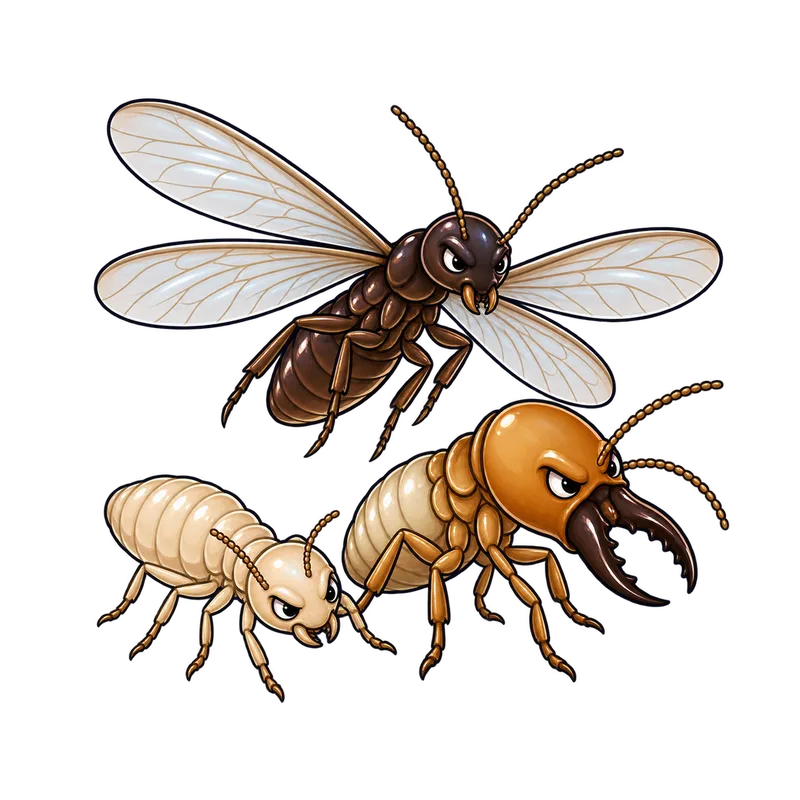
Standard homeowners insurance policies do not cover termite damage, wood-boring beetle destruction, or the cost of pest control treatments. Insurance companies classify insect infestations as preventable property maintenance responsibilities because these pests work in slow motion over months or years, which falls outside of sudden and accidental physical losses.
What is actually going on
Imagine standing in your kitchen on a quiet Saturday morning, watching a fine trickle of sandy dust drift out from behind the baseboard. You tap the wooden trim with the handle of a screwdriver, and the tool punches straight through like a finger poking into a stale loaf of bread. Panic sets in immediately. Your mind races to the stack of homeowners insurance paperwork tucked away in the filing cabinet, and you assume the policy you faithfully pay for every month will handle the repair bill. Unfortunately, standard homeowners insurance policies do not cover termite damage, wood-boring beetle destruction, or the cost of pest control treatments.
Insurance companies are property casualty underwriters, meaning their contracts are designed to indemnify you against sudden, accidental, and unpreventable physical losses. Think of it like auto insurance. If a sudden storm drops a massive oak tree branch directly onto the hood of your parked car, insurance usually steps in because you could not have predicted or prevented that specific event.
On the other hand, if your car's exhaust pipe silently rusts through over four years of neglect, the mechanic's bill falls squarely on you. Termites, wood-boring beetles, and wood decay fungi operate exactly like that rusted exhaust pipe. They work in slow motion, chewing galleries and digesting cellulose over months or even years.
Because regulatory authorities and technical standards classify insect infestations and timber decay as preventable property maintenance responsibilities, insurers universally exclude them from standard coverage. You might wonder how a homeowner is supposed to prevent something hidden entirely inside a wall cavity. That question hits on why property protection requires a completely different mindset than filing a weather claim.
Spotting the problem early usually requires knowing what these pests leave behind, since you rarely catch the insects walking out in the open. Subterranean termites eat wood from the inside out, typically leaving a paper-thin outer veneer of paint or plaster completely untouched. If you tap a window frame or baseboard and it sounds hollow, you are usually dealing with subterranean activity.
You can also look for mud shelter tubes, which look like small, hardened dirt tunnels running up concrete foundation walls or brickwork. These tubes are how subterranean termites travel across non-cellulose materials without drying out. Drywood termites behave differently because they do not need soil contact. They push out tiny, hard fecal pellets with six concave sides through small kick-out holes. If you find small piles of what looks like coarse sand or tiny wooden seeds accumulating beneath a beam or piece of furniture, you are usually looking at drywood termite frass.
Wood-boring beetles present another distinct set of clues. Depending on the specific beetle species, you will usually find either tiny round exit holes accompanied by fine, flour-like powder or larger oval holes left behind by older larvae. Concrete slab and steel-framed homes also remain vulnerable because subterranean termites easily bypass steel framing to destroy non-structural fittings, timber flooring, door frames, window architraves, drywall paper, and furniture.
How to tell for sure
Keep in mind that a standard visual timber pest report is usually just a surface-level snapshot. An inspector typically checks readily accessible areas on a single day, but they do not usually tear down drywall, pull up wall-to-wall carpets, or crawl inside tight spaces that lack the required physical clearance. If a home inspector misses a glaring, totally accessible infestation that was visible on the day of the walk-through, you might have grounds for a professional negligence claim through the inspector's own professional indemnity insurance, but that is entirely separate from your standard building policy.
Termite shields, often called ant caps, frequently cause confusion for homeowners who assume metal barriers block pests entirely. These shields do not stop termites or prevent entry. Their sole design purpose is to force subterranean termites out into the open so their mud tubes become visible during routine inspections.
What usually comes next
Accepting that your insurance policy will not pay for the damage leaves you with one major practical decision to make right now. You have to decide whether to hire a licensed pest control professional immediately or attempt to manage the situation on your own.
Trying to solve a major structural infestation with hardware store aerosol sprays usually results in wasted money and hidden colonies continuing to chew through your framing. A spray bottle can kill the insects it physically touches on the surface, but it cannot reach the queen or the massive galleries buried deep inside load-bearing studs.
Your most sensible path forward usually involves scheduling a professional assessment with a licensed pest manager who carries proper professional indemnity and public liability insurance. A qualified operator can determine whether you are dealing with subterranean termites, drywood insects, or moisture-driven rot, and they can apply appropriate treatments such as liquid soil barriers, monitored baiting systems, or structural fumigation.
Once the active infestation is handled, your next focus usually shifts to modifying the environment around your house. That means pulling back garden mulch and decorative flower beds from the edge of your concrete foundation. Keeping at least a small strip of the slab edge exposed allows you and your annual inspector to spot new mud tubes before the insects manage to bridge the gap into your framing.
When to get help
There are moments when a weekend DIY mindset becomes a structural hazard, and you need to know when to hand the reins over to outside experts. You must call a licensed structural engineer or a registered builder immediately whenever you discover that load-bearing timbers, floor joists, or roof rafters have lost their integrity, show severe defibridation, or carry a risk of collapse. Pest control operators are experts in eliminating insects, but they are generally not certified to design or approve structural building repairs.
You should also bring in a licensed plumber right away if the infestation was triggered or worsened by hidden plumbing leaks, faulty shower pans, or bad subfloor drainage, because no chemical treatment will hold up against a constant source of wet wood.
If the moisture that attracted the pests has lingered long enough to foster heavy toxic mold growth within your living spaces or wall cavities, you need to consult an industrial hygienist or an indoor air quality specialist to protect your household from respiratory health risks.
Finally, if you suspect you have encountered a rare or highly destructive regulated pest that requires mandatory government reporting, such as specific invasive drywood termite species or European house borers in certain regions, contact your local agricultural extension service or state plant health agency for proper specimen identification and guidance.