
Dampwood termites vs drywood termites: what moisture clues differ?
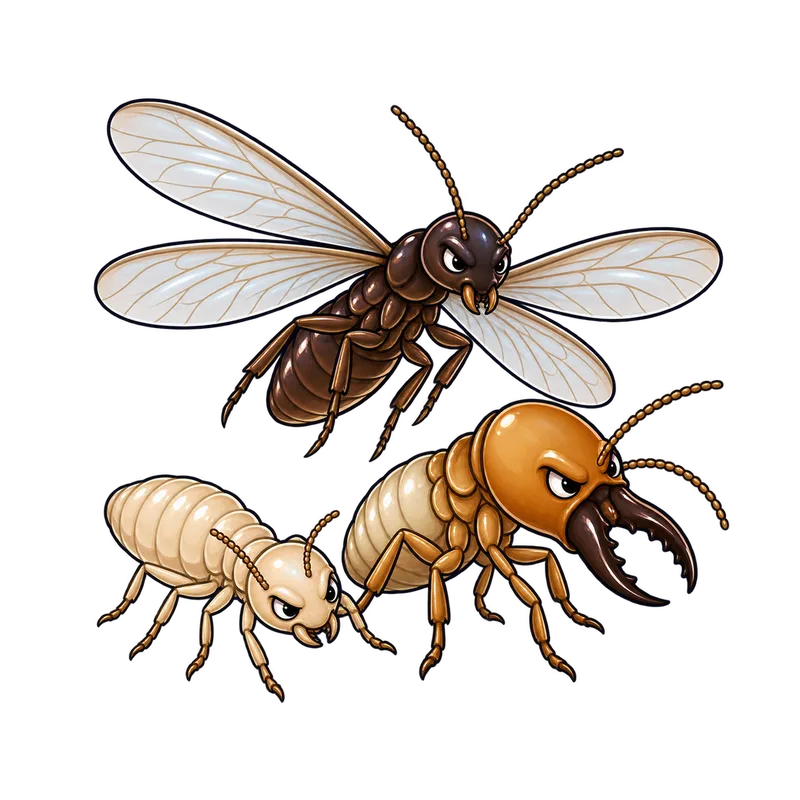
Dampwood termites and drywood termites have opposite moisture needs because dampwood termites require damp or rotting wood with a high moisture content, while drywood termites live in sound, dry lumber with extremely low moisture content. The main difference depends on whether the wood is softened by water issues like plumbing leaks or remains completely dry.
What is actually going on
Imagine stepping into the garage on a lazy Saturday afternoon, reaching for a box stored on a low shelf, and noticing a tiny pile of what looks like coarse sand or coarse salt sitting right there on the concrete. You sweep it away, but a few days later, it is back. Naturally, you wonder what is chewing away at your house, and more importantly, whether you need to worry about a damp basement leak or completely dry framing timber.
The short answer is that dampwood termites and drywood termites are two entirely different creatures with opposite tastes in water. Drywood termites live in sound, dry lumber and do not need any contact with the soil. They can survive in wood with extremely low moisture content because their bodies extract and recycle water internally. Dampwood termites, on the other hand, act as environmental moisture alarms. They require damp, often rotting wood with a high moisture content, usually brought on by plumbing leaks, bad flashing, or direct wood-to-ground contact.
People often assume all termites behave the same way, but their waste products tell completely different stories about how they handle water. Drywood termites use specialized internal machinery to squeeze almost every drop of moisture out of their digestive waste before kicking it out of tiny holes in the wood. Dampwood termites lack that heavy-duty water-saving ability. Because of that, their droppings stay moist and, in wet conditions, actually dissolve into a muddy paste that smears right across the inside of the timber, looking almost like wet coffee grounds smeared along an old fence post.
How to tell for sure
If you want to know which pest you are looking at, you have to examine the waste and the wood closely, usually with a magnifying glass. Drywood termites produce uniform, hard, elongate pellets that measure less than a millimeter long. If you look at one under a lens, you will usually see six concavely depressed sides separated by distinct longitudinal ridges. These pellets are pushed out of tiny kickout holes, forming clean, dry, conical piles below that resemble tiny piles of coarse salt pouring from a shaker.
Dampwood termites usually leave behind larger pellets that are somewhat hexagonal but completely lack those sharp longitudinal ridges. More importantly, the environment changes the waste. If the wood is saturated from an ongoing leak, those dampwood pellets soften and clump together into a dark, muddy slurry that sticks to the gallery walls. You will not find neat little piles of dry sand-like pellets there.
You can also look at the galleries themselves. Drywood termites cut straight across the grain, carving out smooth chambers through both hard and soft wood that feel sandpaper-smooth inside. Dampwood termites usually carve large, irregular, open tunnels, following the softer grain if the timber is sound, or chewing haphazardly through wood that is already softened by fungal decay.
Size is another huge giveaway if you happen to catch the winged reproductives. Pacific dampwood alates are massive, measuring over two inches long including their wings, which makes them look almost like small flying twigs or a visitor the size of an adult pinky finger. Drywood alates are much smaller, usually measuring roughly the size of a grain of rice.
What usually comes next
Making a practical decision here comes down to addressing the root cause before you spend money on treatments. If you are dealing with drywood termites, localized wood replacement or targeted whole-structure treatments by a licensed pest control operator is usually the path forward, because the framing lumber throughout the house remains dry and sound. Whole-structure fumigation or deep gallery injection is often needed for drywood infestations because they hide deep inside structural framing.
If you have dampwood termites, spraying chemicals everywhere is a waste of time and money if you leave the water source alone. Your primary task is finding the leak, whether it is a weeping pipe behind the drywall, a slipped roof shingle, or untreated siding touching wet garden soil. Once you fix the moisture intrusion and replace the rotted timber, dampwood colonies generally die out because they cannot survive without that high continuous moisture content.
When to get help
Termites do not bite humans, carry human pathogens, or infest human skin, so if you are dealing with mysterious skin rashes or bites, skip the pest control company and call a healthcare clinician, urgent care facility, or your local poison control center right away.
For the structure itself, call in a licensed timber pest inspector when the damage is hidden behind finished walls, inside subfloors, or high up in roof rafters. You also want professional help if you cannot tell whether you are looking at dampwood termites, subterranean termites, or wood-boring beetles. A trained inspector uses specialized tools, calibrated moisture meters, and careful probing to map out the extent of the damage before you commit to structural repairs or specialized treatments. Concealed feeding inside structural floor joists or load-bearing studs can lead to sudden structural collapse without obvious external warning signs.