
Can termite frass from a ceiling identify the wood source?
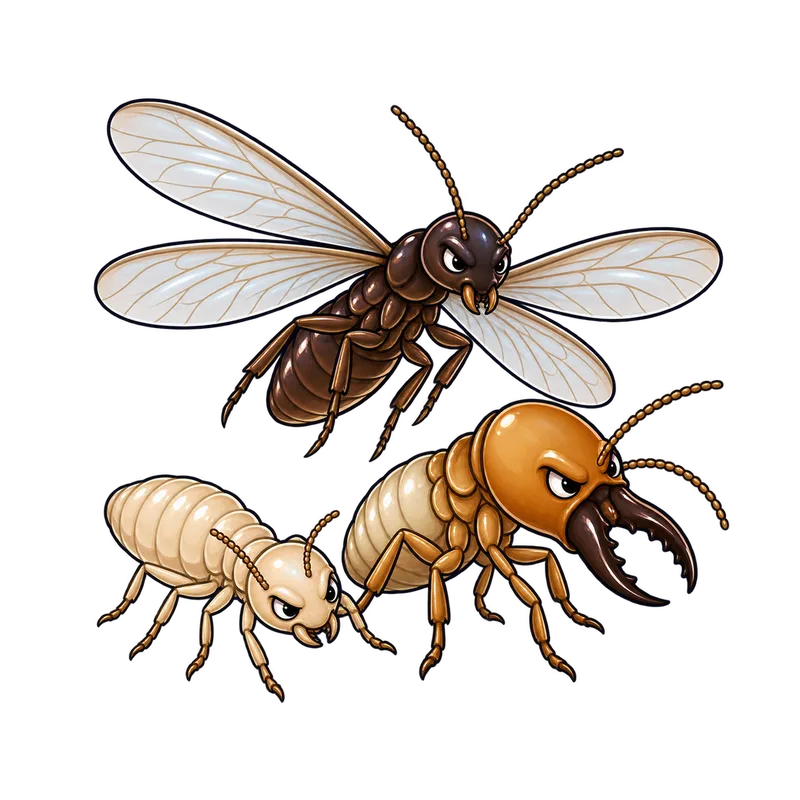
Termite frass falling from a ceiling cannot identify the specific wood source or lumber type being consumed. Although the droppings reveal that you have drywood termites, multiple softwoods and hardwoods can produce identical pellet shades after passing through the insect gut. Finding the exact wood species requires inspecting the uningested framing timber itself.
What is actually going on
Imagine walking into your living room on a Tuesday morning and finding a tiny pile of what looks like coarse sand sitting right on the coffee table. You look up, and there is a faint scattering of the same stuff on the ceiling directly above. Naturally, you might wonder if this debris can tell you what kind of wood the bugs are chewing through up there, perhaps pointing straight to your oak floorboards or your pine framing.
The short answer is no. While termite frass falling from a ceiling is a dead giveaway that you are dealing with drywood termites, it cannot tell you the botanical species or the specific lumber type of the wood being consumed.
What you are looking at is insect waste, known technically as frass. Drywood termites live entirely inside dry timber without any contact with the soil. Because they digest wood cellulose directly, their hindguts act as miniature packaging plants that squeeze every drop of moisture out of their waste before dumping it. This process creates hard, six-sided pellets complete with longitudinal ridges and concave sides. They push these tiny pellets out of microscopic exit holes in the ceiling to keep their indoor galleries clean.
So, while those geometric pellets tell you exactly which pest group you are hosting, they do not hold a botanical fingerprint. The color of the frass might range from off-white and tan to dark brown or black, but that variation only reflects the natural pigment and starch content of whatever timber they happen to be eating. Multiple softwoods and hardwoods can yield virtually identical pellet shades after passing through a termite gut. Finding out the exact wood species requires a physical look at the uningested framing timber itself, inspecting pore arrangements and growth rings rather than relying on the droppings on your floor.
How to tell for sure
Identifying the problem starts with catching the debris and taking a closer look, usually with a standard magnifying glass or a hand lens. When you sweep up the mess or find a fresh drop, look at the individual particles rather than the pile as a whole.
Drywood termite pellets are uniform, elongate shapes measuring less than a twenty-fifth of an inch long. Under magnification, you should be able to spot those six distinct concave sides and ridged edges, making them look like tiny, geometric wooden barrels. If instead you find a fine, flour-like powder with no distinct pellets at all, you are usually looking at the work of powderpost beetles rather than termites. If the debris is gritty and mixed with tiny bun-shaped or lemon-shaped pellets, deathwatch beetles are usually the culprits.
You should also check for other common mimics that can fool an untrained eye. Carpenter ants often get blamed for ceiling messes, but they do not actually eat wood. They chew out clean galleries just to nest and kick out pure fibrous wood shavings and occasional insect body parts, leaving a texture that feels nothing like smooth termite pellets. Subterranean termites never leave dry pellets on a ceiling either, because they rely on moisture and soil, leaving behind mud tubes or damp water blisters instead.
To confirm whether the bugs are still actively chewing away up there, try a simple paper test. Clear away all the existing pellets from your furniture or floor, and lay down a clean sheet of white printer paper directly beneath the suspicious spot on the ceiling. If new, barrel-shaped pellets appear on that paper within a few days, active feeding and gallery cleaning are happening right above your head.
What usually comes next
Once you establish that you are dealing with drywood termites based on those distinctive pellets, the immediate practical choice comes down to determining the scale of the problem and deciding on a course of action. Do not assume that a small pile of frass means only a few bugs are hanging out in a localized corner. Termites hollow out wood from the inside out, often leaving just a paper-thin shell of timber protecting the gallery while the structural integrity is quietly compromised.
You will want to inspect the overhead timber or drywall with a bright flashlight to locate the tiny circular holes where the pellets are coming out. Painting over these holes or sealing them with tape can help you track whether the insects are still trying to push waste through the barrier. However, patching the hole does nothing to stop the colony feeding inside the wood.
Because drywood termites can establish multiple hidden colonies in different structural framing members throughout a building, localized spot treatments may only solve part of the puzzle if the infestation is widespread. A licensed pest management professional usually needs to evaluate the entire structure to decide whether localized injection or whole-structure treatment is required.
When to get help
There are clear moments when self-directed observation has to stop and professionals need to take over. If the frass is falling from a major ceiling joist or a primary support beam, you could be facing a serious structural collapse hazard where the wood inside has been hollowed out to the point of failure.
Crawling around in attic spaces or ceiling voids to inspect framing carries significant physical risks. You can easily misjudge a joist, fall straight through the ceiling plasterboard, run into exposed electrical wiring, or disturb old insulation that irritates your lungs. Furthermore, standard visual pest inspections are non-invasive, meaning licensed inspectors cannot tear open walls, pull up flooring, or dismantle ceilings without a specialized agreement and a qualified builder.
When treatment time arrives, pest control decisions belong strictly to a licensed applicator. Whole-structure treatments like tent fumigation or targeted insecticide applications require professional licensing, specialized equipment, and adherence to strict state and regional regulations. If you suspect your ceiling timbers are structurally compromised, consult a qualified structural engineer or builder alongside your pest specialist to make sure your home stays safe from top to bottom.