
Are flying ants in Arizona the same concern as termite swarmers?
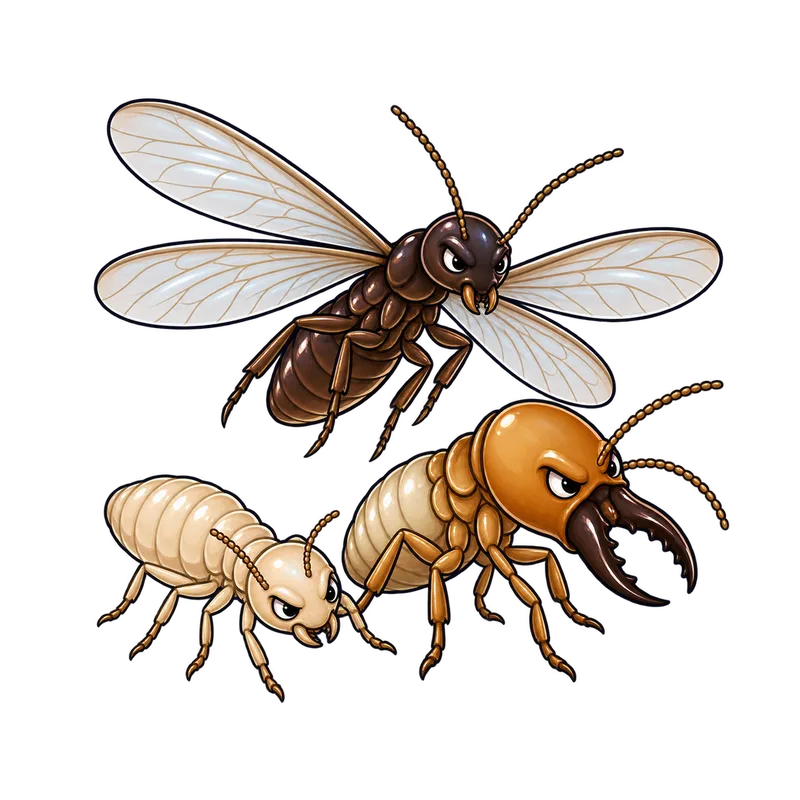
Flying ants in Arizona are not the same concern as termite swarmers. Termite swarmers represent an active structural threat because they eat cellulose and can live right in your framing, while flying ants are mostly just an annoying symptom of the summer monsoon weather.
What is actually going on
Picture walking into your Arizona living room on a heavy summer evening after a proper monsoon storm, only to find a swarm of winged bugs fluttering around the ceiling fan and dropping tiny translucent wings all over the windowsill. It is the kind of sight that immediately makes your stomach drop, wondering if the house is falling apart. To answer the question plainly, flying ants and termite swarmers are not the same concern at all, even though they both show up in large numbers after the rains and cause the same initial panic.
Biologically, they belong to entirely different insect groups with completely different appetites and risk profiles. Termite swarmers, which are the winged reproductive kings and queens leaving a mature colony to start a new one, represent an active structural threat because their species eat cellulose. When you find them inside, it usually means a colony is living right there in your framing or foundation timbers. Flying ants, on the other hand, are mostly just an annoying symptom of the weather.
Why do they both flood the desert air at the exact same time? The answer comes down to moisture and humidity. The intense downpours of the Arizona monsoon soak the desert soil and spike the humidity, which signals subterranean termites and various local ant species that conditions are finally right to send out their reproductive flyers.
People often assume that any winged insect appearing indoors after a storm means disaster, but that panic usually leads to grabbing an aerosol can of bug spray and missing the actual problem. Why would a quick squirt of surface spray be a mistake? Because those flying bugs are only a tiny fraction of the colony. The thousands of workers doing the real chewing or excavating are tucked safely away out of reach, completely unbothered by what is happening in the open air.
How to tell for sure
Telling them apart does not require a degree in entomology, but it does require looking past the wings and checking three specific body parts. First, look at the waist. Termites usually have a thick, uniform connection where the thorax and abdomen join, making them look like a little cigar tube. Ants have a dramatically pinched, hourglass waist that looks tightly cinched in the middle.
Second, check the antennae. Termite antennae are straight and usually look like a tiny, delicate string of beads. Ant antennae bend sharply at an angle, much like a hinged human elbow.
Third, examine the wings. Termite swarmers usually have four wings of equal length, stretching well past the tip of the abdomen, and they usually stack them flat over their backs when resting. Flying ants usually have two pairs of mismatched wings, where the front pair is noticeably larger than the back pair.
When you sweep up those scattered wings on the windowsill, you will usually find them broken off neatly in matching pairs if they belong to termites. If you spot crawling insects with pinched waists and bent feelers still dragging their wings around, you are usually looking at ants. Beyond the bugs themselves, the debris they leave behind usually gives away the culprit. Drywood termites usually push out tiny, hard, six-sided fecal pellets that look like coarse sand or tiny seeds. Carpenter ants do not eat wood at all, but they chew out smooth nesting galleries in damp timber and usually kick out piles of coarse, fibrous sawdust mixed with dead insect parts. Subterranean termites usually keep their waste hidden inside mud tubes running up concrete foundations, so if you see paper-thin earthen tunnels along your stem walls, you are usually dealing with termites rather than ants.
What usually comes next
Once you have figured out whether you are looking at ants or termites, the practical decision usually comes down to whether you are dealing with a localized moisture issue or a structural timber infestation.
If your inspection confirms flying ants, or specifically carpenter ants, the primary culprit is almost always excess moisture. Carpenter ants do not seek out bone-dry sound lumber, meaning they usually set up house in roof rafters, window sills, or subfloors that have been softened by a plumbing leak or a roof drip. Fixing the leak and drying out the wood usually stops them without needing heavy chemical treatments.
If you find termite swarmers or their shed wings indoors, the decision is much simpler. Because subterranean and drywood termites can cause thousands of dollars in hidden damage to structural timbers, catching them early changes the outcome entirely. Do not bother trying to treat a structural termite colony with household sprays. Instead, start checking the perimeter of your concrete slab, crawl spaces, and baseboards for further signs of activity like mud tubes or hollow-sounding wood.
When to get help
There are moments when a DIY approach stops being practical and you need to bring in outside expertise.
If you find actual indoor swarms, piles of uniform wings, mud tubes on your foundation, or wood that gives way under a gentle poke, call a licensed pest control professional or timber pest inspector immediately. A proper professional will use specialized diagnostic tools like electronic moisture meters, sounding mallets, and stethoscopes to find hidden galleries behind your drywall without tearing your house apart.
If anyone in the home experiences severe allergic reactions, unexplained skin irritation, or if you suspect pesticide exposure from improper chemical handling, consult a qualified clinician, urgent care facility, or poison control center right away. If your pest issue involves protected desert wildlife or regulated natural habitats near your property line, reach out to the appropriate state agricultural or wildlife agency before taking any drastic control measures.