
What should Florida homeowners do after finding termite swarmers indoors?
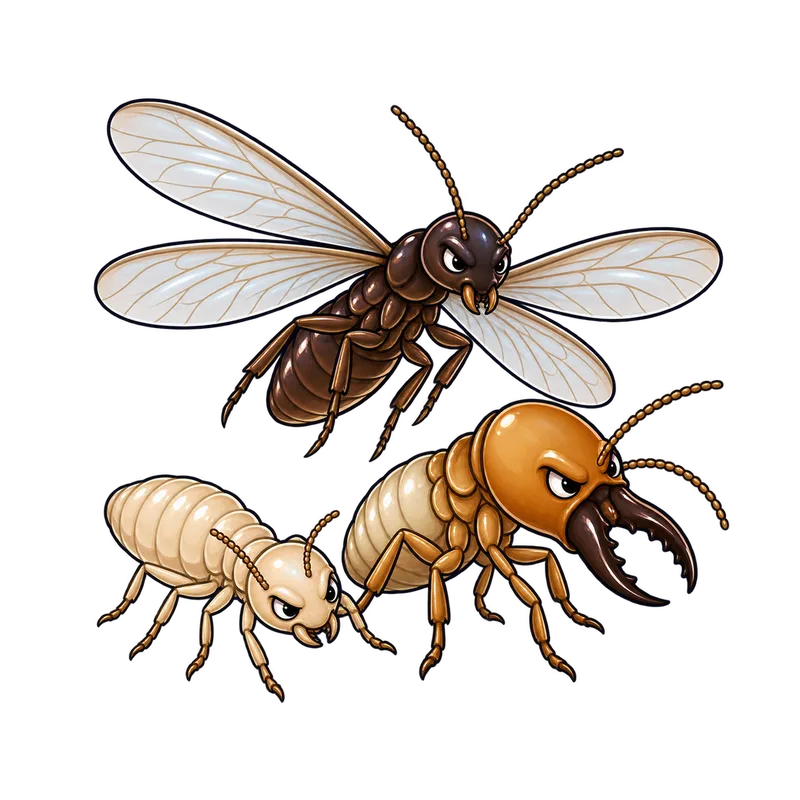
After finding termite swarmers indoors, Florida homeowners should collect five to ten intact insects and dropped wings in a jar of rubbing alcohol for an expert to evaluate. Vacuum up any remaining loose bugs and throw the bag into an outdoor trash bin. Finally, contact a state-licensed pest control operator for a professional inspection instead of using retail sprays.
What is actually going on
Picture walking into your sunlit Florida living room on a warm spring afternoon and noticing what looks like a dusting of tiny flying bugs crawling frantically across the windowsill, alongside a scattering of paper-thin, translucent wings. It is easy to brush them off as harmless gnats blown in through an open door, but finding a flurry of these winged insects indoors usually points to an uncomfortable reality. An established termite colony, likely several years old, is living inside your structural timbers or directly beneath your concrete slab, and these winged scouts are the vanguard trying to branch out.
When termites reach a certain maturity, they produce alates, which are the reproductive members equipped with wings and compound eyes. Environmental cues like temperature shifts and humidity trigger these bugs to abandon the primary nest en masse to mate and start new colonies. Because they are weak fliers drawn to artificial lights and window brightness, they end up concentrated indoors. Finding them inside closed rooms means they did not just wander in from the yard. They hatched from within your home.
The natural instinct when seeing any bug indoors is to reach for the nearest can of surface spray, but blasting indoor swarmers with a retail aerosol insecticide accomplishes almost nothing. Those sprays kill only the visible flyers, leaving the queen, soldiers, and sterile workers safe deep inside their wooden or subterranean galleries. Worse yet, the chemical disturbance often drives the colony to seal off those tunnels and chew through a different, uninspected part of your framing.
How to tell for sure
Before panicking, you need to confirm what you are looking at because winged ants show up in Florida homes too. Grab a magnifying glass and check three physical features. Termites have straight, bead-like antennae, thick waists that do not pinch inward, and four wings of exactly the same length that extend far past their abdomens. Flying ants have elbowed antennae, pinched waists, and forewings noticeably larger than their hindwings.
If you confirm they are termites, you usually need to figure out which kind has moved in. Subterranean termites require moisture and build brittle, pencil-wide earthen shelter tubes made of chewed wood and soil across foundation walls to bridge the gap between the dirt and your house framing. They feed along the soft springwood grain, leaving hollowed timbers behind without dropping any waste out in the open.
Drywood termites operate differently because they live entirely inside dry, sound wood without any contact with the soil. Instead of mud tubes, they usually leave behind tiny, hard fecal pellets that look like coarse sand or table salt. These pellets accumulate in neat little piles beneath tiny pinholes in your trim or baseboards. Finding those six-sided pellets or pencil-thick mud tunnels tells you whether you are dealing with subterranean foragers or drywood residents.
What usually comes next
The single most productive move you can make right now is gathering physical evidence for an expert to evaluate. Collect five to ten intact swarmers and dropped wings, drop them into a small jar or plastic bag containing rubbing alcohol, and leave them preserved for inspection. Vacuum up any remaining loose insects and throw the vacuum bag straight into an outdoor trash bin.
Avoid the temptation to drill holes or apply home remedies to your walls. Instead, do a calm, non-invasive walkthrough of your house. Check baseboards, window frames, and attic spaces for piles of sand-like pellets, and inspect your exterior foundation walls for mud tubes. Tap exposed wooden beams with a screwdriver handle to listen for hollow or papery sounds.
Once you have your samples and notes, contact a state-licensed pest control operator to perform a professional structural inspection. A qualified inspector will map out the extent of the activity, identify the exact species, and recommend an appropriate course of action, which usually ranges from targeted baiting systems and non-repellent liquid soil barriers to whole-structure gas fumigation depending on what they find.
When to get help
Termite management in Florida is not a simple weekend project, and certain situations require immediate professional or regulatory intervention. Uncontrolled subterranean or invasive Formosan termite colonies can hollow out load-bearing studs and subflooring over time, creating severe structural weakening that risks sagging or collapse if left unchecked. Because termiticides and structural fumigants are heavily restricted EPA-registered products governed by strict label laws, soil trenching, sub-slab drilling, and gas tenting belong strictly in the hands of licensed operators.
If you or anyone in your household experiences direct chemical exposure, acute illness, or respiratory distress from misapplied products, contact a clinician, urgent care center, or poison control center right away. Furthermore, if you live in a historic property, near protected wildlife habitats, or within a condominium association where shared exterior walls and roofs complicate the rules, consult local housing authorities or your association management before scheduling invasive treatments or whole-home tenting.