
What does finding flying termites in an Indian house mean?
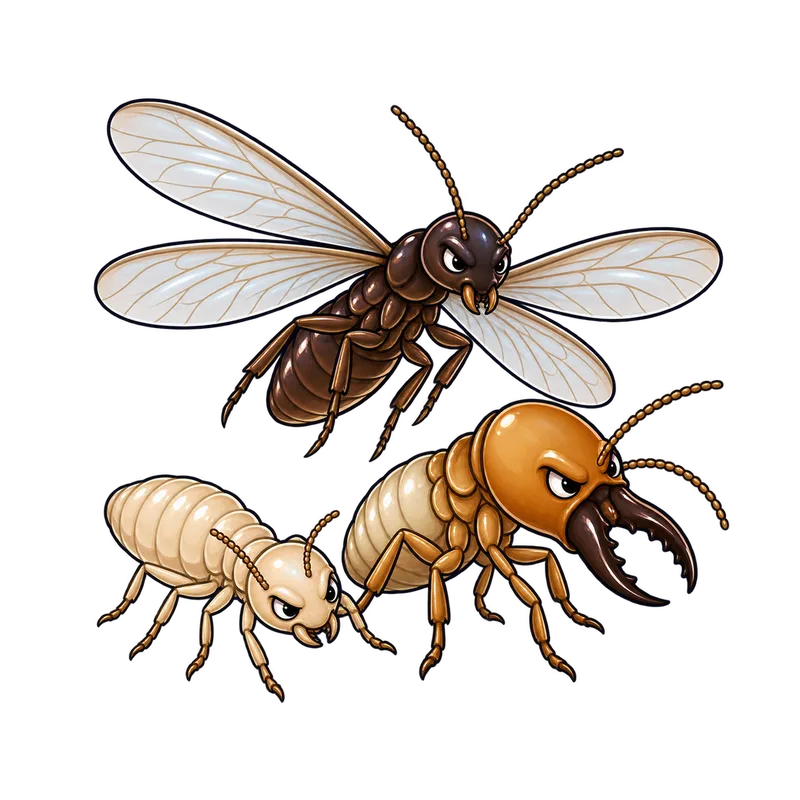
Finding flying termites in an Indian house means that a mature colony nearby is having a mass exodus to mate and start new families. If these winged bugs are emerging directly from a gap in a wooden door frame, a baseboard, or a mud tube, it means an established nest is likely tucked away inside your structure.
What is actually going on
Picture a warm, sticky evening right after a heavy monsoon downpour. You flip on the living room light, and suddenly a cloud of fluttering insects is circling the bulb, dropping little translucent wings all over your tiled floor. If you live in an Indian home, finding these flying bugs is enough to send your heart straight into your throat. You are probably wondering if the house is about to fall down around you.
Here is the short answer: finding flying termites means that a mature colony nearby is having a mass exodus to mate and start new families. These flying visitors are the adult kings and queens of the termite world. They are built for travel, equipped with dark bodies and functional wings that set them apart from the pale, blind workers crawling through the dark under your floors.
When you spot these winged bugs inside your house, the main question is how they got there. If you see them emerging directly from a gap in a wooden door frame, a baseboard, or a mud tube snaking up your wall, you are looking at a serious warning sign. It usually takes a colony three to five years of quiet eating behind the scenes before it reaches the size where it can produce these flyers. That means an established nest is likely tucked away inside your structure.
On the other hand, if you only see a few of them fluttering around an open window or a bright porch light during a sultry evening, they might just be outdoor travelers drawn in by the lights. Even so, that outdoor swarm confirms that destructive colonies are living close to your property, waiting for an opportunity to push inward. They fly for a brief, weak distance, land, break off their wings along a built-in fracture line, and look for a damp, dark spot to build a new empire.
How to tell for sure
It is easy to mistake these critters for flying ants, especially when panic sets in and every bug looks like a threat. Before you assume the worst or start tearing up your furniture, you usually need to take a close look at a few basic physical features. You do not need a microscope for this, though a simple hand lens can help if your eyesight is tired.
Look closely at the waist of the insect. A flying ant has a distinctly narrow, pinched waist that looks like a tiny hourglass, while a termite has a thick, uniform body with no constriction at all, much like a grain of rice. Next, check the antennae. Ants have elbowed antennae that bend sharply in the middle, while termites sport straight, flexible feelers that look like a string of tiny round beads.
Then there are the wings. A termite has four wings of equal length and size that fold flat down its back and stretch well past the tip of its abdomen. A winged ant also has four wings, but the front pair is noticeably larger and longer than the back pair.
People often wonder why a quick spray with a household aerosol can never seems to solve the problem. The reason is simple. Spraying kills only the few dozen insects that decided to fly out into the open room, leaving the massive, hidden core of the colony completely untouched. The queen, the soldiers, and thousands of blind workers are still munching away behind your walls or underneath your floor slab.
What usually comes next
When you find these winged visitors, you have a choice to make about your next step, and your best move is usually calm observation rather than frantic destruction. Start by collecting a few of the fallen insects or shed wings in a clean glass jar or a small container. If you want to keep them intact for an expert to look at later, dropping them into a small amount of rubbing alcohol works well.
Next, do a quick, non-destructive walkaround. Take a bright flashlight and check the wooden elements near floor level, window sills, and where plumbing pipes enter walls. You are looking for thin, muddy tunnels built against the masonry or tiny piles of sand-like droppings. Take a screwdriver handle or a small mallet and gently tap on your wooden skirting boards or door frames. Solid wood gives a sharp, crisp tap, while wood hollowed out by pests sounds dull and papery.
You can also cut off the welcome mat for future colonies by fixing plumbing leaks, clearing away wet firewood stored near the house, and making sure soil and garden mulch do not pile up against your exterior walls. Regarding chemical treatments, remember that any termiticide application must strictly follow the instructions printed on the product label. Never alter or guess at mixing ratios, and never apply restricted professional chemicals yourself.
When to get help
There comes a point in every pest situation where DIY checks run out and you need to hand the reins over to someone who does this for a living. If you spot live termites pouring out of your interior walls, find active mud shelter tubes on your foundation, or tap on a wooden beam that caves in under a light knock, you need to bring in a certified professional.
Subterranean species can cause extensive structural damage remarkably quickly when left unchecked, sometimes chewing through vital structural timber in a matter of months. A licensed pest management operator brings specialized tools like moisture meters and acoustic detection gear to figure out the full extent of the nest.
If you or anyone in your household experiences accidental exposure to concentrated pesticides during a cleanup attempt, do not guess at safety. Contact a medical doctor, an urgent care clinic, or your national poison control center immediately. Termites themselves do not sting or carry human diseases, but chemical handling always demands caution. Let a professional handle the mapping and treatment plan so you can protect your home without second-guessing every wooden beam in the house.