
What are the signs of termites in a house?
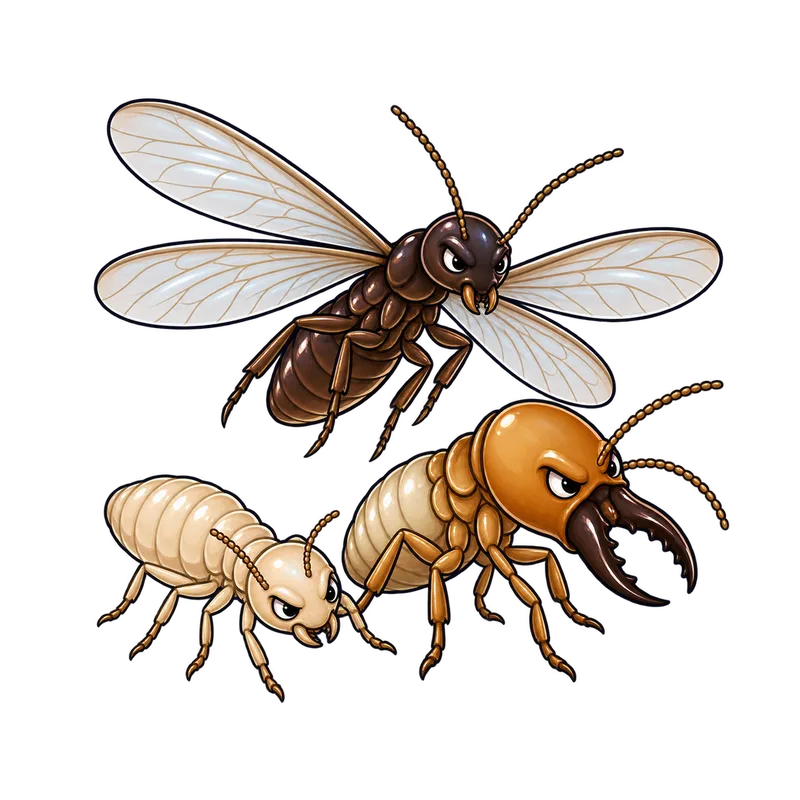
Signs of termites in a house include pencil-thick mud streaks on foundation walls, discarded translucent wings, and small piles of hard, six-sided droppings. The specific clues depend on whether you have subterranean species that build earthen shelter tubes or drywood colonies that push out tiny fecal pellets.
What is actually going on
Picture walking down into your basement on a damp Tuesday morning, holding a cup of coffee and noticing a narrow streak of dried mud running vertically up your concrete foundation wall. It looks like a pencil-thick streak of dirt that someone smeared there with a thumb. Or perhaps you open a spare bedroom window and find a small pile of tiny, hard, pepper-like grains resting on the sill right beneath a dozen discarded, translucent wings. These quiet, hidden clues are usually the first real hints that your house has been hosting an unwelcome colony of wood-destroying insects.
Detecting structural termite activity requires looking in places you usually ignore because these insects lead a strictly hidden life inside soil and timber galleries. They avoid open air and light at all costs, preferring to eat your home from the inside out. The exact signs vary depending on whether you are dealing with subterranean termites that need ground moisture to survive or drywood termites that live entirely within seasoned lumber.
Subterranean species build flat, earthen shelter tubes out of soil, chewed wood, and saliva to bridge non-combustible barriers like concrete footings and brick walls. Breaking one of these mud tunnels open often reveals tiny, creamy-white workers scurrying inside. Meanwhile, drywood termites ignore the soil entirely and push out hard, six-sided fecal pellets through tiny kickout holes in door frames or ceiling beams.
You might wonder how a colony can chew through framing for months without anyone noticing a thing. The answer lies in how they feed. Subterranean workers consume the soft springwood layers of structural timbers while leaving the harder summerwood rings and the outer paint or paper veneer completely intact. This creates a thin wooden blister that usually collapses under the light pressure of a screwdriver or even a thumb, hiding a maze of soil-plastered galleries behind a wall of silence.
Termites survive by staying completely hidden from open air, maintaining high humidity inside their mud tunnels and wood galleries. Subterranean species have soft bodies that dry out rapidly when exposed to room air, which is why they construct dirt drinking straws to cross concrete and stone. They need this enclosed environment to forage safely away from ants and other predators.
Drywood termites take a different approach because they can extract water directly from seasoned timber with very low moisture content. They do not need soil contact at all. Instead of plastering mud inside their tunnels, they keep their galleries clean by kicking their hard, six-sided droppings out through tiny holes, leaving small piles that look like tiny footballs right where they fall.
How to tell for sure
Figuring out whether you are looking at actual termites instead of harmless lookalikes usually comes down to a few anatomical details that might require a magnifying glass. People often mix up swarming winged termites with carpenter ants, but their bodies are built on completely different plans. Termites have a thick, straight-sided waist that does not pinch in, straight antennae that look like tiny strings of beads, and two pairs of wings that are roughly the same length and stretch far past their tails. Ants have a pinched waist, bent antennae that angle sharply like an elbow, and front wings that are clearly longer than their back wings.
The debris left behind also tells you a lot. Drywood termite droppings are hard, shaped like tiny footballs with six indented sides, and pile up neatly in little cones right under their tiny exit holes. If you sweep up fine powder that feels like flour, you are probably looking at powderpost beetles instead of termites. If you find coarse wood chips mixed with dead insect parts, you are likely dealing with carpenter ants that chew wood just to clear a nesting space rather than eating it.
Listening closely can also give away an active colony if you know what to hear. When something disturbs their hidden tunnels or wood galleries, soldier termites shake their bodies and knock their heads against the timber. This head-banging makes a fast, ticking noise, almost like a tiny clock hidden behind your drywall. You can test suspicious framing by tapping it gently with the handle of a screwdriver. Healthy wood makes a crisp, solid sound, while wood eaten out by termites makes a dull, hollow thud.
What usually comes next
Finding mud tubes, discarded wings, or hollow framing means your best move is to stop poking around and call in a professional inspector instead of trying a quick fix from the hardware store. Grabbing a household spray can or wiping away a mud tunnel might feel like taking action, but it just warns the colony, causing the insects to seal off that path and move deeper into hidden walls.
Colonies involve thousands or even millions of insects hidden behind drywall, subfloors, and concrete slabs where surface sprays cannot touch them. A proper inspection uses specialized tools like moisture meters and acoustic sensors to find the full extent of the damage without tearing your house apart. Pretending that cleaning the surface fixes the issue is a costly mistake. Real control means tracing the problem back to where it starts, whether that involves fixing a hidden plumbing leak or finding where the soil touches the foundation.
When to get help
You need to call a licensed pest control professional right away if you notice major structural warning signs like sagging floor joists, buckling drywall with dirt-colored trails behind it, or floorboards that dip when you walk on them. Applying liquid termiticides or setting up soil barriers takes certified training and strict compliance with product label directions, which are backed by law.
There are also safety boundaries to keep in mind. Termites do not bite people or feed on living tissue, but digging into large nests or rotting wood can stir up mold and dust that trigger asthma or allergies. If someone in your house has trouble breathing or shows allergic reactions after checking out a damaged wall, reach for a phone and contact a doctor or poison control right away. Wall voids and crawlspaces also tend to attract protected wildlife like bats or nesting birds. A certified pest technician knows how to check for these animals and will contact the proper wildlife agency before any chemical treatment or structural gas fumigation gets underway.