
What are Formosan subterranean termites?
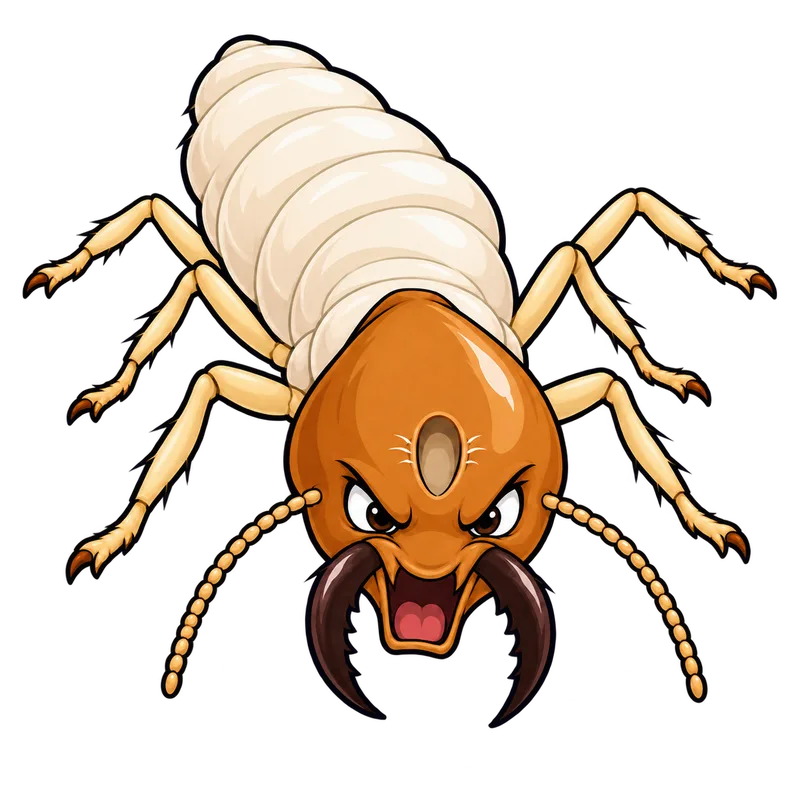
Formosan subterranean termites are invasive, highly aggressive wood-destroying insects that form massive colonies of up to eight million individuals. These pests arrived on cargo ships following World War II and can consume structural timber at a terrifying pace. They can build secondary aerial nests high up in walls if they find a steady moisture source.
What is actually going on
You are walking across the patio on a sticky, humid evening in late spring, and the porch light is suddenly surrounded by a swirling cloud of pale yellow, winged insects. Most people swat at them, assume they are just another harmless beetle or flying ant, and head inside. If you happen to live across the Gulf Coast, parts of South Carolina, Florida, or Hawaii, those visitors might actually be Formosan subterranean termites looking to start a new empire in your framing timbers.
Formosan subterranean termites are an invasive, highly aggressive species originally brought over on cargo ships following World War II. While native subterranean termites usually build modest colonies numbering in the tens or hundreds of thousands, a mature Formosan colony can swell to seven or eight million individuals. Their underground foraging tunnels can stretch over three hundred feet from the nest, and a single colony can easily cover an entire acre of soil, chewing through structural timber at a terrifying pace.
What makes them genuinely unique, and terrifying for property owners, is their ability to build aerial nests out of carton. Carton is a hardened, sponge-like matrix made from chewed wood, soil, saliva, and fecal matter. If they find a steady above-ground moisture source like a chronic roof leak or a dripping air conditioning line, they can establish these secondary nests high up inside wall voids or attics. That means they can thrive and eat your house from the top down without ever needing to maintain direct contact with the soil underneath.
Understanding these insects requires looking at how they operate beneath the surface of your home. Unlike native species that stay close to the ground, Formosan colonies build complex networks that combine underground foraging with above-ground satellite nests. Workers continuously chew wood to feed the colony, while soldiers defend the nest against predators by discharging defensive fluids from a gland on their head. Because a single colony contains millions of members, the rate of wood consumption is significantly faster than what homeowners typically expect from ordinary wood-destroying pests.
How to tell for sure
Figuring out what you are dealing with requires a close look because treatments that work for other wood-damaging insects will fail entirely against Formosan colonies. You usually start by looking at the swarmers, which are the winged reproductives that leave the nest on warm, humid evenings. Formosan swarmers usually have pale yellow to brownish-yellow bodies and wings that are densely covered in fine microscopic hairs, giving them a velvety look under a magnifying glass. Native subterranean swarmers tend to be dark brown or jet-black with completely smooth, hairless wings.
If you manage to catch a soldier termite, which is the defensive caste with large jaws, look at its head capsule under a lens. A Formosan soldier usually has an oval or teardrop-shaped head that tapers toward the front, featuring a tiny central pore called a fontanelle. Native subterranean soldiers usually have elongated, rectangular heads with parallel sides.
Checking your home also means looking closely at what is missing. Subterranean termites never push out dry, hard, hexagonal fecal pellets. If you find tiny wooden pellets on the windowsill, you are usually looking at drywood termites instead. Formosan termites keep their galleries packed with mud, soil particles, and chewed wood paste. If you see brown earthen tubes traveling up your concrete foundation or brick veneer, or if your baseboards sound hollow and crush easily under a screwdriver, you are dealing with subterranean foragers.
What usually comes next
Your single most important practical decision right now is to stop guessing and arrange for a professional timber pest inspection before you touch a single can of bug spray. Grabbing a retail aerosol can from the hardware store and spraying the swarmers you see on the living room floor is like putting a bandage on a broken bone. It kills a few foraging workers on the surface while leaving the multi-million-member colony safely tucked away inside your walls, continuing to eat your framing.
A proper inspection relies on specialized tools like acoustic stethoscopes, moisture meters, and thermal imaging cameras to track down the main colony and any hidden aerial carton nests. Once the extent of the infestation is mapped out, a licensed pest management professional can decide whether the situation calls for targeted baiting systems or modern non-repellent liquid termiticides. These non-repellent treatments work because the termites cannot detect the chemical, allowing foraging workers to unknowingly walk right through it and carry the lethal dose back to share with the rest of the colony through social grooming and feeding.
When to get help
You need to call a certified pest control professional immediately upon finding any physical warning sign of Formosan termites, such as mud tubes, swarming insects indoors, blistered wood flooring, or damp, bulging drywall. Because these insects can compromise the structural integrity of a building in a matter of months, DIY methods simply cannot match the scale of the problem. Handling restricted-use non-repellent termiticides and commercial injection equipment also requires state-certified licensing and adherence to strict product label laws.
If you experience physical symptoms, the situation calls for medical attention. While subterranean termites do not transmit human diseases and rarely bite, the mold, dust, and insect debris accumulating inside infested wall voids can trigger severe respiratory allergies and asthma attacks. If you or a family member develop breathing difficulties, persistent rashes, or allergic reactions around suspected termite damage, consult a medical clinician or your local poison control center right away. If pest management operations happen to overlap with protected wildlife habitats, such as bats or nesting birds in roof voids or hollow trees, you must consult the responsible state or national environmental agency to ensure compliance with wildlife protection regulations before any work begins.