
How can you tell subterranean termite swarmers from drywood termite swarmers?
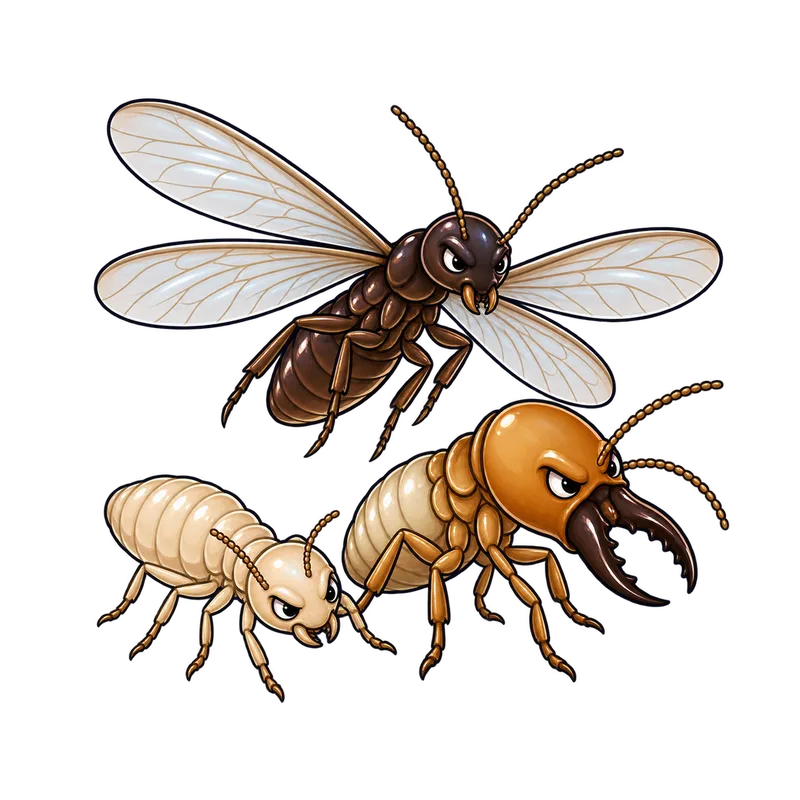
You can tell subterranean termite swarmers from drywood termite swarmers by their size, color, and wing veins. Subterranean swarmers are smaller at 8 to 9 mm long with solid dark brown or black bodies, while drywood swarmers are larger at 11 to 12 mm long with a reddish-brown head and thorax.
What is actually going on
You are walking across the living room on a warm spring afternoon, and suddenly you notice what looks like a cloud of tiny flying insects swirling around the windowsill. Before you start grabbing rolled-up magazines or wondering where they came from, you take a closer look and realize they are dropping tiny, papery wings everywhere. If you happen to live in a region where wood-destroying pests are common, finding winged bugs indoors usually triggers a familiar wave of dread. Are they ants looking for a crumb, or are they termite swarmers signaling a deeper problem in your framing?
When you find these winged invaders, telling subterranean termite swarmers apart from drywood termite swarmers comes down to a few distinct physical and behavioral clues. Subterranean swarmers are typically smaller, measuring about 8 to 9 mm long including their wings, and they usually sport a uniformly dark brown to solid black body. Drywood swarmers are noticeably larger at 11 to 12 mm long, and they often feature a striking two-toned look with a reddish-brown head and thorax paired with a dark brown abdomen.
Beyond their size and color, their wings and habits tell an even clearer story. Subterranean termite wings feature only two primary heavy veins running along the leading edge, while drywood wings carry three or four heavy veins with distinct little cross-veins near the tip. More importantly, how and where you find them in the house usually points straight to their nesting habits. Subterranean species need moisture from the soil and build mud shelter tubes across foundations, whereas drywood species live entirely inside dry structural wood without ground contact and push out hard, six-sided fecal pellets through tiny holes.
Beneath the surface of your drywall, those swarmers are just the public face of a mature colony trying to expand its empire. Once a colony hits roughly three to five years of age, it starts churning out these winged adults for a synchronized flight. They flutter around for a bit, land, and deliberately shed their wings along a weak seam near the base. If a pair manages to find each other and an open door into wood, they dig in and start a brand-new royal family.
The stark differences in how subterranean and drywood swarmers look and behave all come down to moisture management. Subterranean workers have soft, delicate bodies that shrivel in dry air, which ties them to damp soil and protective shelter tubes. Drywood termites evolved to thrive inside bone-dry framing lumber. Their guts reclaim almost every drop of internal moisture, leaving them to push out dry waste as hard, distinct, six-sided pellets that look like tiny wooden footballs.
How to tell for sure
Before worrying about which kind of termite you are looking at, you have to rule out winged ants. Termites have straight, beadlike antennae, a broad waist where the body segments join without a pinch, and four wings of identical size and shape that extend well past the abdomen. Winged ants, by contrast, have elbowed antennae, a narrow wasp waist, and forewings that are noticeably larger than their hindwings. Once you confirm you are actually dealing with termites, you can usually pin down the specific type by examining their physical traits and the surrounding evidence.
Look closely at the body coloration and size under good lighting or with a magnifying glass if you have one. Native subterranean swarmers tend to be a solid, uniform dark brown or black. If you are dealing with drywood swarmers, the head and thorax usually show a distinct reddish-brown or orange-brown hue that contrasts sharply with the darker tail end. If the specimens are faded, damaged, or hard to color-match, check the wing veins. Subterranean wings have a sparse, clean look with two main front veins, while drywood wings have a busier network featuring those extra cross-veins near the tip.
The surrounding clues in your home or yard usually settle the debate. Subterranean termites leave behind flattened earthen tunnels on foundation walls or concrete piers, but they never produce dry droppings. Drywood termites leave no mud tubes at all, but you can usually find small piles of tiny, hard, six-sided pellets tucked near windowsills or floorboards beneath infested timber.
What usually comes next
Finding a pile of discarded wings or active flyers indoors calls for a methodical response, starting with trapping a few intact specimens in a small glass jar or a vial with 70% isopropyl alcohol for an expert to look at, followed by booking a professional inspection. Plenty of people make the mistake of grabbing an ordinary aerosol bug spray from the garage to knock down the insects buzzing around the glass. That might clear the air for the afternoon, but it completely ignores the hidden colony chewing through your structural studs or subfloor.
Try to resist the urge to scrape off mud tubes or start hacking into suspect timber before someone who knows what they are doing arrives. Disturbing active foraging trails often pushes the colony to abandon those tunnels and move deeper into untouched parts of the house, which only makes the eventual diagnosis harder. A licensed pest management professional brings the right tools and training to trace the source, name the exact species, and map out whether you need spot treatments or a whole-house fumigation.
When to get help
Call in a licensed pest management professional the moment you confirm an indoor swarm, spot fresh mud tubes along your foundation walls, or notice piles of dry, six-sided droppings gathering in a windowsill. Termites can quietly hollow out load-bearing timber and subfloors over years, and fixing an established structural infestation takes specialized gear, safety controls, and registered termiticides that belong strictly in the hands of certified operators.
If anyone in the house develops skin irritation, rashes, or allergic reactions after dealing with bugs, talk to a qualified clinician or medical professional without delay. Termites do not bite people or carry disease, so skin marks usually point to something else entirely. If your inspection happens to uncover unexpected wildlife nesting in the attic or crawl space, reach out to a local animal removal specialist or wildlife agency instead of trying to handle protected animals on your own.