
What are Formosan termite swarmers?
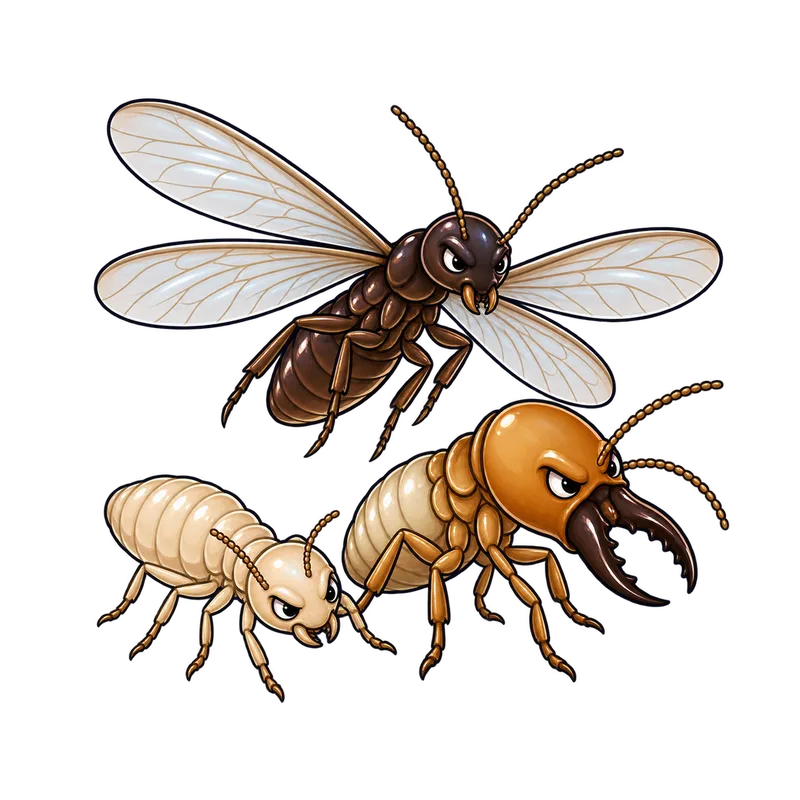
Formosan termite swarmers are the pale yellow to caramel brown, winged reproductive adults of an invasive wood-destroying species that measure one-half to six-tenths of an inch long. They leave their nests at dusk and night to mate and start new colonies. Finding them indoors indicates an active infestation nearby, which requires professional inspection.
What is actually going on
You turn on the back porch light on a warm, muggy June evening, and suddenly the glass is covered in a swirling cloud of pale yellow bugs. By morning, you walk out to find hundreds of tiny, translucent wings scattered across the concrete like confetti, with nary a bug in sight. What you are looking at is a Formosan termite swarm. These insects are the winged, reproductive adults of the Formosan subterranean termite, a notoriously aggressive and invasive wood-destroying species. When a mature colony reaches a certain size, thousands of these winged adults, known as alates, leave their underground or aerial nests simultaneously to mate and start new colonies.
Unlike native subterranean termites that typically swarm during daylight hours in the spring, Formosan swarmers prefer the cover of dusk and night. They are strongly attracted to artificial lights, which is why porch lamps, illuminated windows, and streetlights often turn into gathering grounds for them. After a brief, clumsy flight, they land, snap their wings off along a built-in pre-scored line on their backs, and pair up. Males follow females in a tandem line to find a damp crevice in wood or soil where they can seal themselves inside a nuptial chamber, mate, and begin laying eggs for a brand-new colony.
It helps to understand that these swarmers do not actually eat wood. Their sole purpose in life is dispersal and reproduction. The structural damage you worry about is carried out entirely by the wingless worker caste hidden deep inside the wood or underground. Finding a few stray wings outside on your patio furniture usually just means a colony in the general neighborhood is sending out scouts. However, finding hundreds of live swarmers or piles of shed wings inside your living room or clustered around an indoor baseboard is a different story altogether. That points directly to an active infestation living right inside or beneath your building.
People often panic and call any flying insect with wings an ant or a termite, but telling them apart comes down to a few straightforward physical traits. Formosan termite swarmers measure about one-half to six-tenths of an inch long, including their folded wings, and their bodies usually range from a pale yellow to a caramel brown color. If you look closely at their wings under a magnifying glass, you will notice a dense covering of tiny, fine hairs across the membrane. That hairy wing is a dead giveaway that sets them apart from native subterranean termites, which usually have clear, hairless wings and much darker, nearly black bodies.
To separate termites from winged ants once and for all, check the diagnostic body triad. Termites have straight, bead-like antennae, a thick and uniform waist that looks like a small soda can, and four wings of identical length. Ants, by contrast, feature elbowed antennae, a severely pinched waist that looks like an hourglass, and forewings that are noticeably longer than their hindwings. If the insect you trapped has a cinched waist and elbowed feelers, it is an ant. If it has a thick waist and straight feelers, you usually need to look closer at whether it is a Formosan or a native termite.
Catching a few specimens usually settles the debate. You can easily trap five or ten of the insects or their dropped wings in a clean container, slide them into a small jar of isopropyl alcohol, or tuck them into a plastic bag before placing them in the freezer. Bringing those preserved samples to a local university extension office or a licensed pest control professional gives you a definitive identification without relying on guesswork.
How to tell for sure
The single most important decision you face when spotting these bugs indoors is whether to buy an aerosol bug spray or call for backup. It feels tempting to grab a can of surface insecticide from the garage shelf and blast every swarmer crawling up the window frame. While that clears away the visible insects, it solves almost nothing about the actual problem. Sprays only kill the few dozen adults in plain view. They leave the main colony, which may consist of hundreds of thousands of hungry workers and a queen safely tucked away behind your drywall or beneath your slab, completely untouched.
Instead of treating the swarmers as the enemy, view them as messengers. Their appearance inside your living space means a mature colony is close by, and it is time to arrange a professional inspection. Formosan termites are unique because they do not always require damp soil to survive. If your house has chronic roof leaks, poor plumbing, or air conditioning condensation pooling in wall cavities, these pests can build self-sustaining aerial carton nests made of chewed wood, soil, and saliva entirely above ground. A standard soil treatment misses an aerial nest completely, which makes expert mapping of the structure necessary before any treatment plan begins.
What usually comes next
You need to involve a licensed pest control professional the moment you find live Formosan swarmers or piles of shed wings inside your home, or if you discover mud shelter tubes running up your foundation walls. Structural termite management involves specialized tools like non-repellent liquid termiticides or regulated baiting systems containing insect growth regulators. These materials and their application methods are strictly governed by product labels and state regulations, meaning they belong exclusively in the hands of licensed applicators who know how to handle them safely and effectively.
When to get help
If anyone in your household experiences severe allergic reactions, breathing difficulties, or skin irritation around pesticide applications or heavy dust during an inspection, seek medical attention from a clinician immediately or contact poison control. For suspected or confirmed Formosan termite activity in public buildings, historical structures, or commercial properties, notify the property management or the responsible agricultural agency to ensure the infestation is handled according to local building codes and structural protection standards.