
What is termite frass?
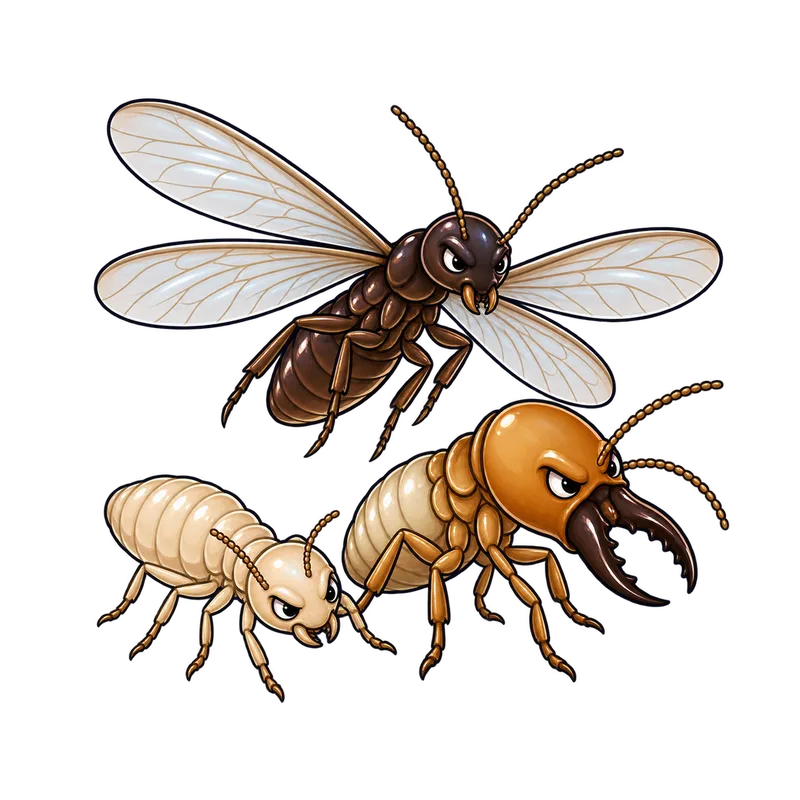
Termite frass is the official term for digested wood excrement left behind by wood-destroying insects. Individual drywood termite fecal pellets average approximately 0.85 millimeters in length and feature six distinct, concave sides that give them a hexagonal cross section. To the unaided eye, these hard, dry pellets look like a tiny pile of coarse sand or poppy seeds.
What is actually going on
You wipe down a wooden windowsill on Saturday morning, clear away a tiny pile of what looks like coarse salt or ground pepper, and move on with your weekend. By Wednesday, that exact same little pile of debris has reappeared in the exact same spot. Nothing around it looks broken, no plaster is falling, and there are no stray bugs crawling across the ledge. You are looking at insect frass, which is the official term for digested wood excrement left behind by wood-destroying insects.
When termites live inside a piece of wood, they eat their way through the interior cellulose. What goes in as wood fiber must eventually come out. Depending on the type of termite involved, that waste takes very different forms. Drywood termites live entirely within sound, dry lumber like attic rafters, window frames, door casings, or hardwood furniture. Because they get no outside water source, their digestive tract is built to reabsorb nearly every drop of liquid from their gut contents before waste leaves the body. That intense pressure compresses their waste into dry, hard, uniform pellets.
To keep their internal feeding galleries clean, drywood termites bore tiny, round exit ports through the surface of the timber. These openings measure roughly 1/16 inch in diameter, which is about the thickness of a thick pencil lead. Worker termites push the accumulated pellets out through these holes. If the hole sits directly above a horizontal surface like a baseboard, the falling pellets settle into a tidy, conical mound that resembles a tiny spilled salt shaker. If the hole is located high up on an attic joist, subtle air currents scatter the falling pellets across a broader area, leaving a thin layer over insulation.
A widespread misconception is that all termites leave piles of dry pellets on the floor. They do not. Subterranean termites, which build their nests in the soil and attack structures from below, do not push out dry pellets or frass. Instead, subterranean termites produce a liquid or paste-like excrement. They blend this fluid waste with soil particles, sand, chewed wood fiber, and saliva to construct mud tubes over foundation walls and plumbing pipes. If you see loose, dry grains accumulating under a board, you can usually rule out subterranean termites.
Dampwood termites present another variation altogether. They target wood with high moisture levels, such as timber suffering from active plumbing leaks or ground contact. Their fecal pellets remain individual and football-shaped in drier pockets, but when wood moisture rises or fungal decay takes hold, those pellets absorb water, lose their shape, and dissolve into a dark, muddy paste that coats the inside of their galleries.
How to tell for sure
Telling termite frass apart from normal house dust or the waste of other insects comes down to visual details and tactile texture. Individual drywood termite fecal pellets average approximately 0.85 mm in length. Under close inspection, these pellets feature rounded ends and six distinct, longitudinal, flattened or concavely depressed sides. This gives each pellet a unique hexagonal cross section with sculptured ridges along its length.
You cannot confirm those six concave sides with the naked eye. To see the diagnostic shape clearly, you usually need a 10x magnification hand lens or a small pocket microscope. To the unaided eye, a pile of drywood frass looks like a heap of poppy seeds, coarse sand, or uniform wood-colored granules. The color varies depending on the shade of the wood the insects have been eating, ranging from light tan to dark brown or reddish-black.
A quick way to narrow down what you are looking at is the simple pinch-and-roll test. Pick up a few grains between your thumb and forefinger and rub them together. If the particles feel hard, dry, gritty, and remain distinctly separate like tiny salt grains, you are likely looking at drywood termite pellets or anobiid beetle frass. If the material feels soft, silky, and smooth like baking flour or talcum powder, without any distinct pellets, it points toward true powderpost beetles. If the powder feels coarse and gritty, tightly packed inside gallery openings, it often belongs to false powderpost beetles. If the frass consists of a fine, gritty powder mixed with microscopic, lemon-shaped pellets, it is characteristic of deathwatch beetles or furniture beetles. If you find coarse, thread-like wood shavings mixed with bits of dead insects, you are dealing with carpenter ants, which do not digest wood at all.
You might reasonably wonder if finding a pile of frass means you have a massive infestation actively destroying your home this very second. The answer is not automatically yes. The physical presence of pellets alone does not prove that live insects are currently inside the timber. Dry pellets can remain trapped inside wall cavities, door frames, or hollow floor joists for years or even decades after a colony has died out. A sudden vibration, like a slammed door, home remodeling, or structural shifting, can shake ancient pellets out of old galleries and drop them onto your floor, making a dead infestation look brand new.
To test whether an infestation is active, perform a clean-and-seal monitoring test. Vacuum or sweep away every trace of the existing pellet pile. Thoroughly clean the wood surface beneath it and seal any suspected kick-out holes with a small strip of painter's tape or a thin coat of paint. Keep a close eye on the spot over the next three to fourteen days. If fresh pellets accumulate on top of the clean surface or break through your sealed tape, live insects are actively feeding and grooming inside the wood.
What usually comes next
Once you have identified the debris and tested for activity, your immediate goal is to evaluate the affected timber without causing unnecessary structural damage. You do not need to tear down drywall or rip up floorboards the moment you spot a teaspoon of frass. Termite colonies, particularly drywood termites, develop quite slowly compared to other household pests. A small pile of frass is an early warning light, not an instantaneous structural collapse.
You can perform a basic visual and audio check using simple household tools. Take the heavy rubber or plastic handle of a screwdriver and tap gently along the suspected wood. Sound, solid timber responds with a clear, solid, high-pitched ring. Wood that has been hollowed out by termite galleries or wood-boring beetles produces a dull, thudding, or hollow sound.
Next, take a flathead screwdriver or pocket knife and gently press the tip against any areas where the wood grain looks blistered, dark, or slightly sunken. Termites often eat wood right up to the outermost layer, leaving a paper-thin surface veneer intact. If the tool easily breaks through that outer surface into hollowed, empty chambers containing packed pellets or dark spotting, you have confirmed internal gallery damage.
While checking the wood, take time to look at the surrounding environment. Look for active sources of excess moisture, such as leaking window seals, roof line drips, or plumbing condensation nearby. While drywood termites do not require external water, damp wood significantly speeds up decay and makes the structure far more attractive to other wood-destroying organisms like dampwood termites, subterranean termites, and wood-rotting fungi.
Cleaning up existing frass and fixing surrounding moisture issues are helpful initial steps, but they do not eliminate live colonies inside the wood. Once you know whether the material is fresh and where it is coming from, you can make an informed decision about professional treatment options without panicking.
When to get help
While monitoring and testing frass is easy to do yourself, structural pest control has clear limits where professional expertise becomes essential. Standard home inspections and visual checks are strictly non-invasive. A surface pile of pellets cannot tell you how deep the internal galleries extend or whether key load-bearing timbers have been compromised.
If tapping tests yield hollow thuds across major support beams, floor joists, or wall studs, stop probing and bring in a licensed timber pest inspector, structural engineer, or licensed builder. When wood-boring beetles or termites extensively hollow out subflooring or framing under heavy appliances or roofing loads, structural failure becomes a safety hazard that requires professional load-bearing evaluation.
Chemical control of wood-destroying insects is governed strictly by state and federal laws. All pesticide applications, including borate wood treatments, silica aerogel dusts, liquid soil termiticides, and structural tent fumigants, must be applied in strict accordance with the product label. It is illegal to exceed specified concentrations or apply chemicals in ways that contradict label directions. Localized gallery injections, soil barrier trenching, bait station deployment, and full-structure fumigation belong exclusively to licensed pest management professionals.
Health and environmental safety also require clear precautions. Termites do not bite humans, consume blood, or spread infectious diseases. However, disturbing large accumulations of fine insect frass, beetle dust, or associated mold spores in enclosed spaces can trigger respiratory irritation or allergic reactions in sensitive individuals. If exposure to insect dust or damp crawl spaces leads to persistent coughing, wheezing, or skin irritation, consult a qualified clinician or healthcare provider.
Finally, always consider local wildlife before undertaking attic treatments or structural repairs. Attics, wall voids, and barn rafters frequently shelter protected species, such as roosting bats or nesting migratory birds. Federal and local wildlife regulations strictly protect these animals, making it illegal to disturb or trap them during pest control operations. A licensed professional can coordinate required wildlife checks and environmental safety protocols before any work begins.