
What do termite wings in a house mean?
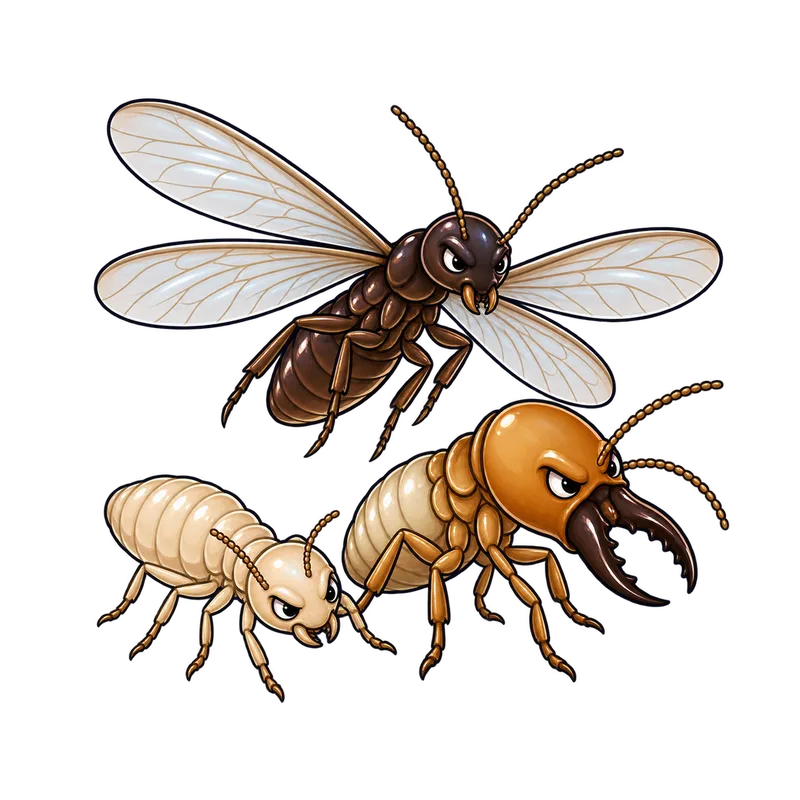
Finding termite wings in a house means that an established, mature colony has released winged flyers that shed their wings after landing. This event signals that a group of termites is currently living inside your framing, subfloor, or foundation.
What is actually going on
You walk over to the living room window on a bright spring morning, pull back the curtain to let the sun in, and freeze. Scattered right there across the painted sill is a little pile of translucent, silvery flakes that look suspiciously like tiny fish scales or discarded cellophane slivers. You lean closer, touch one with the tip of your finger, and realize you are looking at dozens of identical, delicate wings. Where did they come from, and why are they sitting in your house?
Finding discarded termite wings indoors means that a group of winged primary reproductives has swarmed either inside your living space or directly beneath the building. These insects are not random travelers that blew in on a casual breeze. Social termite colonies living in the soil or tucked away inside structural framing do not produce winged members right away. A colony typically needs three to five years, sometimes longer, to reach maturity before it is ready to produce these winged flyers.
When the time is right, driven by warmth and humidity after a rain, hundreds or even thousands of these winged males and females emerge simultaneously through tiny exit slits or kick holes in the wood. Their flight is notoriously clumsy and weak. Once they land on a surface, they deliberately twist and shed their wings along a built-in fracture line, pairing off to find a dark, damp crevice where they can start a brand new family.
So, when you see a concentrated pile of those wings on a windowsill, near a floor vent, or trapped in a light fixture, it is a very strong sign that an established, mature termite colony is currently living inside your framing, subfloor, or immediate foundation. The flyers dropped their wings because they found a structure they liked, and the wingless adults have crawled away into the dark voids to dig in.
How to tell for sure
Before you panic about structural ruin, you have to confirm what you are actually looking at, because ants love to throw winged swarms inside houses too. Do not rely on a bite or a random itch to tell you anything, because termites do not bite humans. Look at the physical specimens themselves. If you still have some dead insects mixed in with the wings, or if you can catch a few, grab a magnifying glass and check three simple body parts.
First, look at the waist. Termites usually have a broad, uniform body shape that looks remarkably like a single grain of rice, with no skinny pinch between the thorax and the abdomen. Ants, on the other hand, have a dramatic, ultra-cinched wasp waist that looks like an hourglass. Second, check the wings. Termite swarmers usually possess four transparent or smoky wings of the exact same length and shape, which fold flat over their backs and stretch well past their rear end. Winged ants have front wings that are noticeably larger than their hind wings.
Third, look at their faces. Termites have straight, filamentous antennae that do not bend sharply anywhere along their length. Ants have distinctively elbowed antennae that bend at a sharp angle like a bent arm.
You should also check the debris itself. If you find tiny, hard, six-sided pellets that look concavely depressed rather than wings, you are usually dealing with drywood termites kicking out their droppings from clean holes. If the wings are uniform, translucent, and shed in a tidy pile without any body parts attached, you are almost always looking at the aftermath of a subterranean or drywood termite emergence.
What usually comes next
The single most important decision you face right now is to resist the urge to grab a can of household bug spray and blast it into the holes where you think the insects came out. It feels counterintuitive because you want to kill the pests immediately, but spraying standard aerosol contact insecticides onto exit holes or mud tubes usually backfires. Surface chemicals will kill a few visible bugs on contact, but the rest of the hidden colony will simply detect the chemical disturbance, seal off that particular passageway, and quietly re-emerge in another dark, undetected corner of your house.
Instead of treating your walls like target practice, your best move is to gather your evidence and call in a professional timber pest inspector. Collect a few of those shed wings and any intact insects you can find, drop them into a small jar or a bag, and keep them safe for a specialist to examine. Check your crawlspace, basement, or foundation for any obvious plumbing leaks, roof drips, or wood touching damp soil, but leave the actual diagnostic work and treatment planning to someone licensed to handle structural pests. A qualified inspector will use specialized tools like moisture meters and acoustic gear to track down where the parent colony is hiding without scattering them further into your walls.
When to get help
There are moments when a household pest issue crosses the line from a weekend worry into a situation requiring outside authority. You need to call a certified timber pest professional the moment you find concentrated piles of shed wings indoors, or if you spot mud shelter tubes snaking across your concrete foundation walls, or if you tap on a wooden baseboard and it sounds hollow or crushes inward like a fragile eggshell under the light pressure of your thumb.
On the health side, termites are harmless to human skin and do not transmit infectious diseases, so you do not need an emergency room visit just because you found their wings. However, if you or someone in your home experiences unexplained skin lesions, acute allergic reactions, or unusual respiratory symptoms, consult a qualified medical clinician or poison control center right away, as damp wood and structural decay often encourage indoor mold growth and airborne spore accumulation that can trigger sensitivities.
Finally, if your inspection reveals an unusual or reportable invasive timber pest governed by regional biosecurity laws, or if you live in a jurisdiction where specific non-native species trigger mandatory statutory reporting, you must notify the responsible state or national agricultural agency rather than attempting any self-treatment.