
What does drywood termite frass look like?
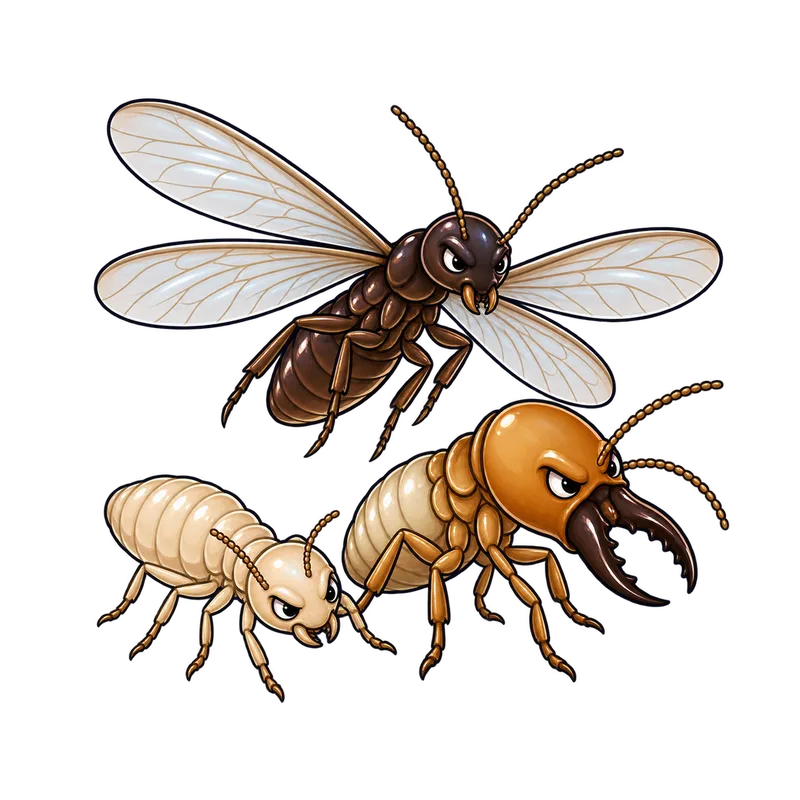
Drywood termite frass looks like tiny piles of coarse coffee grounds or dark sand. Each individual pellet is hard, dry, and measures less than one-twenty-fifth of an inch in length. Under magnification, every pellet features six distinct, concavely depressed sides running down its length, separated by sharp ridges.
What is actually going on
You walk over to the living room window to open it on a bright Saturday morning, and you spot a tiny pile of dark granules sitting right there on the white sill. It looks almost like someone spilled a pinch of coarse coffee grounds or dark sand. You brush it away with a paper towel, figuring some dirt blew in through an open screen, but two days later, the exact same little heap is back. That tiny pile is not stray dirt. It is drywood termite frass, which is just a polite word for their droppings.
Drywood termites spend their entire lives tucked deep inside sound, dry wood structures, chewing galleries across the grain as they feed. Because they need to keep their tunnels clear to move around, they push their waste out of tiny openings in the wood. Those little piles are the primary clue they leave behind, long before any structural timbers begin to sag or fail.
If you look at these pellets closely, they are hard, dry, and surprisingly uniform. Each individual piece measures less than one-twenty-fifth of an inch in length, which translates to about zero point eight five millimeters. They contain no soil, no mud, and no sticky binders. The termites pack every bit of moisture they can out of their digested food before expelling the waste, which gives each pellet a very specific shape.
Drywood termites belong to a specific family of wood-destroying insects that do not need any contact with damp soil to survive. They pull all the moisture they need right out of the dry, seasoned timber they inhabit. As the workers tunnel through framing lumber, window casings, and roof supports, they consume cellulose and digest it with the help of specialized organisms living in their hindguts.
The waste generated by this wood diet must go somewhere. If the termites left all their excrement inside the galleries, they would quickly run out of living space. To solve this problem, they bore tiny, round openings through the outer veneer of the wood, known as kick-out holes. They use these temporary ports exclusively to purge their waste, pushing the pellets out into the open air where gravity takes over.
When the pellets drop from a low structural member onto a windowsill or a baseboard, they form neat, conical heaps that catch the eye. If they fall from high attic rafters or roof sheathing, they scatter across the floor or insulation below. Because these pellets are entirely dry and protected from rain, they do not decay quickly. They can sit in an undisturbed wall void for years, which complicates things when you are trying to figure out whether a colony is currently active or long gone.
How to tell for sure
You do not need a fancy laboratory microscope to figure out what you are looking at, but a standard ten times magnifying glass helps a lot. If you take a small pinch of the material and roll it between your thumb and index finger, it usually feels hard, dry, and gritty, much like clean beach sand. It will not crush into a soft, floury powder, which serves as your first big hint that you are not dealing with wood boring beetles instead.
Under magnification, the shape gives the game away completely. Each pellet features six distinct, concavely depressed sides running longitudinally down its length, separated by sharp ridges. This sculptured, hexagonal cross section happens inside the termite hindgut during that water extraction process. If your pellets lack those six sides or look like smooth, rounded footballs, you might be looking at dampwood termite waste instead.
Color can throw you off if you rely on it too rigidly. The pellets usually range in color from light tan and cream to reddish brown, dark brown, or black, but that shade depends entirely on the specific wood the colony happens to be eating. If they are munching on dark walnut, your pile will be dark. If they are in light pine framing, the pellets will be much lighter. Sometimes a single pile has a salt and pepper look if the workers are crossing different strata of building materials.
You will usually find these droppings arranged in two distinct patterns depending on where the colony is nesting. If the exit hole is just a few inches above a flat windowsill or door frame, the pellets fall straight down and form a neat, conical mound. If the nest is up in the attic roof sheathing or ceiling joists, the pellets fall from a height and scatter broadly across the insulation or flooring below.
What usually comes next
The single most important realization you can come to right now is that finding a pile of pellets does not automatically prove you have an active infestation. Because these pellets are dry and protected inside a building, old piles left behind by a long dead or previously treated colony can sit undisturbed in a wall void or attic for years.
Before you panic or start pulling down drywall, run a simple cleanup test. Vacuum or sweep away every single pellet you can see, wipe the surface clean with a damp cloth, and mark the date on your calendar. Check that exact spot again after seven days, and then take another look at fourteen days. If fresh pellets have piled up in the exact same spot, active termites are pushing them out of a kick out hole overhead. If the surface remains completely clean, you are likely looking at historical evidence of a problem that is no longer there, though it still pays to keep a close eye on the area.
When to get help
Once you confirm that fresh frass is re accumulating, or if you spot tiny round kick out holes drilled through your trim work, it is time to bring in a licensed pest management professional. Drywood termites tunnel extensively while leaving a paper thin layer of wood intact on the surface, meaning structural timbers can be hollowed out severely before any obvious sagging catches your eye. A professional will use specialized equipment to trace the extent of the gallery system.
Keep in mind that any chemical treatments, localized wood injections, or whole structure fumigations must be carried out by licensed applicators following strict product label rules. Never attempt to mix or apply restricted pest control chemicals on your own, and always verify local regulations regarding protected wildlife or mandatory reporting if an invasive species is suspected in your region. Finally, if anyone in your household is experiencing skin rashes, bites, or allergic reactions, remember that termites do not bite humans or transmit diseases, so you should direct those health concerns immediately to a primary care clinician or local medical professional rather than looking to a pest control manual for a diagnosis.