
What should you do after seeing a termite swarm indoors?
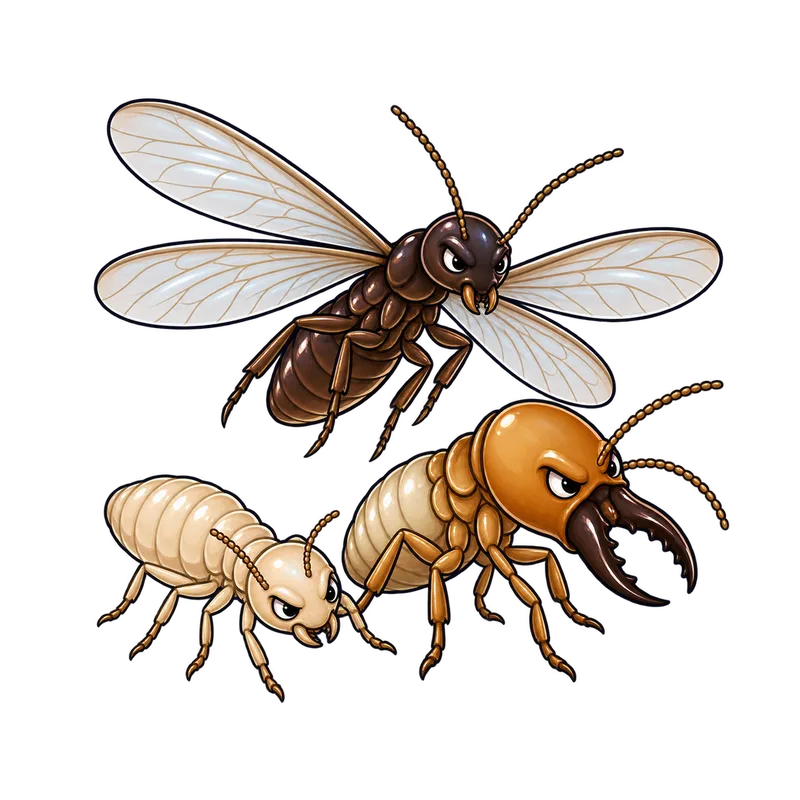
After seeing a termite swarm indoors, you should collect several bugs or shed wings in a sealed bag immediately, put away the aerosol spray, and call a licensed timber pest professional. Avoid using household insect sprays because they only kill a fraction of the flying adults and can cause the main colony to move elsewhere.
What is actually going on
You are sitting near a sunny living room window on a warm spring afternoon, reading or catching up on work, when a faint fluttering catches your eye. A sudden swarm of small, dark insects is tumbling over the glass, scrambling toward the light. By evening, the insects themselves have vanished, but they left behind a messy cluster of fragile, translucent wings scattered across the sill like tiny fish scales. If you just watched dozens of winged insects emerge inside your living room, collect several of the bugs or shed wings in a sealed bag immediately, put away the aerosol spray, and call a licensed timber pest professional.
What you just witnessed is called a dispersal flight, or a swarm. When a subterranean or drywood termite colony reaches structural maturity, usually after growing underground or inside framing for 3 to 5 years, it produces winged reproductives known as alates. Their single job in life is to fly out, find a mate, shed their wings, and dig a new nest in moist soil or sound wood. The immediate bad news is that if these insects emerged inside your home from a baseboard, a ceiling fixture, or a hairline crack in the drywall, they did not wander in through an open window from the backyard. They came from a mature parent colony living inside your building envelope or directly beneath your concrete slab.
It helps to think of swarming termites like smoke coming out of a chimney. The flying adults themselves are harmless to your house. They do not chew wood, they do not bite humans, and they carry no diseases. In fact, because indoor air is notoriously dry, the vast majority of these winged insects will dehydrate and die within 12 to 24 hours without ever finding soil. However, their sudden presence inside your living room is visual proof that an invisible fire, a massive colony of soft-bodied worker termites, is actively eating the structural wood hiding behind your walls.
How to tell for sure
Before you start worrying about structural repairs, you need to verify what kind of insect actually swarmed. Homeowners frequently mistake winged ants for swarming termites, and while neither is a welcome sight in a living room, carpenter ants and termites require entirely different management strategies. You can make a confident initial identification right at your kitchen table using your naked eye or a simple hand lens that offers 10x magnification. Look closely at 3 main body features to be sure.
First, look at the waist. A termite has a thick, uniform body with no waistline constriction where the thorax meets the abdomen. A winged ant has a pinched, narrow, wasp-like waist. Second, look at the antennae. Termite antennae are usually straight and flexible, resembling a tiny string of round beads. Ant antennae are distinctly elbowed, featuring a sharp bend along their length. Third, look at the wings. Termites usually have 4 wings that are completely equal in length, shape, and delicate veining. When resting, these wings fold flat over the back and extend far beyond the tip of the abdomen. Flying ants also have 4 wings, but their front wings are noticeably larger and longer than their hind wings, and they rarely extend far past the body.
While you can easily tell a termite from an ant at home, this is where do-it-yourself identification stops. Deciding whether you are dealing with native eastern subterranean termites, invasive Formosan termites, or drywood termites requires examining microscopic wing hairs or soldier head capsules under higher magnification. That level of detail usually belongs to a professional inspector or a university extension office. Beyond the flying insects themselves, keep an eye out for other physical evidence around the house. Subterranean termites construct earthen mud shelter tubes, roughly the width of a pencil, that run up foundation walls, subfloor piers, or floor joists to protect themselves from dry air. Drywood termites, on the other hand, do not use soil contact. They live entirely inside sound lumber and push hard, 6-sided, sand-like fecal pellets out of tiny kickout holes, leaving small piles of gritty debris on floors or window ledges below.
What usually comes next
After the shock of seeing a swarm indoors wears off, you need to focus on a few calm, practical steps. Your most important initial job is keeping physical proof so a professional can identify the exact insect. Try to collect 5 to 10 intact bugs or shed wings. Pop them into a sealable plastic bag or drop them into a small glass jar filled with 70% isopropyl alcohol. Alcohol keeps fragile body parts intact and makes the specimens much easier for an expert to examine under a microscope.
Next, record the details of the event. Snap clear pictures or take a short video of the exact spot where the bugs crawled out, whether it was a gap behind a baseboard, an opening around a pipe, or a tiny split in the drywall. Note down the time of day, the weather outside, and if the swarm happened right after a heavy rain. Once you finish documenting everything, you can safely sweep or vacuum up the dead bugs and loose wings. Just remember to empty the vacuum bag or canister straight into an outdoor trash bin right after. Now comes the part most homeowners struggle with: putting down the retail insect spray.
Reaching for an aerosol can, liquid bug killer, or household bleach to blast swarming termites or mud tunnels is almost always a mistake. It feels good to watch those visible bugs drop dead immediately, but retail sprays only kill the tiny fraction of flying adults that were going to die on their own within hours anyway. More importantly, heavy-handed supermarket sprays panic the main colony hidden deep inside your walls. When foraging worker termites smell these harsh chemical repellents, they simply back away, seal off those tunnels with mud, and move their invisible chewing crew to another untouched part of your framing. Instead of spraying, leave the spot alone and take a walk around the outside of your house. Pull back any heavy garden mulch, soil, or stacks of firewood from touching your foundation walls. Check that your wall weep holes and foundation vents stay wide open so air can circulate and inspectors can actually see where pests might get inside.
When to get help
Wiping out a structural termite problem is not a weekend DIY project you can fix with a quick trip to the hardware store. It calls for specialized diagnostic tools, professional-grade treatments, and a deep knowledge of building construction that only a licensed timber pest professional brings to the table. When the inspector shows up, they will check your house using high-intensity flashlights, moisture meters, sound-probing tools, and sometimes thermal cameras to track down hidden damp spots and feeding tunnels behind your drywall.
Modern subterranean termite treatments rely on specialized methods that only licensed applicators are allowed to use. One standard method involves non-repellent liquid soil treatments sprayed around your foundation perimeter. Modern active ingredients like fipronil or imidacloprid are completely undetectable to termites. Worker bugs walk right through the treated dirt without noticing a thing, picking up tiny doses of the chemical. As they groom each other and share food normally, they spread the product through the entire hidden nest, eventually wiping out the whole colony, queen and all. Another proven choice uses in-ground bait stations placed around the yard. These stations hold slow-acting growth regulators that mess up the molting process of worker termites, gradually collapsing the colony over a period of months. If the inspection finds drywood termites living entirely inside your roof timbers or furniture, spot treatments or whole-house tent fumigation might be needed depending on how far the insects have spread.
Keep safety rules and legal standards in mind during the entire process. Product labels carry the weight of federal and state law, which means insecticides must never be mixed or applied in ways that go against the container directions. Kitchen remedies like vinegar, salt, or orange oil sprays are unproven, illegal for structural jobs, and completely useless against deep underground nests. While termites themselves do not carry diseases or bite humans, chemical treatments demand careful handling. If you ever worry about accidental exposure, skin contact, or breathing in professional pesticides during a job, reach out to a doctor or your regional poison control center immediately. Always keep any pest control products locked safely in their original labeled containers at least 5 feet off the ground and completely out of reach of children and pets. Finally, if an inspection shows that drywood or subterranean termites have moved into an attic or roof space that also plays host to protected wildlife, like nesting birds or bats, the applicator must notify the local environmental or wildlife agency before applying restricted treatments or sealing up entry holes.
Finding a termite swarm inside your house is stressful, but one single swarm will not make your ceiling cave in by tomorrow morning. Save your samples, leave the emergence spot alone, and let a qualified professional deal with the colony hiding beneath your floors.