
What does termite damage look like?
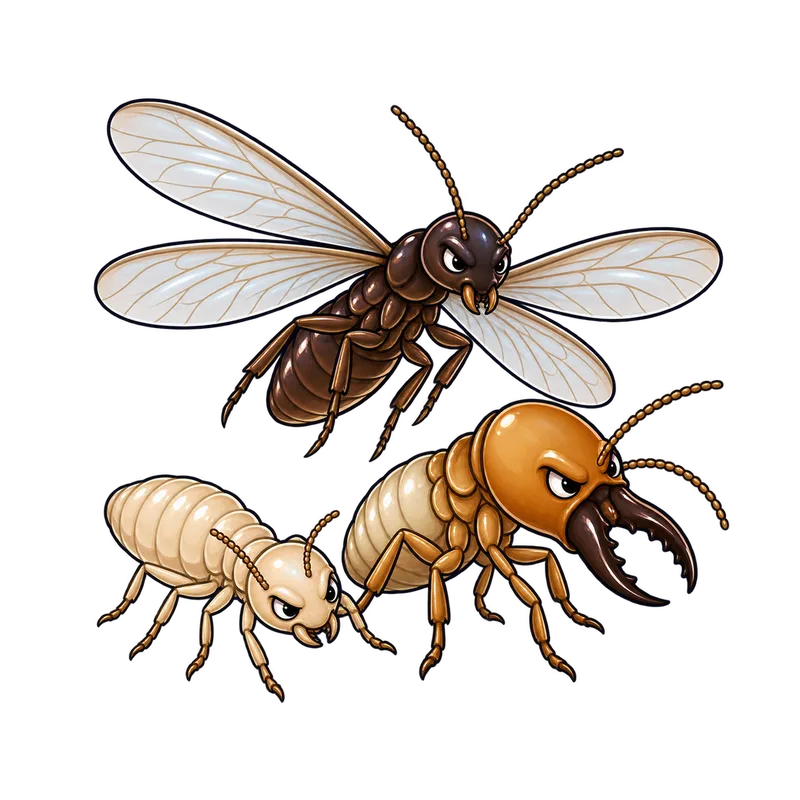
Termite damage typically appears as hollowed, paper thin wood with a layered honeycomb pattern or clean chambers, concealed behind muddy shelter tubes or marked by piles of six sided hexagonal fecal pellets. The exact look of the damage depends on the termite species.
What is actually going on
You are walking through the basement on a Saturday morning, wiping down some baseboards, and your thumb accidentally punches right through the bottom of the wood trim as if it were made of cardboard. Nothing on the outside looked particularly wrong at a glance, but the paint was hiding a hollow shell. That is usually the first real clue that termites have been making themselves at home in your structural framing.
Termite damage typically appears as hollowed, paper-thin wood carved along or across the grain, concealed behind muddy soil-and-fecal shelter tubes or marked by piles of six-sided hexagonal fecal pellets, without the loose sawdust or clean exit holes associated with other wood-boring insects. What you are actually looking at is the aftermath of cellulose digestion. These insects eat the structural carbohydrates inside timber, but they do it entirely from the inside out to protect themselves from dry air and light.
The exact look of the damage depends heavily on which type of termite is doing the eating. Subterranean termites need moisture from the soil and eat selectively, carving out the softer springwood growth rings while leaving the denser summerwood rings intact. This creates a layered, honeycomb pattern inside the timber. Drywood termites do not need soil contact at all and will happily chew straight across the grain of dry structural framing, creating large, clean chambers connected by small passages. Dampwood termites prefer rotting or water-logged timber, leaving large and irregular galleries that often turn muddy if the wood stays wet.
To understand why wood looks so strange when termites move in, you have to remember that these insects want to stay hidden. Unlike carpenter ants that clear out debris to keep a clean nursery, termites consume the material they tunnel through or repurpose it. Subterranean workers mix soil, chewed wood, and liquid feces into a dark mastic used to line their subterranean galleries or build protective utility tubes over cold concrete foundations where they would otherwise dry out.
Drywood termites take a drier route, extracting almost all moisture from their metabolic waste through specialized rectal glands. This compresses the indigestible lignin residue into hard, dry pellets that look suspiciously like tiny spilled poppy seeds. They bore small kickout holes just wide enough to shove these pellets outside, which is why you end up finding neat little conical piles of frass sitting on a windowsill or floorboards below an undamaged-looking ceiling beam.
How to tell for sure
People often assume that finding any pile of dust near a wooden beam means termites, but that mistake usually leads down the wrong path. If you find loose, powdery wood dust or clean circular holes bored through the surface, you are usually looking at wood-boring beetles rather than termites. Termites do not push loose sawdust or wood shavings out of their feeding galleries.
If you are dealing with drywood termites, look for tiny, round kickout holes roughly 1 to 2 millimeters wide. Beneath these openings, you will usually find conical piles of hard, dry fecal pellets that look like coarse sand or spilled poppy seeds. If you inspect those tiny droppings closely, you will see they have six distinct concave sides and rounded ends.
When subterranean termites are the culprits, you will rarely see pellets because they mix their waste into the muddy mastic they use to line their galleries. Instead, look along your concrete foundations, brick veneer, or crawlspace piers for flattened, earthen shelter tubes about a quarter to a half inch wide. These mud leads look like dried dirt straws running vertically from the soil up to the wooden framing.
You can also test suspect wood yourself by gently tapping it with a screwdriver handle or a small mallet. Sound wood gives a sharp ring, while termite-damaged timber produces a dull, hollow thud. If you press a flathead screwdriver into the surface, it will usually break right through the thin outer veneer and sink into a network of soil-lined or pellet-filled galleries hidden just beneath the paint or wallpaper.
What usually comes next
Once you find hollowed wood, mud tubes, or pellet piles, your immediate practical decision is to stop poking around and call a professional timber pest inspector rather than heading to the hardware store for a spray can. Over-the-counter insecticides applied to surface wood will only kill a few foraging workers on the outside while leaving the main colony and the queen completely untouched deep inside the soil or structural voids.
Confirming the exact species, locating hidden carton nests behind walls, and designing an effective treatment plan like a continuous chemical soil barrier or an engineered baiting system requires specialized diagnostic tools and training. Trying to handle an active structural infestation with DIY retail products usually results in the colony simply shifting its feeding path to another part of the house, allowing the damage to continue unchecked while you assume the problem is solved.
When to get help
You need to bring in a licensed pest management professional as soon as you confirm active termite damage, mud leads, or unexplained frass piles in your framing. Structural damage evaluations and chemical soil treatments, sub-slab drilling, or structural fumigation belong exclusively to licensed professional applicators who follow strict statutory product label directions.
If you live in a specific region where exotic timber pests are tightly regulated, such as Western Australia, discovering certain reportable pests carries a strict legal obligation to notify the responsible government agricultural or pest authorities.
If occupants in the home experience unexplained insect bites, skin irritation, respiratory distress from mold or dust in damp crawlspaces, or accidental exposure to chemical treatments, do not attempt self-treatment or diagnosis. Refer immediately to a qualified medical clinician, an urgent care facility, or your regional poison control center.