
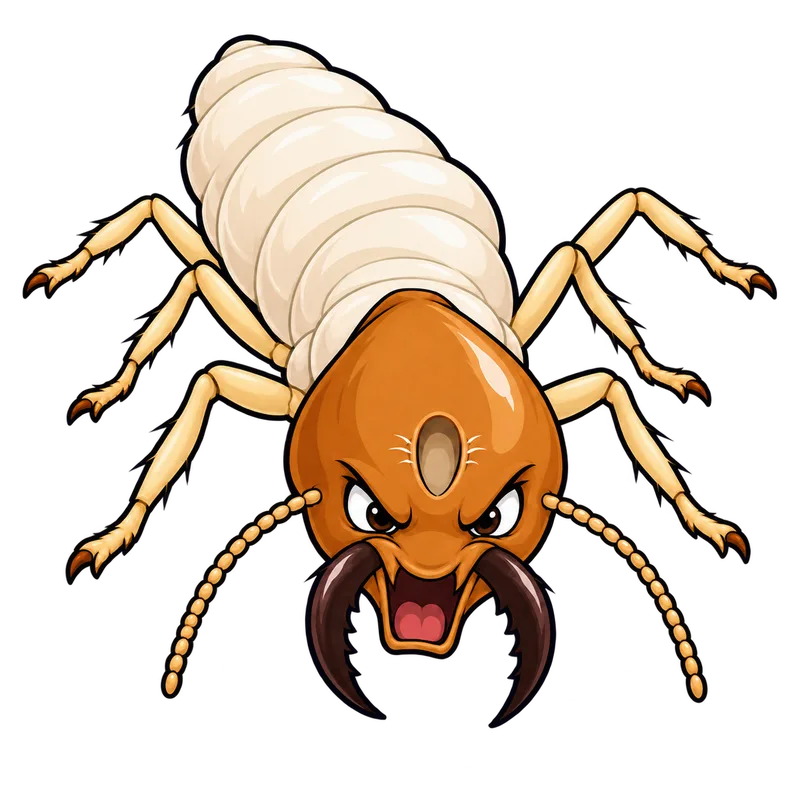
Formosan subterranean termite
Coptotermes formosanus
- Size
- 15 to 18 mm with wings
- Color
- Pale yellow to pale yellowish-brown
- Habitat
- Subterranean and aerial carton nests
- Diet
- Cellulosic materials and living timber
- Life cycle
- Hemimetabolous with queen-led colonies
You are likely looking at this creature because a swarm of pale, yellowish insects has just descended on your porch light on a humid June evening, dropping their wings onto every windowsill in the house. That swarm is your clearest introduction to Coptotermes formosanus, a species where the winged adults reach 15 to 18 mm in length including their wings, glowing a pale yellowish-brown against the night. If you pick up one of those discarded wings and slide it under a 10x magnification lens, you will spot something that separates them immediately from native subterranean termites: the wing membrane is covered in fine, dense micro-hairs rather than sitting slick and bare.
Identity
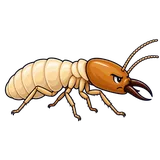
Step away from the swarmers and look inside the wood or mud tubes, and you will find the soldiers. A soldier's head is the diagnostic fingerprint here. While native subterranean termites carry oblong, rectangular head capsules, the Formosan soldier wears a teardrop or oval-shaped head capsule. Right on its forehead sits a tiny opening called a fontanelle. If you gently touch a soldier with a twig, it will instantly discharge a bead of milky-white, defensive fluid from that opening. That combination of an oval head, a milky forehead gland, and hairy wings removes any guesswork about what is chewing through the studs.
Separating this termite from local look-alikes usually comes down to the soldiers and the alates, or swarmers. Native subterranean soldiers have rectangular heads without that forehead gland. If you grab a magnifying glass and check the swarmers, the presence of hair on the wings is the definitive trait that sets them apart from other wood-chewing pests in the neighborhood. Do not rely on finding the nest itself, because it is usually hidden deep inside a wall void or beneath the soil.
Habitat & behaviour
These termites lead a cryptobiotic life, meaning they despise the open air and build their entire existence inside moisture-controlled tunnels. They operate within an active temperature range spanning from 9.3 to 38.1 degrees Celsius, which allows them to keep foraging year-round in warm climates or inside climate-controlled buildings. They do not just stay in the dirt like ordinary subterranean termites. A colony can establish massive, self-contained aerial carton nests inside dark wall voids, attics, or floor spaces without any contact with ground soil, provided they have a steady leak from a roof or a plumbing pipe to keep things humid.
When they need to travel between soil and timber, the workers build mud shelter tubes out of chewed wood, soil, and excrement. You will spot these thick, rounded tunnels marching straight up a concrete foundation wall. They are remarkably persistent travelers. Their underground gallery networks can stretch up to 580 meters in total length, and individual foraging tunnels can push out 100 meters away from the central nest. They chew through foam insulation boards, drywall, and even thin sheets of lead or copper just to get to the cellulose behind them.
Visual variations
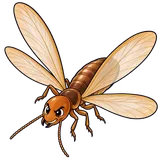
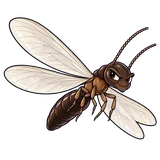
A mature colony operates as a tightly organized society split into distinct castes, and each group looks almost like a separate species entirely. The winged reproductives are the ones you notice during a mating flight, showing darker body coloring, working eyes, and two pairs of pale wings that break off neatly along a natural crease once they touch down and pair up. When a new king and queen lock themselves inside their first chamber, the primary queen goes through a dramatic physical shift. Her abdomen balloons into a massive egg-laying machine known as physogastrism, stretching her total length to 17.5 mm and her width to 4.5 mm, whereas a secondary queen reaches about 14 mm.
The workers do the actual heavy lifting for the colony, making up more than 80% of the total population. They are soft, pale, wingless, and completely blind, serving as the labor crew that digs tunnels, cleans the nest, and feeds everyone else. Then you have the soldiers, which are a bit larger than the workers and feature caramel-colored bodies paired with pale orange-brown oval heads. They are incapable of feeding themselves and rely entirely on the workers for meals, existing purely to guard the colony using their heavy jaws and that sticky defensive fluid.
Why it matters
The sheer size of an established Formosan colony completely alters how a building handles an infestation. While native termite groups stay relatively small, a single mature nest can hold up to eight million insects, letting them chew through wall studs, floor joists, and roof rafters at a terrifying speed that can weaken a house in a matter of months. They leave behind hollow galleries packed with brownish waste and chewed carton material, while the outer wood often gets worn down until it is as thin as paper and gives way under a gentle poke. They do not pose any danger to human or pet health because they do not bite or carry disease, but their relentless appetite for structural wood makes them a massive financial hazard. Because standard soil treatments meant for native pests are easily bypassed by these aggressive foragers, finding them means you need to call a licensed professional right away so they can set up specialized baits or liquid barriers following exact product rules.
Similar species
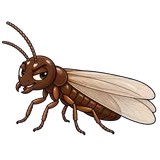 Asian subterranean termiteCoptotermes gestroi
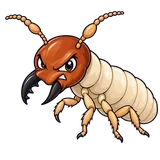 Western drywood termiteIncisitermes minor
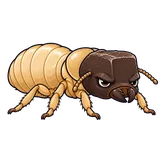 West Indian drywood termiteCryptotermes brevis
 Pacific dampwood termiteZootermopsis angusticollis
 Eastern subterranean termiteReticulitermes flavipes
 Western subterranean termiteReticulitermes hesperus