
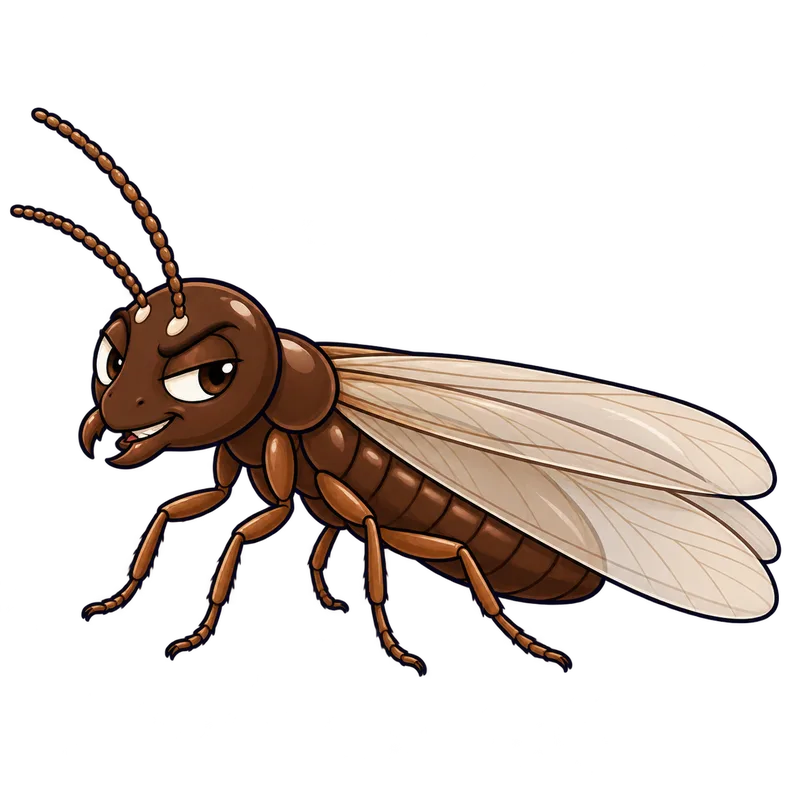
Asian subterranean termite
Coptotermes gestroi
- Size
- Approximately 1 inch with wings
- Color
- Pale yellow body, red-brown soldier head
- Habitat
- Subterranean nests and aerial carton nests
- Diet
- Xylophagous cellulose and structural timber
- Life cycle
- Incomplete metamorphosis through egg, nymph, adult
The Asian subterranean termite is an invasive wood-destroying insect found in tropical and subtropical regions, where it nests in damp soil and inside structures. You are most likely to encounter it when winged reproductives swarm around outdoor lights on warm summer evenings or when workers breach structural timber.
Identity
The adult winged reproductive measures approximately 1 inch with wings, while dealated individuals without wings measure roughly 3/4 inch. Their bodies display a pale yellow to pale yellowish-brown color, and their wings feature fine micro-hairs visible under a 10x magnification lens. Unlike true ants, which have a pinched waist and elbowed antennae, these termites feature a broad waist and straight, bead-like antennae. Soldiers possess a caramel-colored body and a distinct reddish-brown, oval-shaped head capsule equipped with a fontanelle, which is a structural opening that discharges a defensive fluid when the insect is threatened.
Habitat & behaviour
These insects maintain continuous contact with damp soil through underground tunnel networks that can stretch up to 100 meters away fromancake central nest. Their thermal activity range spans from 9.3 degrees Celsius to 38.1 degrees Celsius, keeping them hidden underground or inside wood during extreme weather. Unlike native species that swarm during daylight hours, these termites emerge for their dispersal flights during warm, sultry evenings from May through July, often continuing well into the night. They are strongly attracted to artificial lights, so you might spot winged individuals gathering around porch lamps after a summer rain. What draws them into buildings is the combination of dark, humid structural voids and reachable cellulose. They construct spongy carton nests inside wall voids or attics when an above-ground moisture source like a plumbing leak or roof defect is available, allowing them to bypass soil entirely and form secondary aerial colonies.
Visual variations
Colonies divide themselves into specialized castes instead of separate worker sexes. The flying adults start out with large compound eyes, pale yellow skin, and wings that match in length from front to back. Once they land after a mating flight, they snap their wings off along a weak seam to start a family. The founding queen eventually turns physogastric, which is a fancy way of saying her abdomen swells up massively to pump out eggs, growing as long as 17.5 mm until she cannot move an inch. Workers make up the bulk of the colony with their soft, creamy-white skin, blind eyes, and wingless bodies, taking care of all the chewing, foraging, and building. Soldiers skip the eyes and wings entirely, carrying smooth, curved jaws without teeth and that defensive front gland. Since their mouthparts are designed strictly for fighting off invaders, soldiers cannot feed themselves and depend entirely on the workers for meals. Replacement royals step in if the main king or queen dies, showing up with short wing pads or none at all while keeping a lighter color overall.
Why it matters
A mature colony can swell to 8 million members and chew through load-bearing beams, floor joists, and roof rafters in just 3 months. When the workers travel up from the dirt, they build mud tunnels to crawl over concrete footings and can gnaw right through foam insulation, drywall, and soft metal flashing to get at wood. Their feeding leaves hollow tunnels that follow the softer rings of timber while skipping the harder summer growth, and their galleries feature sticky, paste-like droppings instead of dry pellets or fine dust. Termites will not bite you, carry diseases, or threaten your health directly, though a collapsing house certainly brings its own set of dangers. If you spot mud tubes or chewed timber, you need a professional to take a look and a licensed pest control operator to handle the job, since chemical treatments and bait stations are strictly regulated by product labels.
Similar species
 Western drywood termiteIncisitermes minor
 West Indian drywood termiteCryptotermes brevis
 Pacific dampwood termiteZootermopsis angusticollis
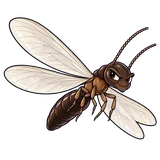 Eastern subterranean termiteReticulitermes flavipes
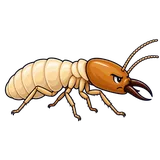 Western subterranean termiteReticulitermes hesperus
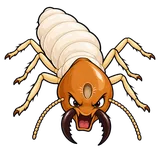 Formosan subterranean termiteCoptotermes formosanus