
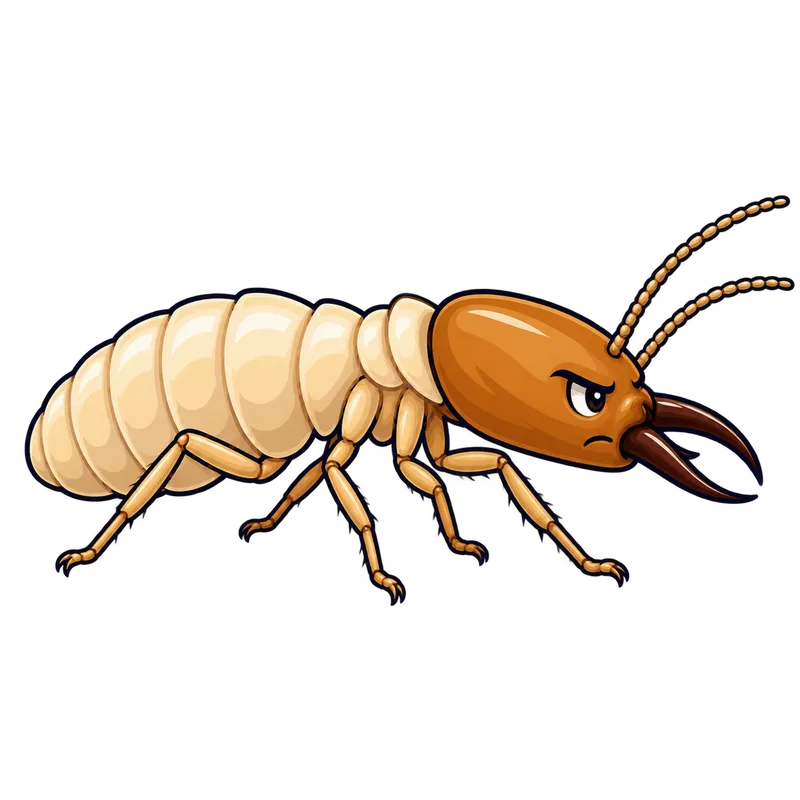
Western subterranean termite
Reticulitermes hesperus
- Size
- Workers 5 mm, alates 8 to 9 mm with wings
- Color
- Creamy-white workers, dark brown to black alates
- Habitat
- Subterranean nests up to 6 to 7 meters deep
- Diet
- Cellulose from wood and structural timber
- Life cycle
- Egg, nymph, worker, soldier, alate and neotenic
The Western subterranean termite is the native timber pest haunting structures from British Columbia down through California to western Mexico, and eastward into Idaho and Nevada. When winged swarming termites appear, you are looking at adults measuring 8 to 9 mm in total length with their wings, or about 5 mm if you measure just the body. Those alates feature dark brown to brownish-black bodies and carry two pairs of equal-sized brownish-gray wings that lack hairs and extend well past the abdomen tip.
Identity
You can easily separate them from flying ants, which are commonly confused with them. Ants possess elbowed antennae, a distinctly pinched waist, and forewings that are noticeably larger than their hindwings. By contrast, Western subterranean termites have straight antennae that look like a tiny string of rounded beads, a thick unconstricted waist, and four wings of identical size.
Other termite species also cross paths with this pest depending on your region. The arid-land subterranean termite features pale, almost whitish wings and a shorter, broader soldier head. The Western drywood termite is larger, measuring 11 to 12 mm with wings, and features a reddish-brown head and thorax while leaving behind hard, six-sided fecal pellets instead of mud tubes. If you spot round beetle exit holes or find fine floury dust pushed out of wood, you are looking at wood-boring beetles rather than subterranean termites, which never push out sawdust.
Habitat & behaviour
Living a cryptobiotic lifestyle means these insects exist entirely hidden inside dark, moist soil and wooden galleries. Because their soft bodies dry out easily, they need constant access to moisture and high humidity, building subterranean nests that can plunge up to 6 to 7 meters deep into the earth.
In California and the Pacific Northwest, their dispersal flights happen in late fall, winter, and early spring. They time these swarms for warm, sunny daytime hours between 10 a.m. and 3 p.m., almost always immediately following a rainfall event. Workers leave the soil to forage for cellulose, selectively chewing away the soft early-season wood layers known as springwood while leaving the dense late-season rings intact.
To bridge gaps like concrete foundations while keeping their bodies moist, workers construct pencil-thin tubes of dried soil and wood stuck to surfaces. You might encounter working tubes connecting soil to timber, exploratory tubes rising from the ground without reaching wood, drop tubes hanging down from structural framing, or swarm tubes built specifically for alates to exit. When their galleries face a disturbance, soldiers jerk violently up and down, striking their head capsules against the wood to sound an audible alarm.
Visual variations
Life inside the colony runs on a strict caste system where every member wears a completely different look. Workers make up the heavy lifting force as creamy-white, soft-bodied, wingless, and eyeless insects that do the actual wood chewing to feed the rest of the group. These busy laborers are technically immature forms that can turn into other roles later through molting.
Soldiers pull guard duty against predators like ants with their wingless, eyeless, caramel-colored bodies and very long, narrow, pale to reddish-brown rectangular heads. Their huge, dark, almost straight jaws look like tiny swords with curved tips, and since soldiers are entirely helpless at the table, workers have to feed them directly.
Primary reproductives start out as flying alates sporting working compound eyes, dark pigmented bodies, and beadlike antennae. As soon as they land from a flight, their wings snap off cleanly along a base line, leaving them as dealates ready to dig out a mating chamber. Inside older colonies, backup breeders called neotenics step in to help out, showing much lighter coloring and either very short wings or none at all.
Why it matters
As a serious structural pest, this termite wrecks mud-sills, floor joists, studs, subflooring, fence posts, and utility poles. While hunting for cellulose, workers will tunnel straight through foam insulation boards, drywall, plaster, and asphalt, leaving behind lumber that looks completely fine from the outside until a screwdriver easily punches right through it.
You usually will not spot them until you see winged adults swarming indoors, small piles of dropped wings left on windowsills, or blistered flooring that gives way beneath your feet. They do not sting, bite people, or spread diseases, but finding them means an active colony is steadily eating away at your home.
Figuring out the exact species, checking how much damage the wood has taken, and putting in chemical soil barriers or bait stations are jobs for a licensed timber pest inspector or pest control applicator. Trying to handle this yourself usually fails because the main nests are buried deep in the ground. Standard house checks also have blind spots since hidden areas like crawlspaces with no access, wall voids, and slab edges covered by flower beds can easily conceal active colonies. As for treatment, professionals rely strictly on the product label directions, and any chemical applications must follow those exact rules.
Similar species
 Formosan subterranean termiteCoptotermes formosanus
 Asian subterranean termiteCoptotermes gestroi
 Western drywood termiteIncisitermes minor
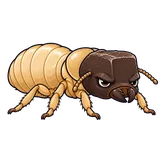 West Indian drywood termiteCryptotermes brevis
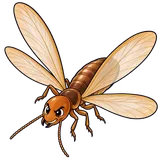 Pacific dampwood termiteZootermopsis angusticollis
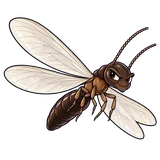 Eastern subterranean termiteReticulitermes flavipes