
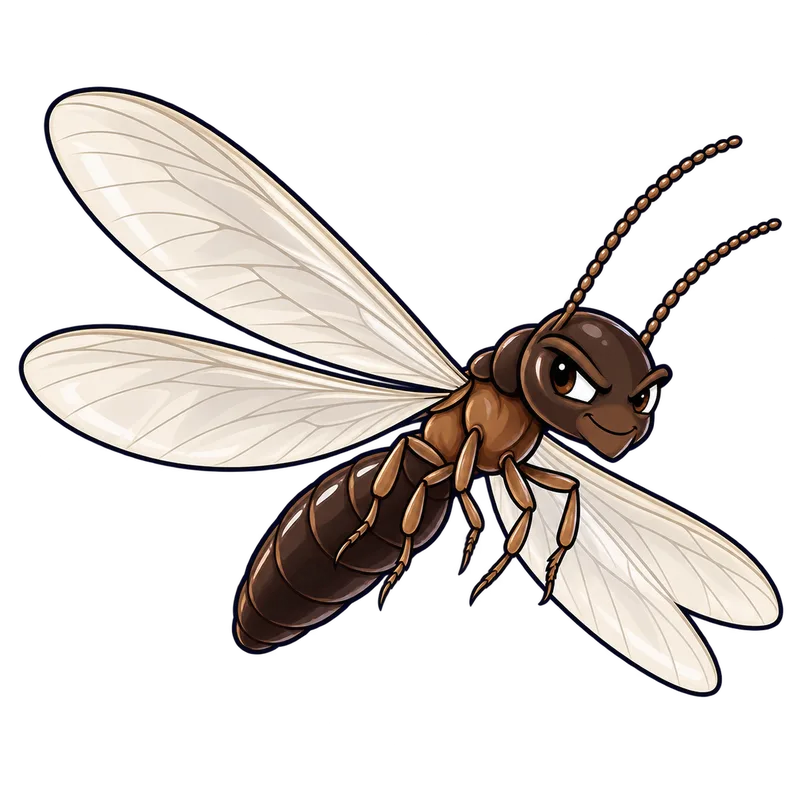
Eastern subterranean termite
Reticulitermes flavipes
- Size
- Worker body ~5 mm; Alate total length 8 to 9 mm
- Color
- Worker creamy-white; Alate dark brown to black; Soldier pale with reddish-brown head
- Habitat
- Subterranean soil galleries and damp wood structures
- Diet
- Obligate xylophagous feeding primarily on soft springwood
- Life cycle
- Hemimetabolous development passing through egg, nymph, and caste stages
You are likely dealing with the Eastern subterranean termite, known scientifically as Reticulitermes flavipes, if you spot pale, soft-bodied insects tunneling inside damp wood or notice small, dark swarmers shedding wings on a windowsill. At about five millimeters long, the workers are easy to miss unless you break open a piece of damaged framing. They have creamy-white bodies, no eyes, and straight, beadlike antennae.
Identity
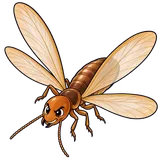
When winged adults, called alates, emerge to start new colonies, they measure roughly eight to nine millimeters including their transparent, smoky-gray wings. You can tell these swarmers apart from winged ants by looking closely at their body shape. Termites have a thick, straight waist and four wings of identical length, whereas ants feature a pinched waist, elbowed antennae, and uneven wings. If you find dry, six-sided fecal pellets tucked into a corner, you are looking at drywood termites instead, because subterranean species never drop loose frass.
Habitat & behaviour
These insects live an entirely hidden life governed by moisture. Because their soft worker cuticles dry out quickly, they build a network of subterranean tunnels deep in the soil and construct mud shelter tubes across foundation walls to reach timber. If you see flat, earthen tubes creeping up concrete, you are witnessing their transit system. They are drawn to structural lumber, fallen logs, and paper products, showing a marked preference for wood already softened by fungi.
Activity shifts with the seasons. In northern regions, they retreat deep below the frost line as winter sets in, only to resume heavy foraging when the soil warms. You will rarely catch them out in the open during bright sunlight unless they are swarming. Spring rains often trigger a massive outdoor flight on warm days, where thousands of alates leave the nest to find mates and establish new colonies.
Visual variations
A single colony contains distinct castes that look completely different from one another, reflecting a division of labor. The working population consists of immature nymphs acting as the general laborers, which are pale, soft, and wingless. If these workers are called upon to defend the colony, they do not change into soldiers themselves, but rather, earlier stages branch off into presoldiers and mature into full soldiers.
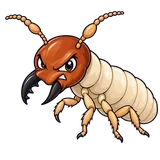
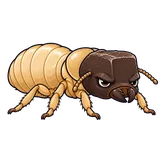
Soldiers feature pale, creamy bodies paired with an oversized, rectangular head capsule tinted reddish-brown, complete with long mandibles designed for fighting off invading ants. When disturbed, these soldiers tap their heads against gallery walls to vibrate warnings through the wood. The primary reproductives, or kings and queens, start out as the dark-bodied alates you see during a swarm. Once they shed their wings and establish a nest, the primary queen's abdomen swells dramatically through a process called physogastry, turning her into an egg-laying machine capable of outputting thousands of eggs.
Why it matters
An established colony can hollow out floor joists, sills, and wall studs by selectively consuming the soft springwood layers while leaving the hard summerwood rings intact. This leaves structural lumber paper-thin and prone to crushing under pressure without any visible sawdust piles outside.
Their presence inside a home confirms an active structural infestation requiring a thorough inspection by a licensed pest management professional. While these termites do not bite humans, vector diseases, or pose direct toxicity risks, missing the signs of their tunneling can lead to severe structural framing failures.
Similar species
 Western subterranean termiteReticulitermes hesperus
 Formosan subterranean termiteCoptotermes formosanus
 Asian subterranean termiteCoptotermes gestroi
 Western drywood termiteIncisitermes minor
 West Indian drywood termiteCryptotermes brevis
 Pacific dampwood termiteZootermopsis angusticollis