
Eastern subterranean vs Formosan termites: why does identification matter?
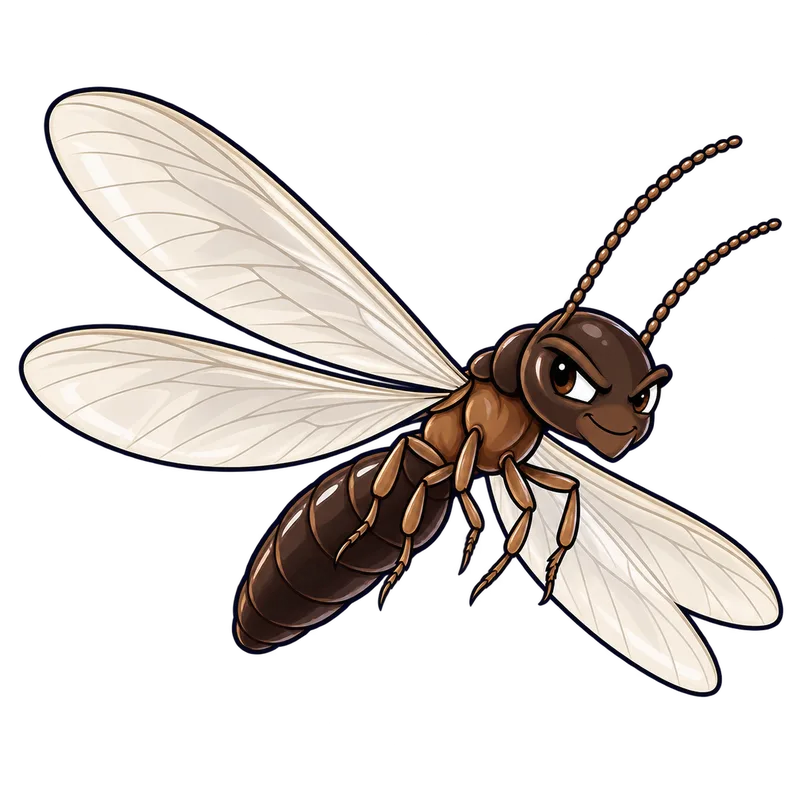
Identifying Eastern subterranean termites versus Formosan termites matters because Formosan termites build massive self-sustaining colonies above ground and shrug off standard treatments. A mature Formosan colony can swell to eight million strong and consume wood much faster than native species. Mixing up the two means standard ground barriers might fail to halt an aerial colony hiding inside your framing.
What is actually going on
Imagine walking down the hall on a humid spring evening, flipping on the porch light, and noticing a swarm of pale, tan insects fluttering against the glass. Or picture tapping on a seemingly solid baseboard with a screwdriver handle only to have the tool plunge right through a hollow wooden shell. When you find yourself staring at termite damage or winged invaders, sorting out the exact species is usually the last thing on your mind. Why does the exact identification between the Eastern subterranean termite and the Formosan subterranean termite matter so much? The short answer is that Formosan termites build massive, self-sustaining colonies above ground and shrug off standard treatments that usually stop native species dead in their tracks. Mixing up the two means you might spend time and money on a treatment plan that completely misses the real threat lurking inside your walls.
To understand why a misidentification leads to trouble, think of native Eastern subterranean termites as commuters who must travel back and forth from their home in the ground to their workplace in your floor joists. They rely on the soil for moisture, building flattened mud tubes across foundations to keep their delicate bodies from drying out. They are destructive, but their operations are tied to the earth beneath your building. Formosan termites, on the other hand, act like developers building a fully self-contained apartment right inside your attic or wall voids. These invasive pests construct secondary above-ground nests out of a hardened, sponge-like material called carton, which is made of chewed wood, soil, and saliva. If your roof leaks or a bathroom pipe drips, a Formosan colony can set up shop upstairs and survive indefinitely with zero ground contact. Beyond their housing choices, Formosan colonies reach staggering numbers. While a native Eastern subterranean colony typically caps out around one or two million individuals, a mature Formosan colony can swell to eight million strong. They consume wood at a much faster rate, and toxicological tests show they possess a higher natural tolerance to soil termiticides than native species. If an exterminator treats your home for standard subterranean termites without realizing you are dealing with Formosans, standard ground barriers might fail to halt an aerial colony hiding in the framing.
How to tell for sure
Figure out which bug you have got by catching them in the right frame of mind, or rather, the right stage of life. Soldiers offer the clearest answers. Under a 10x magnification lens, a native Eastern subterranean soldier shows off a rectangular, caramel-colored head with flat, parallel sides and big dark jaws. A Formosan soldier wears an oval or teardrop-shaped head that narrows toward the mouth, and if you disturb it, it squirts a sticky, milky white fluid out of a noticeable pore right on its forehead. Winged reproductives, also called swarmers, are another dead giveaway. Eastern subterranean swarmers are dark brown to solid black and love flying around on warm, sunny spring afternoons after rain, leaving behind smooth, clear wings. Formosan swarmers are bigger, pale yellow to tan, and show up at dusk or at night because they are drawn to bright porch lights, plus their wings are dusted with fine, tiny micro-hairs. Worker termites look like virtually identical bits of rice with legs, soft and creamy white, so looking at workers alone will get you nowhere. If you plan to snag a few bugs for a pro, drop intact soldiers or winged swarmers into a tiny glass vial filled with rubbing alcohol instead of smashing them flat between your fingers.
What usually comes next
When you suspect these wood eaters have moved in, forget the store-bought spray and hire a licensed pest management professional for a proper structural inspection. The inspector will trace foundation lines, poke at suspect framing, and check upper stories for dripping pipes and spongy carton nests. Where you go from there depends entirely on who is eating your house. Native Eastern subterranean bugs usually yield to liquid termiticide barriers soaked into the soil around footings or to a well-planned set of bait stations. Try that ground-only liquid trick on a Formosan colony, though, and you will likely watch them keep right on eating. Any aerial carton nests hanging out inside your walls or attics must be removed physically or sprayed directly with specialized insecticidal foams and dusts, and that underlying moisture leak must be fixed for good to cut off their water supply.
When to get help
Checking structures, verifying species, pumping chemicals, and replacing damaged timber are jobs for a licensed pest professional and a qualified building inspector. If you notice severe structural sagging, floor joists crumbling under pressure, or failing roof trusses, treat the spot like a collapse hazard and stay clear until an expert checks the load-bearing integrity of the building. Be careful with chemical treatments as well. Trenching dirt, drilling slabs, and applying termiticides anywhere near wells, French drains, or living spaces carry strict legal restrictions governed by the product label, and improper handling risks environmental contamination or toxic chemical exposure. Termites do not bite humans to feed on blood and they do not carry human pathogens, but if anyone develops skin irritation, rashes, or respiratory allergies near the affected areas, talk to a clinician or call a poison control center immediately. Lastly, if your inspection uncovers protected animals like nesting bats or birds taking advantage of structural voids, pause operations right away to comply with local and federal environmental protection laws before going any further.