
Are dark winged insects near a window ants or termite swarmers?
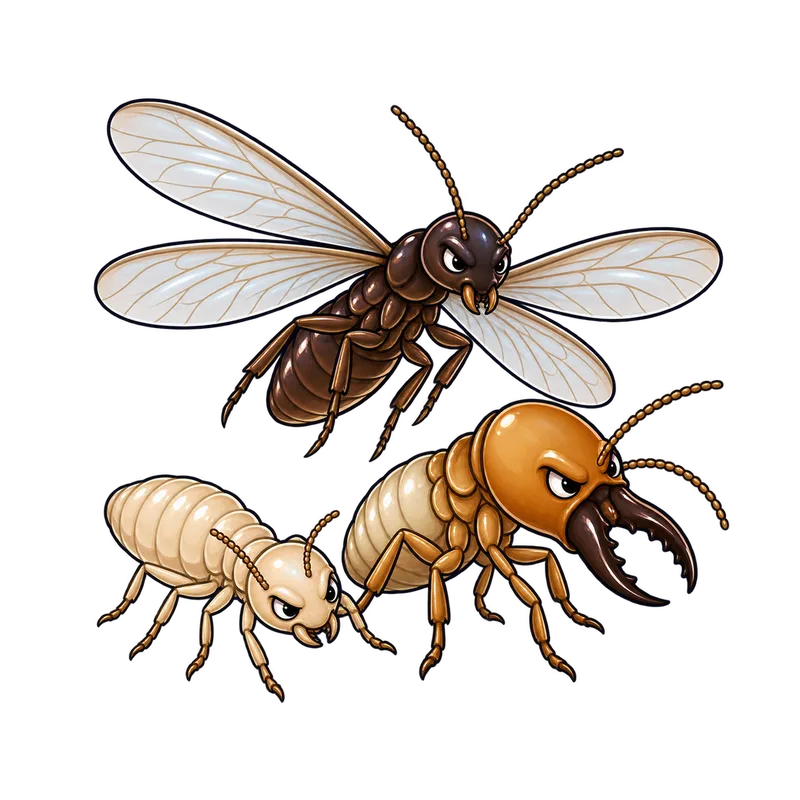
Dark winged insects near a window are reproductive swarmers, but whether they are ants or termites depends on specific body parts. You can tell them apart by checking the waist, antennae, and wings. Termites have a broad waist and equal wings, while ants have a pinched waist and unequal wings.
What is actually going on
You are standing in the living room on a warm spring morning, holding your coffee, and you notice a disturbing little gathering on the windowsill. Dozens of dark, winged bugs are crawling across the glass or lying completely still in small heaps. Your mind immediately leaps to the worst-case scenario. Are those wood-destroying terrors trying to chew their way through your house, or are they just harmless visitors that wandered in from the yard?
To give you the short answer right away, those insects on your window are almost certainly reproductive swarmers, but whether they are ants or termites depends on a few specific body parts. Both pests produce winged adults, and both types are powerfully drawn to light. When a mature colony decides to send out its next generation to start new families, these winged adults fly toward the brightest source they can find. If they hatch from a nest hidden inside your walls, window framing, or subfloor, indoor window glass acts like a glowing beacon, trapping them right where you will spot them over breakfast.
People often assume that finding winged bugs indoors means an immediate structural disaster, but the reality requires a closer look. If they are termites, their presence indoors usually points to an established nest somewhere within the building envelope. If they are ants, they might be carpenter ants nesting in damp timber, or they could simply be foraging scouts that squeezed through a loose window screen from an outdoor anthill. Before you panic or call an exterminator, you need to know what you are actually looking at.
How to tell for sure
You do not need an entomology degree or a high-powered laboratory microscope to figure this out, but you do need to look past the wings and examine the actual body. Grab a bright flashlight and, if you have one, a basic magnifying glass. You usually only need to check three distinct physical features to know for certain whether you are dealing with termites or ants.
First, look at the waist. Termites have a broad, uniform body profile where the thorax and abdomen join together without any pinch or constriction. They look a bit like a tiny, smooth cylinder. Ants, on the other hand, have a sharply pinched waist, giving them an hourglass shape with one or two distinct nodes right in the middle.
Second, check the antennae. Termite antennae usually look like a straight string of tiny, uniform beads extending directly from the head, without any sharp bends. Ant antennae are distinctly bent, meaning they feature a long first segment followed by a sharp elbow bend before the rest of the segments continue.
Third, inspect the wings. Termite swarmers possess four wings of identical length and shape, and those wings usually extend well past the tip of the abdomen. Ant wings are unequal in size, featuring a much larger pair of front wings and a smaller pair of hind wings. Furthermore, termites have a specialized fracture line that lets them snap their wings off effortlessly after a brief flight. If you see piles of detached, uniform translucent wings scattered across the sill like fallen flower petals, you are almost certainly looking at termite evidence.
What usually comes next
Once you have figured out what is crawling across your glass, you have to decide what to do about it without making things worse. Most people grab the nearest aerosol spray can and empty it all over the windowsill, figuring that wiping out the visible crowd solves the whole issue. It rarely does. Squirting bug killer at the window only drops a few unlucky scouts, leaving the actual nest tucked away safely inside the drywall or joists.
Your best move is to save a few samples for a proper ID and look closely at the woodwork right around the frame. Scoop up three or four intact bugs and drop them into a small glass jar or a zip-top bag. If you are still guessing at what they are, any local pest tech can take one look and tell you. Grab your flashlight and peer at the painted trim, checking for pinprick holes dropping tiny pellets or piles of coarse sawdust pushed out from hidden gaps.
If you find heaps of shed wings or the wood gives way with a soft crunch when you tap it with the handle of a screwdriver, casual observation is over and you need professional eyes. Skip the hardware store aisle with the heavy chemical jugs and do not try mixing up homemade remedies from online videos. Real treatment for wood-eating pests takes specialized gear and strict attention to safety rules that belong entirely in the hands of a licensed applicator.
When to get help
There comes a point when a few dozen bugs on a windowsill stops being a weird spring quirk and starts demanding immediate action. If you see insects pouring straight out of a crack in your indoor molding, or if you spot muddy tunnels tracking across your concrete foundation and up the window frame, call a professional pest service right away. Subterranean termites can chew through support timbers faster than most people expect when moisture is high, and dragging your feet only adds zeroes to the eventual repair bill.
You also have to know where pest control ends and heavy construction begins. Exterminators know how to track down bugs, name the species, and apply the right treatments, but they generally are not framing carpenters or engineers. If an inspection shows serious damage to load-bearing window headers, wall studs, or floor joists, you will need to bring in a licensed contractor to shore up the structure and handle the carpentry.
Finally, keep safety front and center for both your family and your home. Never try to guess the source of a skin reaction or a bite based on a picture online, and always call a doctor or poison control if anyone in the house feels unwell. Follow product labels to the letter if you use any registered treatments yourself, and let the pros handle the heavy lifting when your home structure is on the line.