
Why can subterranean termite evidence be hidden behind finished walls?
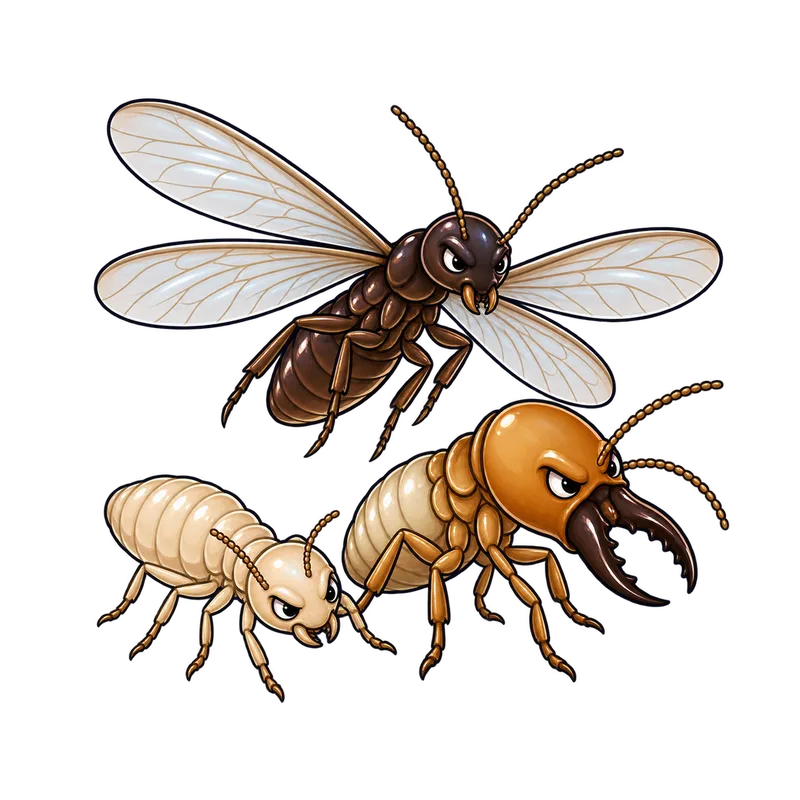
Subterranean termite evidence stays hidden because these insects live a strictly hidden lifestyle to avoid open air and dry indoor environments that quickly kill them. They hollow out structural wood from the inside while leaving the outermost layer or drywall paper untouched, and standard home inspections are strictly visual and surface based.
What is actually going on
Picture walking into your living room on a quiet Sunday morning. Everything looks completely normal. The baseboards are neat, the drywall is smooth, and a family portrait hangs securely over the sofa. Yet, behind that painted wallboard, thousands of subterranean termites could be methodically chewing through your home framing without a single hint showing on your side of the wall.
Why does this happen? The short answer is that subterranean termites live a strictly hidden lifestyle. Their bodies are soft and lack protective armor, meaning open air and dry indoor environments will quickly kill them. To survive, they stay behind the scenes, traveling through moisture-rich mud tubes and hollowing out structural wood from the inside while leaving the outermost layer untouched.
When people imagine a pest infestation, they usually picture visible signs, like piles of sawdust, discarded bugs, or obvious holes. Subterranean termites do not work that way. They eat the softer springwood inside a stud while leaving the harder exterior rings intact. They do not kick out wood pellets or punch through to the room. Instead, they build a paper-thin veneer of wood or leave the back of the drywall paper completely undisturbed, sealing themselves away from light and dry air.
At the same time, standard home inspections are strictly visual and surface-based. An inspector is not going to tear off your drywall, pull up your baseboards, or slice open your insulation just to check what is happening inside an empty wall cavity. Unless a mud tube happens to breach an exposed foundation wall or a piece of trim gives way under pressure, the damage stays completely out of sight.
How to tell for sure
Figuring out whether you have a hidden problem usually requires looking for subtle clues around the house rather than catching the bugs in the open. Since you cannot see inside the walls, you have to watch the edges. You can usually spot trouble by checking exterior foundation lines, slab edges, and brick weep holes for flattened earthen mud tracks that look like hardened dirt veins.
Inside, you want to pay attention to your woodwork. If you press your thumb against a baseboard or door frame and it yields, or if lightly tapping the wood with a screwdriver handle produces a dull, hollow thud rather than a solid knock, something is usually eating it from within. You might also notice faint rippling, bubbling, or discoloration on drywall paint that mimics a water leak, even when the plumbing behind the wall is bone dry.
If you happen to find a stray insect near a windowsill or a door frame, figuring out what you are looking at usually comes down to a few distinct physical traits. True ants have pinched waists and elbowed antennae, while subterranean termites usually have thick, straight bodies and bead-like antennae. If you find winged swarmers indoors during warmer months, or piles of discarded wings left behind after a flight, that usually points to an established colony nearby.
What usually comes next
Finding a suspicious sign usually leads to a single practical decision: getting a professional assessment instead of guessing or trying to fix it yourself. Since standard visual checks cannot see through opaque wall coverings, confirming what is happening behind finished walls usually requires specialized tools like thermal imaging cameras, acoustic stethoscopes, or moisture meters. In some cases, a professional may need to perform an invasive inspection by drilling small access holes into wall voids, but that requires your formal consent first.
Once the pest is properly identified, treatment is not a matter of picking up a generic spray from the hardware store. Subterranean termite management relies on strict product label rules, specialized liquid barriers, baiting systems, or dusts applied to nesting areas. Because these methods require specific equipment and knowledge of local building codes, the work usually belongs in the hands of a licensed pest management professional rather than a weekend DIY project.
When to get help
You should involve a professional immediately if you confirm active termites, find mud tubes emerging from electrical outlets or baseboards, or notice structural sagging in walls and doorways. If your home framing sustains heavy damage, you may also need a structural engineer or a licensed builder to evaluate load-bearing studs and specify proper repairs.
Safety and health considerations also matter here. If you or someone in your household experiences severe allergic reactions, respiratory irritation from dust inside wall cavities, or unexplained skin symptoms, do not try to diagnose the issue yourself. Consult a medical clinician or your local poison control center right away. Likewise, if your inspection reveals protected wildlife like bats or nesting birds roosting in your crawl spaces or wall voids, stop and consult your local wildlife agency before attempting any sealing or pesticide work, as disturbing protected animals is against the law.