
How are drywood termites treated?
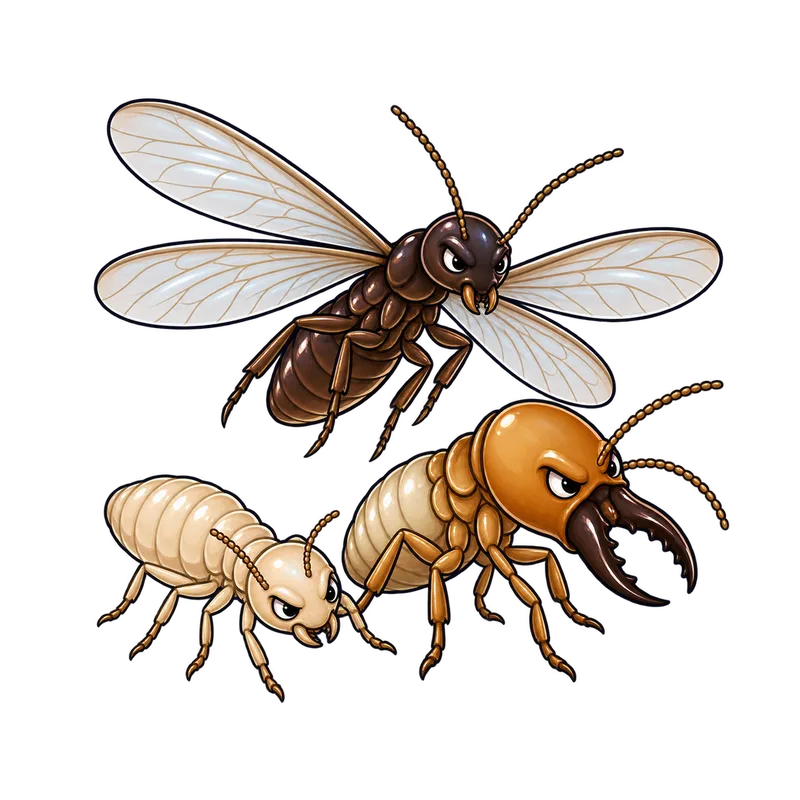
Drywood termites are treated by targeting the wood or the surrounding airspace, and the right approach depends on whether you are fighting a localized colony in a single piece of furniture or an entrenched population scattered across hidden framing throughout the house. For isolated areas, professionals use localized gallery injection or surface borate applications. For widespread infestations, the entire house gets wrapped in airtight tarps and flooded with a penetrating gas like sulfuryl fluoride.
What is actually going on
You are wiping down the bookshelf or clearing off a dusty windowsill when you notice a small pile of tiny, hard grains that look suspiciously like poppy seeds or coarse ground pepper. You brush them away, but by tomorrow morning, the exact same little pile is back. When you look straight up, you spot a pinprick hole in the wood trim. You are not dealing with subterranean pests that crawled up from the garden dirt, and you certainly do not have ordinary household dirt falling from above. You have drywood termites, and they have set up house entirely inside your timber without ever touching the soil.
Treating drywood termites depends entirely on whether you are fighting a localized colony tucked inside a single piece of furniture or an entrenched population scattered across hidden framing throughout the house. Unlike subterranean termites, which require moisture tunnels and ground contact to survive, drywood termites live in dry wood and get all the water they need right from the cellulose they digest. Because they never visit the soil, laying down perimeter termiticide trenches or ground bait stations will do absolutely nothing to stop them. You have to treat the wood itself, or the airspace surrounding it.
Drywood termites live entirely within enclosed wooden chambers in sound, dry timber. They do not maintain ground nests or build mud shelter tubes. Instead, they chew through structural framing, furniture, and trim, extracting all the moisture they need from the wood itself and their own metabolic processes. Because they stay hidden inside the wood, traditional soil treatments and bait stations designed for subterranean pests are completely useless here. The colony expands slowly within its wooden tunnels, pushing out waste through tiny holes as the population grows.
How to tell for sure
Before you buy any treatments or call in help, you need to make sure you are actually looking at drywood termite activity and not old damage or another insect entirely. The most definitive sign is their frass, which is just a polite word for waste pellets. If you sweep up tiny, hard pellets that feature six distinct concave sides and sharp longitudinal ridges along the angles, you are usually looking at drywood termite work. They push these pellets out of small ejection ports known as kickout holes, which look like tiny pinpricks in the wood surface.
You can usually tell if the infestation is currently active by cleaning up the pellet pile and sealing the kickout hole with a bit of tape or putty. If fresh pellets accumulate on the surface below within a few days, the colony is alive and feeding inside. If months go by and nothing reappears, you might just be looking at historical waste left behind by a colony that died out years ago.
People often confuse these six-sided pellets with the fine, flour-like dust dropped by powderpost beetles, or the gritty frass of other wood-boring insects. If the debris feels like smooth, uniform little seeds with flat sides rather than talcum powder, you can safely point the finger at drywood termites.
What usually comes next
Your main practical choice comes down to scope: do you need to tent the whole house, or can you just spot-treat the problem? If the termites are stuck inside one piece of movable furniture, an isolated door frame, or a single exposed rafter, you do not have to launch a massive fumigation operation. You can treat those zones individually using localized gallery injection, where a professional drills micro holes into the timber and pushes dust or liquid termiticides straight into the network. For unpainted, bare wood, surface borate applications can also soak deep into the grain to act as a slow-acting poison.
On the other hand, if you find multiple infestation sites scattered across different rooms, or if the bugs are living inside walls and attic spaces you cannot easily reach or drill into, spot treatments generally fail. The termites simply bypass the treated pocket and march into untouched framing right next door. That is when you usually have to bite the bullet and opt for structural fumigation, where the entire house gets wrapped in airtight tarps and flooded with a penetrating gas like sulfuryl fluoride to reach every last insect.
One common doubt people raise is whether fumigation keeps the house safe forever, and the honest answer is that it does not. Fumigation gas kills everything living inside the walls at that exact moment, but it leaves behind zero residual protection for tomorrow. The very next day, a fresh pair of swarming alates, which are simply winged reproductive termites, can land on your roof and start a brand-new colony in your attic rafters. To stop that cycle, you usually want to pair localized treatments with long-term preventative steps, such as dusting attics with silica aerogel to dry out future invaders by stripping away their protective wax coatings.
When to get help
Whole-structure tent fumigation, deep gallery pressure injection, and the handling of restricted-use gases or concentrated dusts must be performed exclusively by a licensed pest control operator. Sulfuryl fluoride gas, which is the standard choice for tenting, is extremely toxic and completely odorless, meaning it demands specialized gear, continuous air monitoring, and formal clearance tests before anyone steps back inside. If pilot lights or electric heating elements are left running, sulfuryl fluoride can also break down into corrosive hydrofluoric acid gas that ruins surfaces.
If structural timbers have been hollowed out extensively over many years, you should also bring in a structural engineer or a qualified builder to inspect load-bearing beams, joists, and rafters for collapse risks. No amount of chemical termite treatment will ever fix a weakened roof support that is ready to buckle.
If anyone in your household suffers from severe respiratory irritation, persistent coughing, or unexplained skin and eye reactions after chemical treatments or exposure to dusty attic spaces, consult a medical clinician or contact your local poison control center right away. If you happen to live in a region where finding certain invasive species triggers mandatory legal reporting to agricultural departments, make sure your pest professional files the required statutory notices on your behalf.