
Termites vs carpenter ants: what damages the wood?
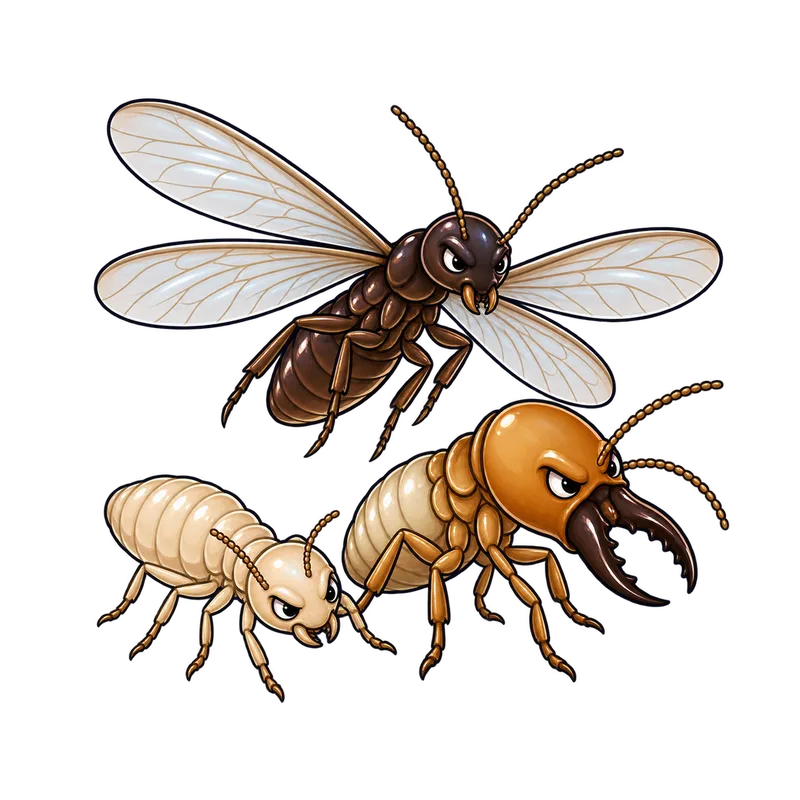
Both termites and carpenter ants damage wood, but they do it for completely different reasons. Termites actually eat wood for fuel because wood cellulose is their primary diet. Carpenter ants do not eat wood at all, choosing instead to chew it out of the way to build nests.
What is actually going on
You are standing in the hallway on a quiet Saturday morning, sweeping up a small pile of coarse wood shavings near the baseboard, and you wonder if you have an expensive problem on your hands. It is the kind of discovery that instantly ruins your coffee. When you find damaged timber in a home, the usual suspects are termites and carpenter ants, and people mix them up all the time. The short answer to what damages the wood is that termites actually eat it for fuel, while carpenter ants just chew it out of the way to build a house for themselves and throw the debris on the floor.
Think of termites as tenants who slowly devour the actual structure of the building from the inside out because wood cellulose is their primary diet. They have specialized microorganisms in their digestive tracts that break down tough plant fibers into energy, turning your floor joists or wall studs into their personal pantry. They tend to hollow out the interior timbers completely, often leaving nothing behind except a fragile, paper-thin outer shell of wood.
Carpenter ants, by contrast, do not eat wood at all. They lack the digestive machinery to process cellulose, so they get zero nutritional value from your home framing. When you find them hollowing out a window sill or a porch column, they are acting more like messy contractors using your structural lumber as raw real estate for a nursery. Because they cannot digest what they cut, they have to haul the excavated material out of the nest and dump it outside in neat little piles.
This fundamental difference in lifestyle changes everything about how they damage a house. Termites live a hidden life, meaning they stay away from light and dry air inside the wood or beneath the soil, sealing their tunnels behind them. Carpenter ants are more like commuters, chewing out smooth living quarters while foraging outside the timber for sweet liquids, dead insects, and kitchen crumbs.
How to tell for sure
Before you start panicking or buying chemicals, you need to look at the physical evidence left behind, because these two pests leave very different signatures. Start by examining the waste pile if you find one. If the debris looks like coarse sawdust mixed with dead insect parts and empty pupal cases, you are usually looking at carpenter ant frass, which they push out of narrow slit-like openings in the wood. If you instead find tiny, hard, dry pellets that have six distinct concave sides, you are usually looking at the droppings of drywood termites, which they kick out through small holes like a miniature pile of coarse pepper.
Next, look at the condition of the wood galleries themselves, assuming you can see inside them. Carpenter ant galleries are usually completely clean, free of mud or droppings, and feature smooth, polished walls that look almost sandpapered. Termite galleries usually look very different. Subterranean termites pack their tunnels with dark, dried fecal plaster and imported soil particles, and they usually eat only the softer springwood while leaving the harder growth rings intact.
You can also look at the insects themselves if you happen to spot them out in the open. Ants have a distinct narrow waist, elbowed antennae, and two pairs of uneven wings where the front pair is longer than the back pair. Termites have a thick, uniform waist that does not pinch in, straight bead-like antennae, and four wings of identical length that extend far past the tip of the abdomen. If you see pale, soft-bodied, wingless workers crawling out of a broken timber, those are almost always subterranean termites, whereas foraging carpenter ants are heavily armored, dark brown or black, and move with purposeful speed.
What usually comes next
When you confirm which pest you are dealing with, your next practical decision is to determine whether the infestation is currently active or if you are just looking at historical damage from years ago. A lot of people find an old pile of sawdust in a damp basement corner, spray half a can of household bug spray at it, and assume the problem is solved, only to find the damage spreading months later.
Take a close look at the moisture levels in the immediate area. Both pests love moisture, but carpenter ants almost always set up their initial satellite nests in wood that has been softened by roof leaks, plumbing drips, or window condensation. Subterranean termites need consistent moisture too, and they build muddy shelter tubes across concrete foundations to travel safely between the damp soil and your dry framing without drying out. If you poke a suspected timber with a screwdriver and the handle sinks straight into a hollow shell, or if you keep sweeping up fresh piles of sawdust every single day after cleaning the floor, you are usually dealing with an active colony that requires a targeted management plan rather than a casual wipe-down.
When to get help
There are moments when a DIY approach stops being practical and starts becoming a costly mistake. If you notice structural compromise, such as sagging floors, buckling door frames, or support beams that yield under gentle pressure, you need to bring in a professional timber pest inspector immediately to evaluate the safety of the building.
You should also involve a licensed pest management professional when the infestation requires specialized control measures, such as structural fumigation or comprehensive soil treatments. The pesticide product label is a binding legal document, and applying outdoor chemicals indoors, or mixing unapproved quantities, violates federal and state laws. Leave those applications to certified operators who have the proper equipment and training.
If anyone in the household experiences unexplained skin rashes, severe allergic reactions, or respiratory distress around the affected areas, consult a qualified clinician or poison control center right away. Never attempt to diagnose medical symptoms from pest encounters on your own. When the safety of your home's structural framing or your family's health is on the line, getting an expert on-site is always the safest path forward.