
White ants vs termites in Australia: are these different pests?
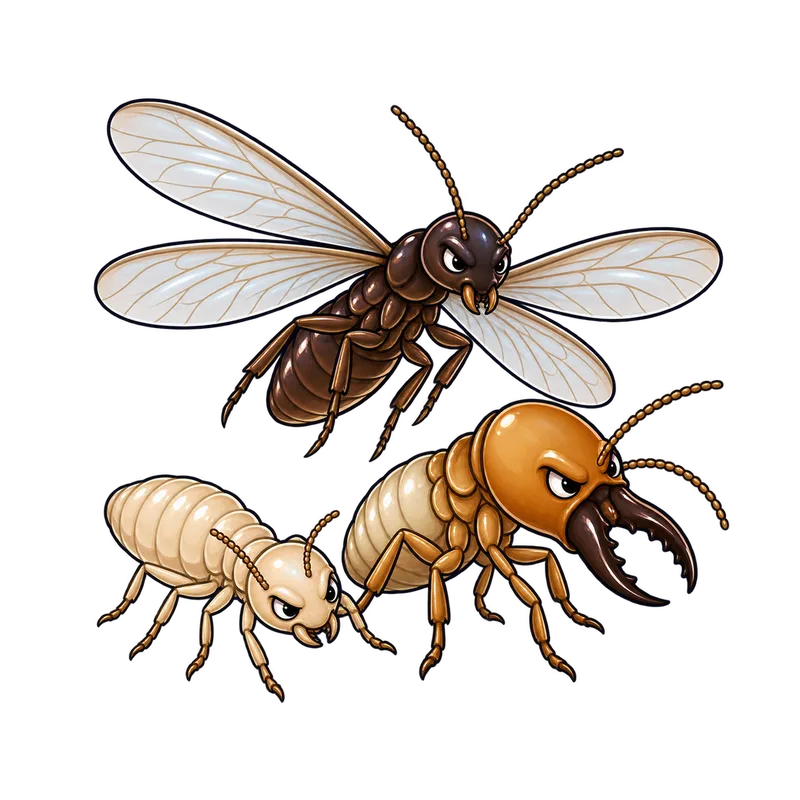
Yes, white ants and subterranean termites in Australia are the exact same wood-destroying insect. White ant is simply a long-standing bit of backyard slang, while professional standards and government bodies use the formal term termites.
What is actually going on
Picture standing in your kitchen on a humid Saturday afternoon, tracing a faint, earthy mud streak running up your concrete foundation wall. You tap the wooden skirting board nearby with your knuckles, and it sounds hollow, yielding slightly under the pressure of your thumb. You grab a can of surface spray from the laundry, ready to deal with what everyone down at the local hardware store calls white ants, wondering just how much structural damage is hiding behind the plaster.
If you live in Australia, the short answer is that white ants and termites are the exact same wood-destroying insect. White ant is just a deeply ingrained bit of backyard slang that has stuck around for generations in everyday speech, real estate listings, and older maintenance records. Scientifically and professionally, however, these pests are known exclusively as subterranean termites. While they might look like pale, crawling ants at a casual glance, they actually belong to an entirely different biological family and share a closer evolutionary lineage with social cockroaches than with true ants.
This linguistic mix-up happens because worker and nymphal termites are soft-bodied, pale or creamy-white, wingless, and live in massive social colonies that build underground nests. But calling them white ants creates a false sense of security, leading many homeowners to treat them like common garden ants that can be washed away with a squirt of dish soap or a quick burst of household fly spray. In reality, subterranean termites are silent, destructive foragers that inflict damage on a significant share of Australian homes during their service life, often chewing through structural timbers in a matter of months under favorable conditions.
Professional Australian technical standards, industry associations, and government bodies always use the formal term termites on official paperwork, such as pre-purchase property inspection reports. Recognizing that you are dealing with a colony of wood-eating social insects rather than an ordinary ant infestation changes everything about how you respond.
How to tell for sure
Telling a subterranean termite apart from a true ant usually comes down to four distinct physical traits across the body, and you can generally spot the differences if you have a magnifying glass and a steady hand.
First, look at the waist. A termite has a broad, thick waist where the thorax and abdomen join together without any constriction, looking rather like a straight drinking straw. A true ant has a distinctly narrow, pinched hourglass waist with a sharp constriction between the body segments.
Next, check the antennae. Termite antennae are straight and look like a string of tiny, uniform beads. Ant antennae bend sharply in the middle, resembling a flexed human elbow.
If you happen to spot winged insects swarming around your windowsills on a sticky summer evening, take a close look at their wings and eyes. Winged termites carry four wings of the exact same length and shape that lie completely flat along their backs, while their everyday workers do not have eyes at all. Winged ants feature two sets of wings of different sizes, where the front pair is noticeably larger than the back pair, and they have clear compound eyes you can spot without a struggle.
You can usually confirm a termite presence without ever laying eyes on the bugs themselves by hunting for their craftsmanship. Subterranean termites have delicate, soft bodies that dry out rapidly in the open air, so they rarely travel across exposed surfaces. Instead, they build hollow, pencil-wide mud tubes out of dirt, saliva, and waste to cross foundations, bricks, or subfloor piers in total darkness. If you tap a timber door frame and hear a papery, hollow echo, or notice blistered paint and stained wall linings, you are looking at the aftermath of hidden termite chewing.
What usually comes next
When you suspect or uncover active termites, your most critical rule is to leave the insects entirely alone and put down that can of household surface spray.
Homeowners frequently make the mistake of blasting visible termites with cheap aerosol pesticides, believing they are wiping out the nest. In reality, disturbing live termites with standard DIY chemicals or poking at them causes the workers to seal off those access tunnels and retreat deep into hidden underground zones or untouched wall framing. This panic reaction makes later professional treatment much harder because the colony simply redirects its hunger to another part of your house.
Instead of fighting a solo chemical battle, your next sensible move involves clearing away the wood and paper clutter sitting right against your exterior walls. That means hauling old timber off-cuts, firewood piles, spare cardboard boxes, and rotting tree stumps away from the house, keeping garden mulch well below your brick weep holes, and making sure your concrete slab edges remain exposed so you can easily spot mud tubes during regular checks. After that, you bring in a licensed timber pest management specialist to run a proper inspection.
When to get help
You need to call in a licensed professional the moment you find mud shelter tubes on your foundation, stumble upon hollow timbers, or watch a swarm of winged insects drop their wings all over your windowsills.
Chemical treatments, soil barriers, and advanced baiting systems must only be handled by licensed pest management technicians who hold the proper industry credentials. These treatments are strictly regulated by product labels, and trying to mix or apply commercial termiticides without the right license, safety gear, and training is against the law as well as unsafe.
When visual signs or moisture meters point to hidden damage behind a finished wall, a formal invasive inspection using thermal cameras or small borers is usually the smartest path. If that check reveals your main structural beams have been hollowed out, you will also need to bring in a qualified builder or structural engineer to check load-bearing safety and manage the carpentry repairs.