
How do termite signs in a California home differ by species?
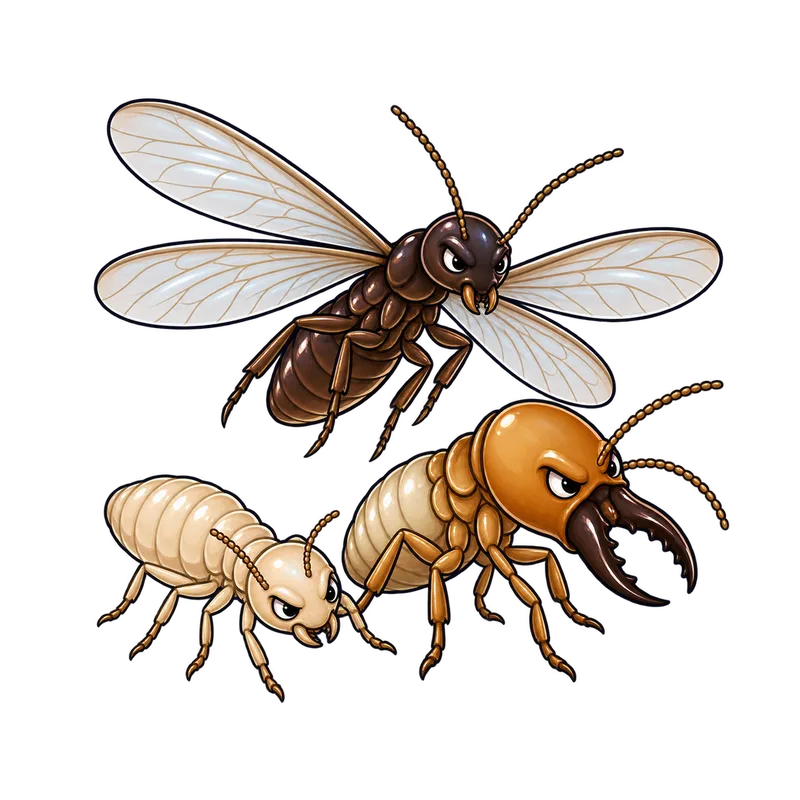
Termite signs in a California home differ by species because subterranean, drywood, and dampwood groups build and dispose of waste differently. Subterranean termites build earthy shelter tubes up foundations and hollow out soft wood, while drywood termites push out hard, six-sided fecal pellets measuring about 0.85 mm long. Dampwood termites prefer soaked timber and leave behind larger, smooth, football-shaped pellets that often form a muddy paste.
What is actually going on
Picture walking into your sunroom on a crisp Tuesday afternoon, reaching down to slide open a stuck window, and noticing a tiny, neat pile of what looks like coarse brown sand resting right on the wooden sill. You brush it away, assuming it is just tracked-in garden dirt, but by Thursday morning, the pile is back. If you live in California, that little cone of grit is usually your first hint that wood-munching insects have moved in. But the exact story behind that frass depends entirely on which pest you are dealing with.
Termite signs in a California home vary dramatically by species because the state hosts three distinct ecological groups, and each one builds, eats, and disposes of waste differently. Subterranean termites live underground and need moisture from the soil, so they never leave dry pellets behind. Instead, they build earthy shelter tubes up your foundation and hollow out soft springwood beneath a thin outer shell of paint. Drywood termites live entirely inside sound, dry wood without touching the ground, pushing out hard, six-sided fecal pellets through tiny kickout holes. Dampwood termites prefer soaked, decaying timber, leaving behind larger, football-shaped pellets that often dissolve into a muddy paste.
People often assume any wood damage or frass points to the same basic problem, but treating a drywood infestation like a subterranean one is a fast way to throw money at a ghost while the real colony thrives elsewhere. The clues are right there in the debris, the galleries, and the construction of the tunnels. Once you know what to look for, telling them apart comes down to a few surprisingly simple physical details.
How to tell for sure
Start by looking closely at the droppings, because they are the most reliable fingerprint these insects leave behind. If you collect those tiny pellets on a piece of white paper and examine them, drywood termite frass measures about 0.85 mm long and features six distinct, concave sides separated by longitudinal ridges, looking like a microscopic football shaped by a machine. Dampwood termite pellets are slightly larger at roughly 1 mm, smooth, and football-shaped without those sharp ridges, and they usually clump into a muddy paste if the timber is wet. If you find a fine, talcum-powder dust instead of distinct pellets, you are usually looking at beetles rather than termites.
Next, check for mud. If you spot pencil-thin, flattened earthen tunnels running up your concrete foundation wall or piers, you are usually dealing with subterranean termites. They build these tubes out of soil and wood fragments to protect themselves from dry air and predators while they travel between the soil and your wall framing. Drywood and dampwood termites never build mud tubes.
You can also use a simple pocket screwdriver to tap on suspicious wood. Subterranean termites eat selectively along the grain, consuming the soft springwood while leaving the harder summerwood intact, which creates a layered, hollowed-out gallery covered by a paper-thin wooden veneer. Drywood termites cut indiscriminately across and along the grain, leaving clean, smooth chambers entirely free of mud or soil. If the wood sounds like a hollow drum when you tap it and crushes easily under the tip of your screwdriver, it is time to look closer at the gallery walls.
What usually comes next
Once you have identified the physical signs, the practical decision you face usually boils down to separating an active threat from old, abandoned damage. If you find drywood frass, try cleaning up the pile completely, sealing the tiny round kickout holes with a piece of tape, and waiting forty-eight hours to see if fresh pellets reappear. If they do, the colony is active and occupying the timber.
For subterranean signs like mud tubes, breaking open a small section can tell you whether workers are currently using the route. If workers quickly patch the breach with wet soil, the highway is open for business. If the tube is brittle, dry, and abandoned, it might be a remnant of an old foraging path from years past.
Before you buy any treatments or tear into drywall, remember that California homes present unique structural vulnerabilities, such as earth-filled patio porches or siding that sits too close to the soil line. Pinpointing whether the insects are entering through a hidden dirt-to-wood contact point or flying in from the outside helps you figure out whether you are dealing with a local timber issue or a systemic foundation bridge.
When to get help
Some situations move past the realm of weekend DIY checks and require professional muscle. If structural timbers like load-bearing studs, floor joists, or roof rafters show significant sagging, severe hollowed sections, or visible structural failure, you need a licensed structural pest control operator to evaluate the building envelope.
Legal property transfers in California also require official Standard Timber Pest Inspection Reports filed through licensed Branch three operators, meaning home sales demand professional documentation rather than casual observation. Whole-structure tent fumigation or soil termiticide applications also involve regulated chemicals governed strictly by product labels and state law, requiring professional application.
If you encounter unexpected pest bites, respiratory irritation from moldy dampwood timber, or suspected pesticide exposure, reach out immediately to a qualified clinician or your regional poison control center. Similarly, if your termite inspection reveals protected wildlife nesting in structural cavities, such as bats or birds, you will need to involve licensed wildlife specialists rather than attempting removal yourself.