
What do flying termites in a house mean?
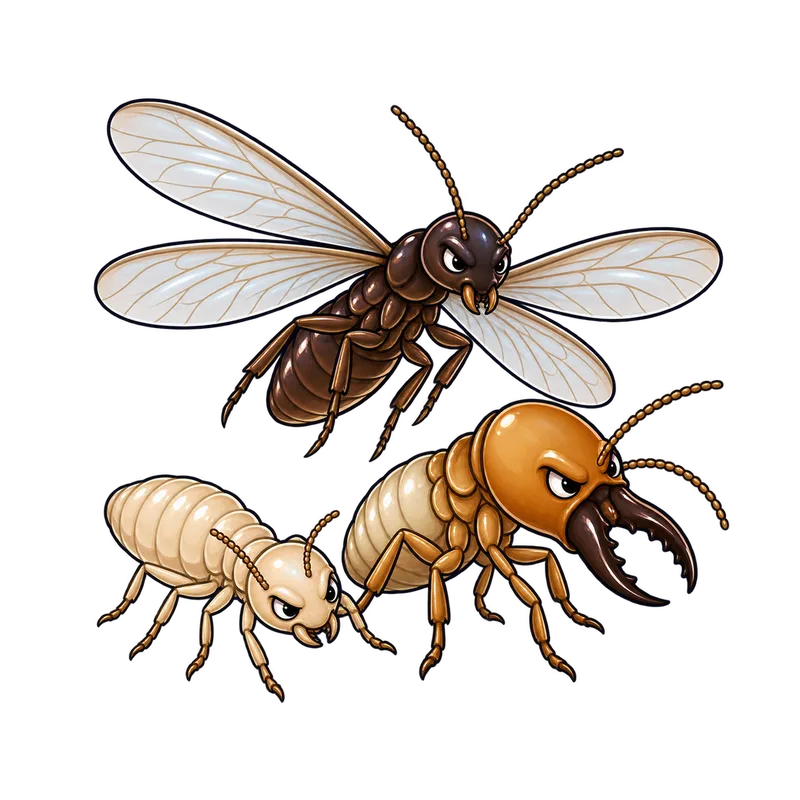
Finding flying termites in a house means an active, mature termite infestation is hidden somewhere inside the structure. A subterranean or drywood colony usually spends three to five years quietly growing inside wall cavities before producing these winged reproductives. Seeing them emerge indoors indicates the nest is already established.
What is actually going on
You are sitting on the couch on a warm spring afternoon, minding your own business, when you notice a steady stream of small, dark bugs fluttering near the living room window. They look a bit like ants with wings, but they are clumsy flyers, crawling all over the glass and dropping little translucent wings onto the windowsill. Naturally, you reach for a rolled-up magazine, thinking it is just a random batch of bugs that slipped in through a loose screen.
Except it is not a random batch of bugs. If those winged insects turning up on your windowsill are flying termites, it means you have an active, mature termite infestation hidden somewhere inside your house.
Those winged visitors are primary reproductives, and they are the only members of the colony equipped with wings and eyes. They do not appear overnight. A subterranean or drywood termite colony usually spends three to five years quietly growing, eating wood, and expanding inside wall cavities before it is mature enough to produce these flyers.
When the weather turns warm and humid, often after a soaking rain, the colony triggers a mass departure. The reproductives leave the nest to swarm, mate, and start new colonies elsewhere. If they are swarming outdoors near a dead tree, it simply means a colony lives nearby. But when they emerge directly from your baseboards, door frames, or electrical outlets inside the living room, they are telling you that the nest is already inside your structure.
How to tell for sure
Before you start tearing open drywall, you need to make sure you are actually looking at termites and not flying ants. People mix them up all the time, but a close look usually clears up the mystery.
Grab a magnifying glass or just look closely at one of the specimens. A flying termite usually features a thick, straight body with a broad waist that does not pinch in the middle. Its antennae are straight and beaded, resembling a tiny string of pearls rather than a bent elbow.
Take a look at the wings, too. Termites have four wings of equal length and shape that lie flat across their backs when they are at rest.
Flying ants, on the other hand, have a sharply constricted waist that looks pinched like a wasp, elbowed antennae, and uneven wings where the front pair is noticeably larger than the back pair.
If you find a pile of discarded wings on a windowsill without the actual insects, check the shape and size. Termites shed their wings very easily right after landing, leaving behind tiny, uniform piles that often look like a drift of translucent dust.
You should also rule out other wood-boring pests. Powderpost beetles leave tiny, round emergence holes and fine, flour-like dust behind, while carpenter ants push out coarse piles of sawdust mixed with dead insect parts. Termites do neither of those things, relying instead on mud tubes, hollow-sounding wood, or piles of six-sided fecal pellets if they happen to be drywood species.
What usually comes next
The single most practical move you can make right now is to step back, put the aerosol bug spray down, and call in a professional inspection.
It is tempting to empty a whole can of household insecticide onto the swarm crawling across your window, but that approach creates a false sense of security. Spraying only kills the visible flyers on the surface, leaving the thousands or millions of worker termites chewing through your framing studs and floor joists untouched behind the walls.
Instead, collect a few intact specimens in a clean, sealable plastic bag or a small glass jar. Take note of the exact spot where you saw them emerging, whether that happens to be a crack in the baseboard or a joint in the drywall. Leave that area alone for now, and resist the urge to seal it up with caulk or tape just yet.
An experienced pest management professional needs to see that exact emergence point to understand how the colony is moving through the building.
Termites do not bite humans, sting, or carry infectious diseases, so you do not need to panic about your personal safety. The threat is entirely financial and structural. Because a hidden colony can quietly compromise the load-bearing strength of your home over months and years, getting an expert set of eyes on the problem is the only way to map out the real scope of the damage.
When to get help
You need to involve a licensed pest management professional as soon as you confirm an indoor termite swarm. This is not a weekend do-it-yourself project involving hardware store sprays or kitchen remedies.
Licensed applicators carry the proper training and access to specialized equipment, such as thermal imaging cameras and moisture meters, required to trace hidden tunnels and evaluate the integrity of structural timber.
Treatments involving soil barriers, bait stations, structural fumigation, or localized wood replacements require the selection of specific methods and regulated materials that belong strictly to licensed professionals operating under state or national guidelines.
If anyone in your household experiences unexpected health symptoms, skin reactions, or breathing difficulties after interacting with pests or pesticide products, consult a clinician immediately, or contact your local poison control center.
For property transactions, look for certified inspectors who can issue formal wood-destroying organism clearance reports to ensure no hidden structural liabilities are left behind before a sale closes.