Centipedes
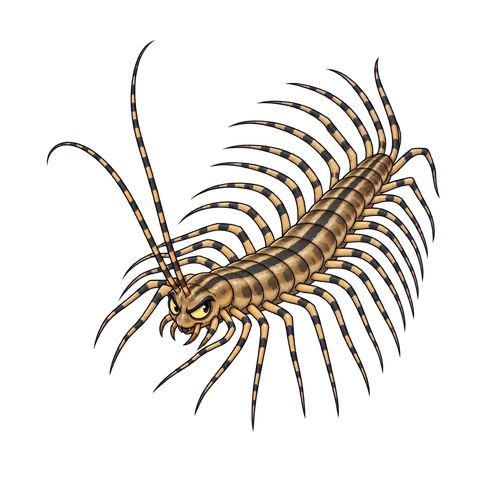
When a grey blur with fifteen pairs of impossibly long legs suddenly zips across your basement wall or bathroom floor, your first instinct is usually to panic. What unites these creatures in a single group is a shared predatory blueprint featuring flattened bodies and exactly one pair of legs per body segment, turning them into high-speed hunters rather than passive crawlers that chew on your belongings. They do not damage wood, paper, or fabrics, preferring instead to hunt down silverfish and spiders in the dark structural voids of your home.
Telling them apart from their neighbors comes down to a few obvious giveaways once you stop running for a shoe. Unlike millipedes, which sport two pairs of legs per segment and roll into slow, timid coils, or silverfish, which have only six legs and distinct tail filaments, centipedes rely on their numerous, rapid legs and complete lack of wings to dart away from the light. Spotting one usually indicates two hidden truths about your space: a damp environment that needs ventilation and an active population of smaller insects sustaining them.